
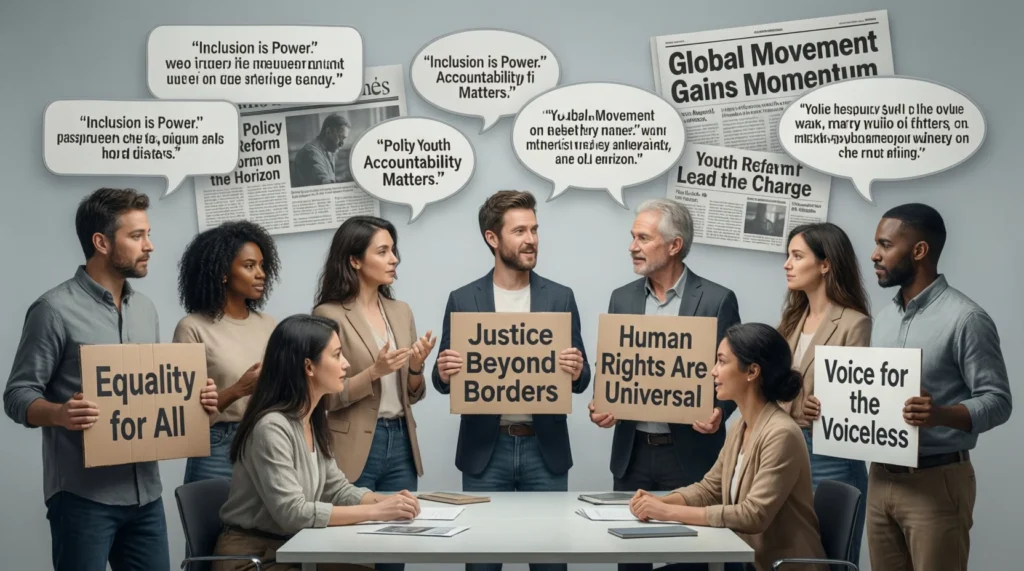
Definition
In politics, “woke” refers to awareness of social injustices such as racism, inequality, discrimination, and systemic bias, often associated with progressive or left-leaning political views.
“Woke” is one of the most talked-about and misunderstood political terms of the modern era. Some people use it as a positive label for social awareness, while others use it critically to push back against certain What Does “Woke” Mean Politically? ideas.
Understanding what woke means in politics requires context, history, and careful attention to tone.
This comprehensive guide explains the meaning of woke in politics in a clear, friendly, and professional way, covering its definition, origin, usage, examples, comparisons, alternatives, and frequently asked questions.
The word woke appears everywhere in modern political discussions. It shows up in campaign speeches, news commentary, social media debates, and policy discussions. While it once had a clear and positive meaning, it has evolved into a highly debated political label.
To some people, being woke represents empathy, fairness, and social responsibility. To others, it suggests political overreach or excessive focus on identity issues. This divide is exactly why understanding the term is so important.
Origin of the Word “Woke”
Early Cultural Roots
The word woke originated in African American Vernacular English, where it meant being alert or aware, especially of racial injustice and social danger. The phrase “stay woke” was used as a warning to remain aware of discrimination and unfair treatment.
Growth in Popularity
The term gained widespread attention during the 2010s through social justice movements, especially discussions around racial inequality, policing, and civil rights. Social media played a major role in spreading the term beyond its original cultural context.
How “Woke” Became a Political Term
As the word entered mainstream conversations, it took on a stronger political meaning.
In progressive politics, woke often describes awareness of systemic inequality and support for reforms related to race, gender, climate justice, and inclusion.
In conservative politics, woke is frequently used as a criticism, suggesting excessive political correctness, identity politics, or performative activism.
Real-World Political Usage of “Woke”
Common Areas Where the Term Appears
Political debates and speeches
News opinion articles
Social media discussions
University and workplace policy debates
Corporate and government messaging
Issues Often Described as “Woke”
Racial justice initiatives
Gender identity and LGBTQ+ rights
Diversity, equity, and inclusion programs
Environmental justice policies
Changes in language, education, or media representation
Tone and Context: Why Meaning Changes
The meaning of woke depends heavily on tone and intent.
Positive or Friendly Tone
Used to express awareness and compassion.
Example:
“She is very woke about social inequality and fairness.”
Neutral or Descriptive Tone
Used analytically or academically.
Example:
“Woke politics has influenced modern political messaging.”
Negative or Dismissive Tone
Used as criticism or mockery.
Example:
“That policy is just woke politics.”
Example
| Context | Example Sentence | Tone |
| Social justice discussion | “The movement encourages people to stay woke.” | Positive |
| Political analysis | “Woke ideas influence modern campaigns.” | Neutral |
| Public criticism | “The company went woke to avoid backlash.” | Negative |
| Media commentary | “Opponents labeled the reform as woke.” | Mixed |
Why Is “Woke” Politically Controversial?
The controversy exists because woke has become a symbol of deeper cultural and political disagreements, including:
Tradition versus social change
Free speech versus inclusive language
Individual responsibility versus systemic inequality
As a result, the word often carries emotional and ideological weight.
Comparison With Related Political Terms
Woke vs Progressive
Woke focuses on social awareness and injustice.
Progressive refers to a broader political ideology that supports reform and change.
Not all progressives identify as woke, and not all woke ideas align perfectly with progressive policy.
Woke vs Politically Correct
Woke emphasizes awareness and activism.
Politically correct focuses on using language that avoids offense.
Woke vs Liberal
Liberal describes a political ideology.
Woke describes a social attitude or awareness, not a formal ideology.
Alternate Meanings of “Woke”
Outside of politics, woke can still mean waking up from sleep or being generally alert or informed. However, in modern media and political discussion, the social and political meaning is now dominant.
Polite and Professional Alternatives to “Woke”
Because the term can be polarizing, these alternatives are often better in formal or professional writing:
Socially aware
Inclusive
Equity-focused
Justice-oriented
Human rights focused
Progressive, when accurate
Example:
Instead of “woke policies,” use “equity-focused policies.”
Clear Communication
Consider your audience before using the word
Avoid it in professional writing unless clearly defined
Be mindful of tone and context
Choose neutral alternatives when clarity matters
Conclusion:
The political meaning of woke has evolved significantly over time. What began as a call for awareness has become a contested political label used in both praise and criticism.
Understanding the term requires attention to context, tone, and intent. Whether used positively or negatively, woke plays a major role in modern political language.
Being informed about its meaning helps promote clearer and more respectful discussions.
FAQs
What does woke mean in simple terms?
It means being aware of social injustice and inequality.
Is woke a political ideology?
No. It is a descriptive term, not a formal ideology.
Is being woke considered positive or negative?
It depends on who is using the term and how it is used.
Why do politicians argue about being woke?
Because it represents deeper disagreements about values, culture, and social change.
Is woke the same as liberal?
No. Liberalism is an ideology, while woke is an awareness-based term.
When did woke become political?
It became mainstream in the early to mid-2010s.
Can companies or institutions be described as woke?
Yes. The term is often applied to corporate or institutional policies.
Should woke be used in academic writing?
Usually no. Neutral and precise language is preferred.
Discover More Related Articles:
- IDTS Mean in Text | TikTok, Snapchat, Instagram In 2026
- What Does Surreal Mean | Art & Literature In 2026

Ryan Thompson is an experienced content writer specializing in slang terms, texting abbreviations, and word meanings. He writes for meanvoro.com, where he creates accurate and easy-to-understand language content for readers.