Texture in art refers to the surface quality or feel of an artwork, either actual (tactile) or visual (illusion of texture).
It describes how a surface appears to feel or look like it would feel if touched.
In simple terms: texture gives artworks depth, dimension, and sensory interest.
When you look at a painting, sculpture, or digital artwork, you may notice surfaces that feel rough, smooth, soft, or jagged even if you can’t touch them. These qualities are referred to as texture in art.
Understanding what texture means in art is essential for artists, students, and art enthusiasts because texture adds depth, emotion, and realism to creative works.
This guide explains texture in a clear, friendly way, including types, techniques, examples, and how artists use it to make their work engaging.
Why Texture Is Important in Art
Texture is a fundamental element of art because it:
- Enhances realism and visual interest
- Communicates mood, tone, or atmosphere
- Guides the viewer’s eye across the artwork
- Expresses creativity and artistic style
Texture can make a painting seem lifelike, a sculpture inviting, or a digital design dynamic.
Origin and Concept of Texture in Art
Texture as an art element has existed for centuries, from cave paintings to modern digital art.
- In traditional art, texture was created using brush strokes, layering, or carving.
- In sculpture, texture arises naturally from materials like stone, clay, or metal.
- In digital art, texture is simulated using digital brushes, patterns, or 3D rendering.
Texture can be tactile (you can feel it) or visual (it looks like you can feel it).
Types of Texture in Art
Artists commonly use two main types of texture:
1. Actual Texture (Tactile)
- Physical texture you can feel
- Created using materials like paint, clay, fabric, or mixed media
- Adds a real, tangible dimension to art
Examples:
- Thick oil paint applied with a palette knife
- A rough stone sculpture
- Collage with paper, fabric, or natural elements
2. Visual Texture (Implied)
- Texture you see but cannot feel
- Created through artistic techniques that simulate surface quality
- Adds illusion of depth, complexity, or realism
Examples:
- A drawing that looks like fur or scales
- A painting that mimics wood grain or water ripples
- Digital textures applied to illustrations or 3D models
How Texture Is Used in Art
Texture can:
- Create contrast between smooth and rough areas
- Convey emotion or atmosphere (soft textures can feel calm; jagged textures can feel chaotic)
- Direct attention to specific parts of a composition
- Highlight material or medium used in the artwork
Example: A seascape painting with rough, layered brush strokes can evoke the movement and energy of waves.
Example
| Type | Description | Example | Effect on Artwork |
|---|---|---|---|
| Actual / Tactile | Can be felt physically | Clay sculpture | Engages touch and visual sense |
| Visual / Implied | Looks textured but is smooth | Painted fur, wood grain | Adds realism or illusion |
| Rough | Uneven, jagged surfaces | Crumpled paper collage | Conveys chaos, energy |
| Smooth | Even, polished surfaces | Oil painting sky | Conveys calm, elegance |
| Soft | Gentle or fluffy appearance | Pastel or fabric | Invites comfort or delicacy |
| Hard | Solid or sharp | Stone carving, metal | Strength, durability, tension |
Popular Techniques to Create Texture
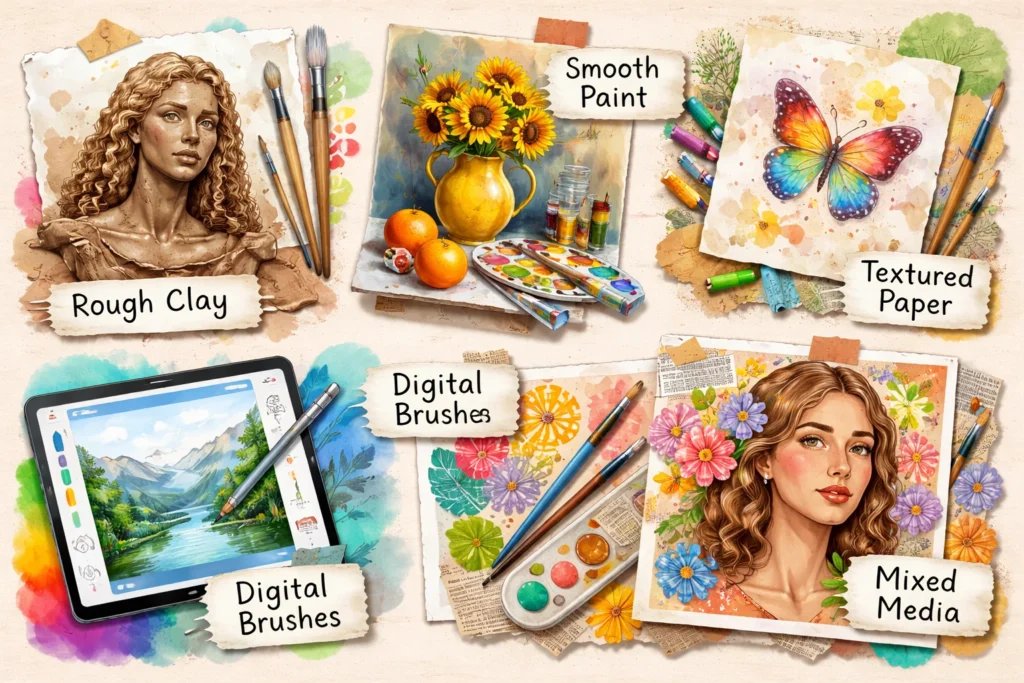
- Impasto: Thick layers of paint that create a tactile surface
- Sgraffito: Scratching through a surface layer to reveal texture underneath
- Collage: Using different materials to add dimension
- Digital Brushes: Simulating textures like paper, fabric, or stone
- Crosshatching or Stippling: Creating visual texture in drawing or printmaking
Comparison: Texture vs Other Art Elements
| Element | Meaning | Key Difference |
|---|---|---|
| Texture | Surface quality | Can be felt or simulated visually |
| Line | Path connecting points | Defines shapes and forms |
| Color | Hue, value, saturation | Influences mood and depth |
| Shape | Two-dimensional area | Defines objects, boundaries |
| Form | Three-dimensional object | Includes volume and perspective |
Texture works with all other elements to create balanced, engaging art.
Polite or Professional Alternatives for Texture
In professional or academic art contexts, texture may also be referred to as:
- Surface quality
- Tactile element
- Material finish
- Implied surface
Example: “The artist used an interesting surface quality to draw attention to the central figure.”
Alternate or Expanded Meanings
- Texture is not only visual or physical but can also imply movement, weight, or temperature in artworks.
- In digital media, texture often includes patterns or overlays to create realism.
- Texture can be symbolic, representing roughness of life, smoothness of calm, or softness of innocence.
FAQs
Meaning of texture in art?
Texture refers to the surface quality of an artwork, either tactile (felt) or visual (simulated).
Difference between actual and visual texture?
Actual texture can be felt physically, while visual texture only gives the illusion of surface quality.
Why is texture important in art?
Texture enhances realism, emotion, and interest, and can guide the viewer’s attention.
How can texture be created?
Through materials, brush strokes, carving, collage, digital techniques, and pattern simulation.
Examples of texture in art?
Rough sculpture surfaces, smooth painted skies, fluffy clouds, or digital fabric textures.
Can texture convey emotion?
Yes, soft textures can feel calm, rough textures can feel chaotic, and jagged textures can create tension.
Is texture only in paintings?
No, it appears in sculpture, ceramics, textiles, digital art, and mixed media.
How do artists measure texture?
Artists judge it visually, by touch (for tactile works), and through tools like palette knives or digital brushes.
Practical Tips for Using Texture in Art
- Experiment with both tactile and visual textures
- Mix smooth and rough areas for contrast
- Observe natural surfaces for inspiration
- Use texture to convey mood or emotion
- Try textures in both traditional and digital mediums
Conclusion
Texture in art is a key element that adds depth, realism, and emotional impact to creative works. Whether tactile or visual, rough or smooth, texture makes art more engaging, immersive, and expressive.
By understanding and experimenting with texture, you can:
- Enhance your own artwork
- Appreciate subtle details in others’ art
- Communicate emotion and mood more effectively
- Create visually dynamic and interesting compositions
Mastering texture is a step toward becoming a more confident and expressive artist.
Discover More Related Articles:
- Perseverance Mean in the Bible: Lessons from Paul, Job, and Jesus for 2026
- Subdue Meaning in the Bible: Lessons for 2026

Jessica Brown is a language-focused writer who creates well-researched articles on word meanings, abbreviations, and everyday expressions. She contributes to meanvoro.com, delivering simple, reliable, and reader-friendly content designed to make complex terms easy to understand.