
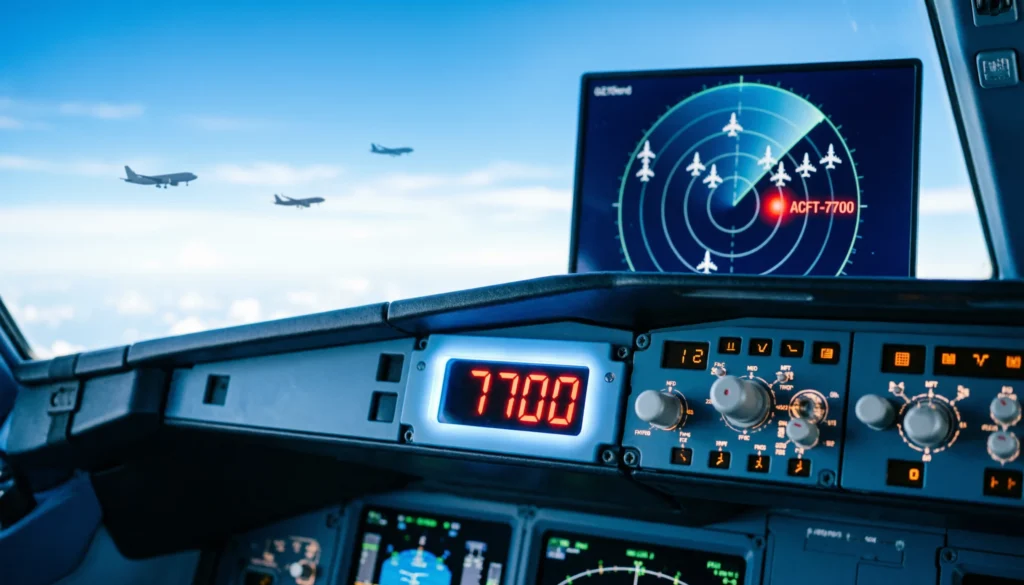
Definition:
In aviation, “squawk” refers to the four-digit transponder code that an aircraft transmits to air traffic control (ATC) to identify itself on radar and communicate specific situations, such as emergencies or communication failures.
Imagine hundreds of aircraft flying simultaneously across the sky. How do air traffic controllers keep track of each one? The answer lies in a small but powerful system known as the transponder, and the codes it transmits commonly referred to as “squawk codes.”
The term might sound unusual, even humorous, but in aviation, it carries immense importance. Whether it’s identifying an aircraft, signaling an emergency, or alerting ATC to a communication failure, squawking the correct code can be critical for safety and efficient airspace management.
This comprehensive guide explores everything you need to know about the aviation term “squawk,” including its origin, usage, examples, related terminology, and frequently asked questions.
What Does “Squawk” Mean in Aviation?
Simple Explanation
In aviation, to “squawk” means to set a specific four-digit code on an aircraft’s transponder, allowing air traffic controllers to identify and track the aircraft on radar.
Key Components
- Transponder: An onboard electronic device that communicates with ATC radar systems.
- Four-Digit Code: A unique identification number assigned by ATC.
- Mode A/C/S: Different transponder modes that transmit identification and altitude data.
Why Squawk Codes Are Important
- Aircraft Identification: Distinguishes one aircraft from another.
- Safety: Enables rapid recognition of emergencies.
- Airspace Management: Helps ATC organize and separate aircraft.
- Search and Rescue: Assists in locating aircraft during distress situations.
How the Transponder System Works
When ATC radar sends an interrogation signal, the aircraft’s transponder responds by transmitting the assigned squawk code. Depending on the mode, it may also send altitude and additional aircraft information.
Transponder Modes
| Mode | Function | Description |
|---|---|---|
| Mode A | Identification | Transmits the four-digit squawk code. |
| Mode C | Altitude Reporting | Adds pressure altitude information. |
| Mode S | Selective Interrogation | Provides enhanced data, including aircraft identity and capabilities. |
Common Squawk Codes and Their Meanings
Certain squawk codes are universally recognized and reserved for specific emergency situations. These codes are easy to remember and critical for aviation safety.
Emergency Squawk Codes
| Squawk Code | Meaning | When Used |
|---|---|---|
| 7500 | Hijacking | Indicates unlawful interference with the aircraft. |
| 7600 | Radio Failure | Used when communication with ATC is lost. |
| 7700 | General Emergency | Signals any life-threatening or urgent situation. |
| 1200 (U.S.) | VFR Flight | Standard code for visual flight rules operations in the United States. |
| 7000 (Europe & many regions) | VFR Flight | Standard VFR code in many countries outside the U.S. |
Tip: Pilots often remember the emergency codes with the phrase:
“75 – Taken Alive, 76 – Radio Fix, 77 – Going to Heaven.”
Origin of the Term “Squawk”
The term “squawk” dates back to early radar and radio communication systems during World War II. Operators noticed that the transponder’s electronic response produced a distinctive sound resembling a bird’s squawk on monitoring equipment. Over time, the aviation community adopted the term to describe the act of transmitting identification codes.
Evolution of the Term
- Military Beginnings: Developed as part of the Identification Friend or Foe (IFF) system.
- Civil Aviation Adoption: Transitioned into standard terminology for air traffic management.
- Modern Usage: Now universally recognized in both military and civilian aviation.
Real-World Usage of “Squawk”
Typical ATC Instructions
Air traffic controllers frequently use the term when communicating with pilots. Here are some common phrases:
| ATC Instruction | Meaning | Tone |
|---|---|---|
| “Squawk 4521” | Set the transponder to code 4521. | Neutral/Instructional |
| “Squawk ident” | Activate the IDENT button to highlight the aircraft on radar. | Neutral |
| “Verify squawk 7600” | Confirm that the aircraft is indicating a radio failure. | Urgent |
| “Reset squawk” | Change or re-enter the assigned code. | Neutral |
Example Scenarios
- Routine Identification (Friendly/Neutral)
- ATC: “Pakistan International 302, squawk 5314.”
- Pilot: “Squawk 5314, Pakistan International 302.”
- Radio Communication Failure (Urgent)
- A pilot experiencing radio issues sets 7600, allowing ATC to recognize the problem and provide assistance through alternative procedures.
- General Emergency (Critical)
- During an onboard medical emergency or engine failure, the pilot sets 7700, prompting immediate priority handling.
- Hijacking Situation (Critical/Confidential)
- If unlawful interference occurs, 7500 alerts authorities discreetly without alarming passengers.
Understanding “Squawk Ident”
What Does “Squawk Ident” Mean?
When ATC says “squawk ident,” the pilot presses the IDENT button on the transponder. This action temporarily highlights the aircraft’s radar return, allowing controllers to quickly confirm its identity.
When It’s Used
- Initial radar contact.
- Clarifying aircraft position.
- Resolving identification uncertainties.
Comparison with Related Aviation Terms
Understanding “squawk” becomes easier when compared with similar aviation concepts.
| Term | Meaning | Key Difference |
|---|---|---|
| Squawk | Four-digit transponder code. | Identifies the aircraft or signals a situation. |
| Transponder | The device that transmits the code. | Hardware rather than the code itself. |
| Call Sign | Aircraft’s radio identification (e.g., PIA302). | Used in voice communication, not radar. |
| ADS-B | Automatic Dependent Surveillance–Broadcast. | Provides more detailed tracking using GPS. |
| IDENT | A button that highlights the radar return. | Temporary action, not a code. |
Squawk Codes Around the World
While emergency codes are standardized globally, routine VFR codes vary by region.
| Region | Standard VFR Squawk Code |
|---|---|
| United States | 1200 |
| Europe | 7000 |
| Australia | 1200 |
| United Kingdom | 7000 |
| Pakistan & Many Other Countries | 7000 |
Alternate Meanings of “Squawk”
Although widely recognized in aviation, the word “squawk” has several meanings in everyday language:
| Context | Meaning |
|---|---|
| General English | A loud, harsh cry, often associated with birds. |
| Informal Usage | To complain loudly or protest. |
| Journalism/Publishing | A “squawk box” refers to a loudspeaker used for announcements. |
| Technology/Customer Service | A “squawk” may refer to a reported issue or defect. |
Polite or Professional Alternatives
In aviation communication, clarity and brevity are essential. While “squawk” is the standard term, here are equivalent phrases used in professional contexts:
| Alternative Phrase | When Used |
|---|---|
| “Set transponder to…” | Training or explanatory contexts. |
| “Select code…” | Instructional or written communication. |
| “Transponder code assigned…” | Documentation or reports. |
| “Activate IDENT” | When highlighting radar identification. |
Usage Tips for Pilots and Aviation Enthusiasts
Best Practices
- Always read back the assigned squawk code to confirm accuracy.
- Avoid entering emergency codes accidentally, as they trigger immediate ATC response.
- Verify the code before takeoff when operating under ATC instructions.
- Understand regional differences in standard VFR codes.
- Use the IDENT function only when instructed by ATC.
Common Mistakes to Avoid
- Mishearing similar numbers (e.g., 7500 vs. 7700).
- Failing to reset the code after leaving controlled airspace.
- Accidentally selecting an emergency code during adjustments.
Labeled Example Table: ATC Communication Using “Squawk”
| Scenario | ATC Instruction | Pilot Response | Purpose |
|---|---|---|---|
| Initial Radar Contact | “Squawk 4321.” | “Squawk 4321.” | Aircraft identification |
| Radar Confirmation | “Squawk ident.” | “Ident.” | Radar highlight |
| Radio Failure | Pilot sets 7600 | N/A | Indicates communication loss |
| General Emergency | Pilot sets 7700 | N/A | Requests immediate assistance |
| Hijacking | Pilot sets 7500 | N/A | Alerts authorities discreetly |
Why “Squawk” Is Essential for Aviation Safety
The squawk system is a cornerstone of modern air traffic management. It enables:
- Efficient aircraft tracking
- Rapid emergency response
- Improved situational awareness
- Enhanced coordination between ATC and pilots
- Integration with advanced surveillance technologies like ADS-B
Without squawk codes, maintaining safe separation between aircraft would be significantly more challenging.
FAQs
1. What does “squawk” mean in aviation?
It refers to the four-digit transponder code transmitted by an aircraft to identify itself and communicate specific situations to air traffic control.
2. Why is it called a squawk?
The term originated from early radar systems during World War II, where the electronic signal resembled a bird’s squawk.
3. What are the emergency squawk codes?
The universal emergency codes are:
- 7500 – Hijacking
- 7600 – Radio failure
- 7700 – General emergency
4. What does “squawk ident” mean?
It instructs the pilot to press the IDENT button on the transponder, highlighting the aircraft’s radar return for quick identification.
5. What is the standard VFR squawk code?
It varies by region:
- 1200 in the United States
- 7000 in many other countries, including Pakistan and Europe
6. Can squawk codes be changed during a flight?
Yes. ATC may assign new codes as the aircraft moves between different airspace sectors.
7. What happens if a pilot accidentally squawks 7700?
ATC immediately treats it as an emergency and attempts to contact the aircraft. The pilot should promptly clarify the situation.
8. Is “squawk” used outside aviation?
Yes. It can mean a loud cry, a complaint, or a technical issue report in other contexts.
Conclusion:
Understanding what “squawk” means in aviation is essential for anyone interested in how modern air traffic management keeps the skies safe. At its core, a squawk is a four-digit transponder code that allows air traffic control (ATC) to identify and monitor an aircraft, as well as quickly recognize emergencies.
From routine identification to critical situations like hijacking (7500), radio failure (7600), and general emergencies (7700), squawk codes play a vital role in ensuring efficient communication and rapid response.
The term itself, rooted in early radar technology from World War II, has become a standard part of aviation language used worldwide.
Discover More Related Articles:
- “Sustain” Mean in a Court of Law: Sustain vs Overrule in 2026
- Rhythm Mean in Music: From Classical to Modern Songs in 2026

Jessica Brown is a language-focused writer who creates well-researched articles on word meanings, abbreviations, and everyday expressions. She contributes to meanvoro.com, delivering simple, reliable, and reader-friendly content designed to make complex terms easy to understand.