
Definition:
Soloin Spanish primarily means “alone” or “only.” It can describe being by oneself, emphasizing exclusivity, or highlighting a single item or action.
Whether you’re learning Spanish for travel, school, or just curiosity, understanding solo is essential because it appears frequently in conversations, books, and media. In this guide, we’ll cover its definition, origins, usage, examples, comparisons, alternatives, and common FAQs all in a friendly, clear, and professional style.
What Does Solo Mean in Spanish?
In Spanish, solo has two main meanings:
- Alone / by oneself – describing a person or thing without company.
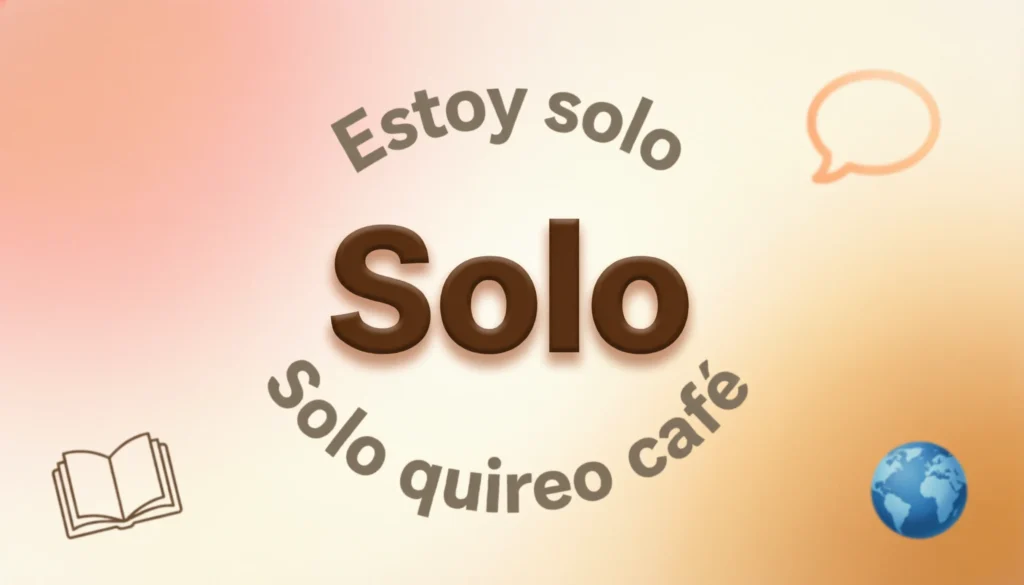
- Example: Estoy solo en casa. → “I am alone at home.”
- Only / just – emphasizing exclusivity or limitation.
- Example: Solo quiero un café. → “I only want a coffee.”
Tip: The accent mark (
sólo) used to differentiate “only” from “alone” is largely optional in modern Spanish, but some grammar guides still recommend it to avoid ambiguity.
Origin of the Word Solo
- Etymology: From Latin solus, meaning “alone” or “only.”
- Popularity:
Solohas been in use in Spanish for centuries and remains common in everyday conversation, literature, and media. - Cultural Note: It’s also used metaphorically, such as in music (solo sections) or sports (jugador solo – solo player/goal), which came from Italian or English influence.
Common Uses of Solo
1. Describing Being Alone
- Estoy solo en la oficina. → “I am alone in the office.”
- Ella vive sola en Madrid. → “She lives alone in Madrid.”
2. Expressing “Only” or Exclusivity
- Solo tengo cinco euros. → “I only have five euros.”
- Esta oferta es solo para estudiantes. → “This offer is only for students.”
3. In Music
- El guitarrista toca un solo impresionante. → “The guitarist plays an amazing solo.”
Here,solorefers to a musical passage performed by one musician.
Neutral, Friendly, and Emphatic Tones
| Tone | Example | Meaning / Context |
|---|---|---|
| Friendly 😊 | Solo ven cuando quieras. | “Just come whenever you want.” |
| Neutral | Trabajo solo hoy. | “I’m working alone today.” |
| Emphatic / Dismissive 😬 | Solo tú puedes arreglar esto. | “Only you can fix this.” |
Comparison: Solo vs Sola vs Solamente
| Word | Meaning | Usage Example |
|---|---|---|
| Solo | Alone (male or general), Only | Estoy solo. – “I am alone.” / Solo quiero café. – “I only want coffee.” |
| Sola | Alone (female) | Ella está sola. – “She is alone.” |
| Solamente | Only, just (formal/clearer) | Solamente tengo cinco minutos. – “I only have five minutes.” |
Tip:
Solois versatile, but if you want to sound extra formal or avoid confusion, usesolamentefor “only”.
Polite or Professional Alternatives
- Instead of solo quiero…, you can say:
- Solamente quiero… → “I only want…”
- To emphasize being alone without sounding negative:
- Estoy sin compañía → “I am without company”
- Me encuentro a solas → “I find myself alone” (formal/literary)
Example Table: Solo Usage in Context
| Spanish Sentence | English Translation | Meaning / Note |
|---|---|---|
| Estoy solo en casa. | “I am alone at home.” | Being physically alone |
| Solo quiero un café. | “I only want a coffee.” | Expressing limitation/exclusivity |
| Tocó un solo de guitarra. | “He played a guitar solo.” | Musical context |
| Ella vive sola. | “She lives alone.” | Female singular form |
| Solamente estudiantes pueden entrar. | “Only students can enter.” | Formal alternative to “solo” |
Real-World Usage of Solo
Friendly Context
- Talking with friends:
Solo quiero relajarme hoy. → “I just want to relax today.”
Neutral / Professional Context
- Emails or announcements:
Esta reunión es solo para gerentes. → “This meeting is only for managers.”
Emphatic / Negative Context
- Expressing frustration or exclusivity:
Solo tú podías olvidar la fecha. → “Only you could forget the date.” 😬
Alternate Meanings of Solo
- In Music: Refers to a solo performance, not about being alone.
- In Sports: Can indicate a single player acting alone (gol en solitario – solo goal).
- In Italian/English Influence: Used in Spanish for emphasis in arts, like solo dance or guitar solo.
Usage Tips to Avoid Confusion
- Remember gender agreement:
- Male/general:
solo - Female:
sola
- Male/general:
- Use
solamenteto clarify “only” if needed - Context matters: In music or arts,
solorarely means “alone”
FAQs
1. Is “solo” always spelled without an accent?
- Modern Spanish allows solo without an accent for both meanings. Some guides still use
sólofor “only” to avoid ambiguity.
2. Can “solo” mean “only” and “alone” at the same time?
- No, context determines which meaning applies.
3. What’s the difference between “solo” and “solamente”?
Solamenteis more formal and clearly means “only.”Solocan mean both “alone” and “only.”
4. How do you say “alone” for a female subject?
- Use
sola. Example: Ella está sola.
5. Can “solo” be used in music?
- Yes! Solo can refer to a single musician’s performance.
6. Does “solo” have slang meanings?
- Rarely, but in informal speech it might emphasize “just” in phrases like solo digo… → “I’m just saying…”
7. Is “solo” used differently in Latin American Spanish?
- Generally, usage is the same as in Spain, but local expressions may vary.
8. Can I use “solo” in professional writing?
- Yes, especially for “only,” but using solamente may sound clearer and more formal.
Conclusion:
The Spanish word solo is simple, flexible, and incredibly common. It mainly means “alone” or “only,” and the correct meaning depends entirely on context. When talking about being by yourself, remember gender agreement (solo for masculine/general, sola for feminine).
When expressing limitation or exclusivity, solo often means “just” or “only,” though solamente is a clear, more formal alternative.Solo is simple but versatile. Once you master its contexts and alternatives, you’ll sound more fluent and natural in Spanish conversations, writing, and cultural references.
Discover More Related Articles:
- Biblical Meaning of Defiled: What It Really Means According to Scripture (2026)
- The Meaning of the Rainbow in the Bible : Explained for Christians (2026)

Jessica Brown is a language-focused writer who creates well-researched articles on word meanings, abbreviations, and everyday expressions. She contributes to meanvoro.com, delivering simple, reliable, and reader-friendly content designed to make complex terms easy to understand.