
Definition:
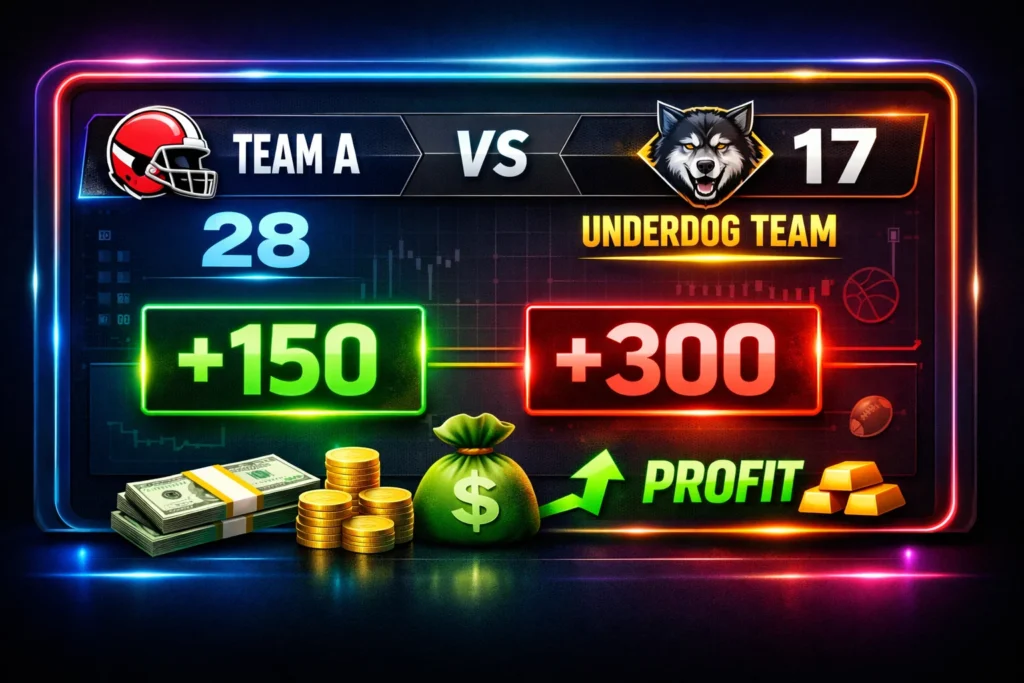
In sports betting, the “plus” (+) sign refers to underdog odds and shows how much profit you can make on a $100 bet. For example, +200 odds mean you would win $200 in profit if you bet $100 and your wager is successful.
If you’ve ever looked at betting odds and seen something like +150, +300, or even +1000, you might have wondered what it all actually means. At first glance, it can feel confusing but once you understand the “plus” sign, everything becomes much clearer.
The plus sign isn’t just a symbol it’s a key indicator of risk, reward, and probability. It tells you when a team or player is considered the underdog and how much you stand to gain if they pull off an upset.
Whether you’re new to sports betting or just trying to sharpen your knowledge, this guide will break down everything you need to know about what “plus” means in betting, how it works, and how to use it smartly.
What Does the Plus Sign (+) Represent in Betting?
In betting odds (especially American odds), the plus (+) sign represents:
- The underdog in a matchup
- The potential profit on a $100 bet
- A higher payout but lower probability of winning
Simple Breakdown:
- +100 → Win $100 profit on a $100 bet
- +200 → Win $200 profit on a $100 bet
- +500 → Win $500 profit on a $100 bet
👉 The bigger the plus number, the higher the reward but the lower the chance of winning.
Origin and Popularity of Plus Odds
The plus (+) and minus (–) odds system comes from American betting markets, often referred to as American odds.
Why This Format Became Popular:
- Easy to understand for beginners
- Clearly shows profit potential
- Widely used in sportsbooks in the U.S. and globally
Over time, this system spread across online betting platforms, making it one of the most recognized formats worldwide.
How Plus Odds Work
Understanding plus odds is actually straightforward once you break it down.
Formula:
Profit = (Odds ÷ 100) × Bet Amount
Example:
- Odds: +250
- Bet: $50
👉 Profit = (250 ÷ 100) × 50 = $125 profit
👉 Total payout = $125 (profit) + $50 (stake) = $175
Example Table: Plus Odds Explained
| Odds | Bet Amount | Profit | Total Payout | Meaning |
|---|---|---|---|---|
| +100 | $100 | $100 | $200 | Even odds |
| +150 | $100 | $150 | $250 | Slight underdog |
| +300 | $100 | $300 | $400 | Clear underdog |
| +500 | $100 | $500 | $600 | Big underdog |
| +1000 | $100 | $1000 | $1100 | Major upset |
Real-World Usage of Plus Odds
You’ll commonly see plus odds in:
1. Sports Betting
- Football, cricket, basketball, MMA, etc.
- Example: Team A (+200) vs Team B (-150)
2. Moneyline Bets
- Straight bets on who wins
- The underdog always has a plus sign
3. Futures Betting
- Betting on long-term outcomes (e.g., tournament winners)
- Higher plus odds = less likely outcome
Tone and Context: What “Plus” Implies Emotionally
While betting terms are technical, they can also carry subtle “tone” depending on context:
🟢 Positive / Exciting Tone
- “They’re at +400—huge payout potential!”
- Implies opportunity and excitement
⚪ Neutral Tone
- “The team is listed at +150.”
- Just factual information
🔴 Risk-Aware Tone
- “At +800, it’s a risky bet.”
- Highlights uncertainty and low probability
Plus vs Minus in Betting
Understanding “plus” becomes easier when compared to its opposite: the minus (–) sign.
| Feature | Plus (+) Odds | Minus (–) Odds |
|---|---|---|
| Represents | Underdog | Favorite |
| Risk Level | Higher | Lower |
| Payout | Higher | Lower |
| Example | +200 → Win $200 on $100 | -200 → Bet $200 to win $100 |
👉 In short:
- Plus = Higher risk, higher reward
- Minus = Lower risk, lower reward
When Should You Bet on Plus Odds?
Betting on plus odds can be smart but only if done carefully.
Good Situations:
- You believe the underdog is underrated
- Strong research supports your pick
- You’re aiming for higher returns
Risky Situations:
- Betting purely for high payout
- Ignoring stats and probabilities
- Chasing losses
👉 Tip: Don’t be tempted by big numbers alone focus on value betting.
Related Terms and Concepts
To fully understand plus odds, here are some related terms:
1. Underdog
The team or player expected to lose.
2. Moneyline
A bet on who wins the game outright.
3. Implied Probability
The chance of winning based on odds.
Formula for Plus Odds:
Probability = 100 ÷ (Odds + 100)
Example:
- +200 → 100 ÷ (200 + 100) = 33.3% chance
Alternate Meanings of “Plus”
While “plus” in betting has a specific meaning, it can have other uses in different contexts:
- Mathematics: Addition (e.g., 2 + 2 = 4)
- Streaming Services: Premium tier (e.g., “Disney+”)
- General Use: Extra benefit or advantage
👉 However, in betting, it always relates to underdog odds and profit potential.
Polite or Professional Alternatives
If you’re explaining betting in a professional setting, you can say:
- “Underdog odds” instead of “plus odds”
- “Higher return potential”
- “Less likely outcome with greater payout”
Common Mistakes Beginners Make
Avoid these errors when dealing with plus odds:
- ❌ Thinking +200 means double your total payout (it’s profit only)
- ❌ Ignoring implied probability
- ❌ Betting emotionally on underdogs
- ❌ Misunderstanding stake vs profit
FAQs:
1. What does +100 mean in betting?
It means you win $100 profit on a $100 bet also called even odds.
2. Is plus better than minus in betting?
Not necessarily. Plus offers higher payouts but lower chances of winning.
3. Why are underdogs given plus odds?
Because they are less likely to win, so sportsbooks offer bigger rewards.
4. Can you win more with plus odds?
Yes, plus odds always offer higher potential profit than minus odds.
5. What does +500 mean?
A $100 bet would win $500 profit if successful.
6. Are plus odds risky?
Yes, they are riskier because they represent less likely outcomes.
7. How do you calculate winnings with plus odds?
Divide the odds by 100 and multiply by your bet amount.
8. What is implied probability for plus odds?
It shows the chance of winning based on the odds (e.g., +200 ≈ 33.3%).
Conclusion:
Understanding what “plus” means in betting gives you a clearer view of how odds, risk, and potential rewards work together. The plus (+) sign simply indicates the underdog and shows how much profit you can make relative to your stake. While these odds can be tempting because of their higher payouts, they also come with lower probabilities of winning.
By learning how to read plus odds, calculate returns, and recognize when they offer real value, you can approach betting with more confidence and better judgment. In the end, it’s not just about chasing big winsit’s about making informed decisions based on logic, strategy, and awareness of risk.
Discover More Related Articles:

Jessica Brown is a language-focused writer who creates well-researched articles on word meanings, abbreviations, and everyday expressions. She contributes to meanvoro.com, delivering simple, reliable, and reader-friendly content designed to make complex terms easy to understand.