Definition:
In LGBTQ+ terminology, “pan” refers to pansexuality, a sexual orientation where a person is attracted to others regardless of their gender identity or biological sex.
Pansexual people can experience attraction to men, women, transgender individuals, non-binary people, and others across the gender spectrum.
Origin of the Term “Pan”
The prefix “pan-” comes from the Greek word “pan”, meaning “all” or “every”, reflecting the inclusive nature of pansexuality.
- Historical roots: Pansexuality as a term gained visibility in the 20th century, with the first academic uses appearing in psychology and sexology studies in the 1970s and 1980s.
- Modern popularity: Social media, LGBTQ+ advocacy, and inclusive education have helped pansexuality become widely recognized and accepted in recent decades.
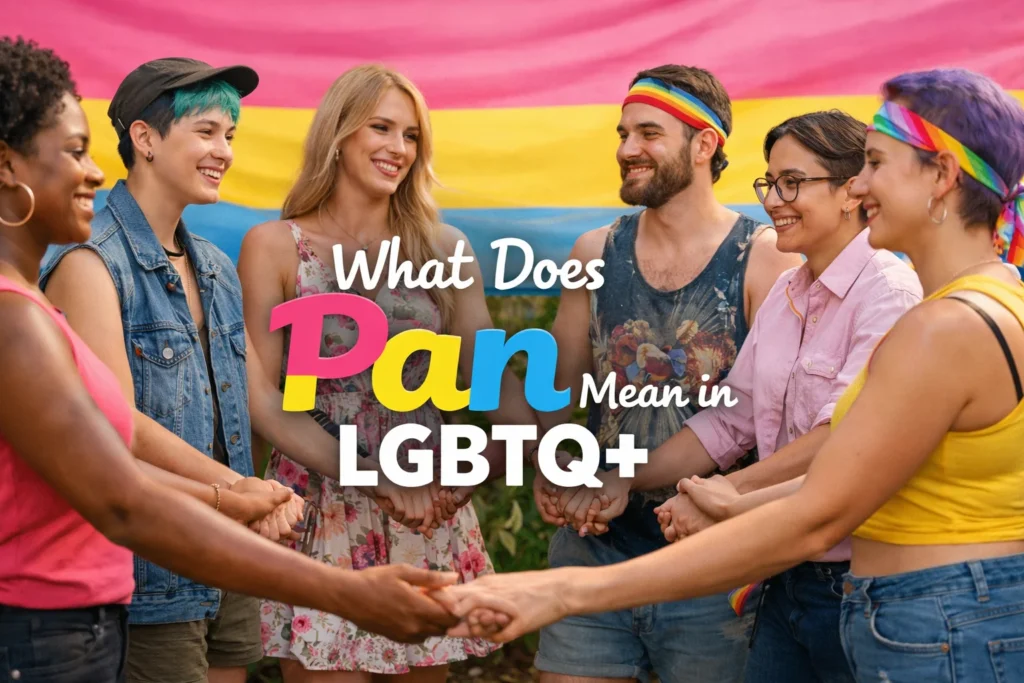
- Symbols: The pansexual pride flag features pink, yellow, and blue stripes, symbolizing attraction to women, non-binary/genderqueer people, and men, respectively. 🌈
How “Pan” is Used in LGBTQ+ Contexts
“Pan” or “pansexual” is a self-identifying term used to describe someone’s sexual orientation. Here’s how it’s generally applied:
1. Self-Identification
- Pansexual individuals often clarify their orientation with statements like:
- “I’m pan, which means I’m attracted to people regardless of gender.”
- It emphasizes gender inclusivity in romantic or sexual attraction.
2. Inclusivity Focus
- Unlike some sexual orientations that are gender-specific, pansexuality highlights attraction to all genders rather than just men or women.
- Example:
- “Alex is pan, so they might be interested in a cisgender woman, a transgender man, or someone non-binary.”
3. Relationship Labels
- Pansexuality can exist alongside romantic labels such as panromantic, heteroromantic, or homoromantic, depending on whether someone’s romantic and sexual attractions align.
- Example:
- “They are pansexual but panromantic, so their romantic and sexual attractions are equally inclusive.”
4. Common Misconceptions
- Not the same as bisexuality: Bisexuality usually refers to attraction to two or more genders, often interpreted as men and women, while pansexuality explicitly embraces all genders.
- Not a “phase” or fetish: Pansexuality is a valid sexual orientation, not a trend or temporary identity.
Examples of “Pan” in Context
| Sentence | Meaning / Context | Tone |
|---|---|---|
| “I came out as pan yesterday.” | Self-identification | Positive / affirming |
| “Pan people can be attracted to anyone.” | Inclusive sexual orientation | Informative |
| “They’re pan, so gender doesn’t define who they like.” | Clarifying inclusivity | Neutral / educational |
| “Pansexuality isn’t the same as bisexuality.” | Explaining common misconception | Clarifying |
💡 Tip: When discussing pansexuality, use respectful language and avoid assumptions about someone’s attractions.
Comparison With Related Terms
| Term | Meaning | Key Difference from Pan |
|---|---|---|
| Bisexual | Attraction to two or more genders | May not explicitly include all genders |
| Omnisexual | Attraction to all genders with gender awareness | Pansexuality often doesn’t consider gender as a limiting factor |
| Queer | Broad LGBTQ+ umbrella term | Pan is specific; queer is general and flexible |
| Polysexual | Attraction to multiple, but not all, genders | Pansexuality is fully inclusive |
Quick Tip: Pansexuality emphasizes gender-blind attraction, while related terms might include preferences or exclusions.
Alternate Meanings of “Pan”
While “pan” in LGBTQ+ contexts refers to pansexuality, the word can have other unrelated meanings:
- Culinary: Pan (a cooking vessel). 🍳
- Greek Prefix: “Pan-” meaning all or everything.
- Geography/Names: Found in place names, surnames, or mythology (e.g., Greek god Pan).
⚠️ Context is crucial. In LGBTQ+ discussions, “pan” almost always refers to pansexuality.
Polite or Professional Alternatives
If you want to talk about pansexuality in a professional or educational setting, consider using:
- Pansexual – formal, widely recognized term
- Gender-inclusive attraction – explanatory, neutral
- All-gender attraction – descriptive, accessible for general audiences
⚠️ Avoid slang or assumptions. Always respect self-identification.
FAQs
- What does “pan” stand for in LGBTQ+?
Pan stands for pansexuality, attraction to people of any gender. - Is pansexual the same as bisexual?
Not exactly. Bisexuality is attraction to two or more genders; pansexuality is inclusive of all genders. - What colors represent pansexuality?
Pink, yellow, and blue stripes on the pansexual pride flag 🌈. - Can pansexual people have preferences?
Yes. Being pansexual doesn’t mean liking everyone equally it means gender isn’t a limiting factor. - Is pansexuality widely recognized?
Increasingly yes, especially in LGBTQ+ communities, education, and social media. - Can someone be panromantic but not pansexual?
Yes. Romantic and sexual orientations can differ. - Is “pan” just a trend?
No. Pansexuality is a legitimate, long-standing sexual orientation. - How should I talk about pan people respectfully?
Use their self-identification, avoid assumptions, and focus on inclusivity.
Conclusion:
In summary, “pan” refers to pansexuality, a sexual orientation where a person can be attracted to others regardless of their gender identity or biological sex 🌈. It emphasizes gender inclusivity and challenges traditional notions of attraction. Pansexuality is distinct from bisexuality, as it explicitly embraces all genders, and it’s a valid, long-standing identity not a trend or phase.
When discussing pansexuality, always use respectful, inclusive language and honor people’s self-identification. Professional or polite alternatives like “pansexual” or “gender-inclusive attraction” can be used in formal contexts, while casual conversations may simply use “pan” as a recognized shorthand.
💡 Practical Tip: When someone says they’re pan, focus on their inclusivity, not assumptions about who they might like. Using inclusive, respectful language helps normalize all sexual orientations.
Discover More Related Articles:
- Biblical Meaning of Equally Yoked: What Christians Need to Know (2026)
- Biblical Meaning of Defiled: What It Really Means According to Scripture (2026)

Jessica Brown is a language-focused writer who creates well-researched articles on word meanings, abbreviations, and everyday expressions. She contributes to meanvoro.com, delivering simple, reliable, and reader-friendly content designed to make complex terms easy to understand.