
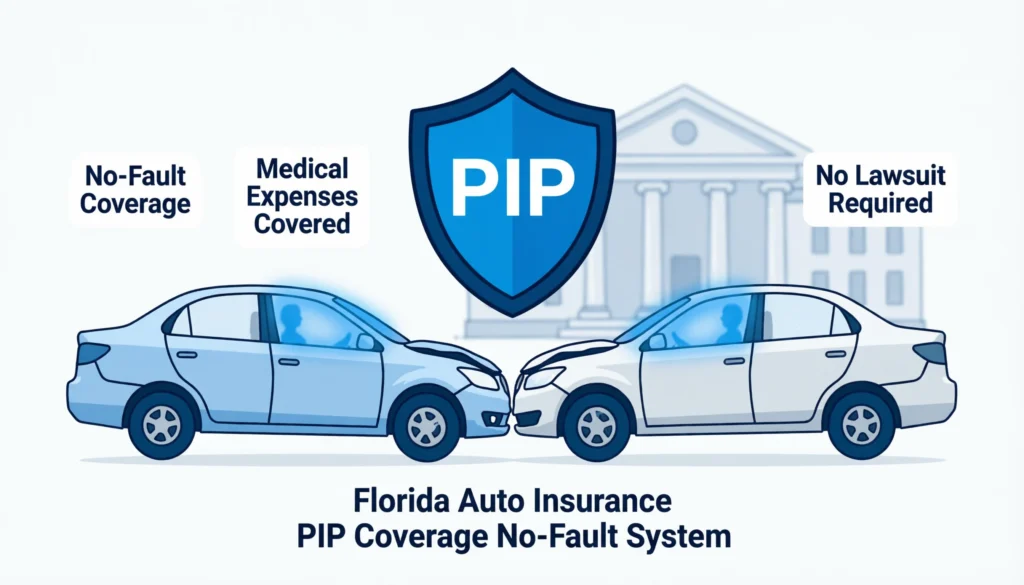
In Florida, “no fault” refers to the state’s auto insurance system, which requires drivers to carry Personal Injury Protection (PIP) insurance. Under this system, your own insurance pays for your medical expenses and lost wages after a car accident, regardless of who caused the crash.
If you’ve ever been in a car accident in Florida or are moving to the state, you’ve probably heard the term “no fault” tossed around by insurance agents, attorneys, or even friends. But what does it really mean? Unlike other states where the at-fault driver’s insurance typically pays for injuries and damages, Florida has a no-fault auto insurance system.
Under this system, your own insurance, through Personal Injury Protection (PIP), covers your medical bills and lost wages regardless of who caused the accident. While it may sound simple, the no-fault law has important rules, exceptions, and limits that every driver should understand.
In this article, we’ll break down what “no fault” means in Florida, how it works, when you can sue, common misconceptions, and tips to navigate the system effectively. By the end, you’ll have a clear, practical understanding of Florida’s unique auto insurance rules.
This concept often confuses drivers, accident victims, and even new residents. Understanding how no-fault insurance in Florida works can save you time, money, and legal stress after an accident.
Understanding Florida’s No-Fault Law
Florida is one of a few U.S. states that follow a no-fault auto insurance system. This law is designed to:
- Reduce lawsuits after minor accidents
- Speed up medical payments
- Ensure injured drivers get quick coverage
Instead of immediately suing the at-fault driver, you first turn to your own insurance for coverage.
Origin and Purpose of No-Fault Insurance in Florida
Florida adopted the no-fault system in the 1970s to address court overload and delays caused by accident-related lawsuits.
Why Florida Uses No-Fault Insurance
- Faster medical treatment after accidents
- Fewer small injury lawsuits
- Lower legal costs for drivers
- Guaranteed minimum coverage for everyone
Despite debate and proposed changes over the years, Florida’s no-fault system is still in effect today.
How No-Fault Insurance Works in Florida
Personal Injury Protection (PIP)
Every Florida driver must carry at least:
- $10,000 in Personal Injury Protection (PIP)
- $10,000 in Property Damage Liability (PDL)
PIP covers:
- 80% of medical expenses
- 60% of lost wages
- $5,000 in death benefits (if applicable)
This applies regardless of who caused the accident.
What PIP Does and Does Not Cover
What PIP Covers
- Emergency medical care
- Follow-up treatment
- Rehabilitation
- Partial lost income
- Medical transportation
When PIP Does NOT Cover
- Vehicle repairs
- Pain and suffering
- Property damage to others
- Serious or permanent injuries beyond limits
Example
| Accident Situation | Who Pays First | Coverage Used | Can You Sue? |
|---|---|---|---|
| Minor injury crash | Your insurer | PIP | No |
| Rear-end collision | Your insurer | PIP | No |
| Serious injury | At-fault driver | Bodily injury claim | Yes |
| Permanent disability | At-fault driver | Lawsuit allowed | Yes |
| Property damage | At-fault driver | PDL | Yes |
When Can You Sue Under Florida’s No-Fault Law?
Florida law allows you to step outside the no-fault system if injuries are serious.
You may sue if injuries include:
- Significant or permanent loss of a bodily function
- Permanent injury
- Significant scarring or disfigurement
- Death
In these cases, you may seek compensation for:
- Pain and suffering
- Emotional distress
- Future medical costs
Comparison: Florida No-Fault vs At-Fault States
| Feature | Florida (No-Fault) | At-Fault States |
|---|---|---|
| Who pays medical bills | Your insurer | At-fault driver’s insurer |
| Lawsuits allowed | Limited | Common |
| PIP required | Yes | No |
| Claim speed | Faster | Slower |
| Legal complexity | Lower | Higher |
Common Misunderstandings About No-Fault in Florida
1. “No fault means no one is responsible”
False. Fault still matters for:
- Property damage
- Serious injury lawsuits
2. “I can’t sue at all”
False. You can sue if injuries meet the serious injury threshold.
3. “No-fault covers car repairs”
False. PIP covers injuries, not vehicles.
Polite and Professional Alternatives to the Term “No-Fault”
In legal or professional writing, you may see:
- Personal Injury Protection system
- PIP-based insurance model
- Limited tort system
These terms refer to the same basic concept.
Real-World Usage of “No Fault” in Florida
You’ll commonly hear the term:
- In insurance policies
- During accident claims
- In legal consultations
- On Florida DMV and court documents
Example sentence:
- “Florida follows a no-fault insurance system, so your PIP coverage pays first.”
FAQs
1. What does no fault mean in Florida?
It means your own insurance pays medical expenses after an accident, regardless of who caused it.
2. Is Florida still a no-fault state?
Yes, Florida currently follows a no-fault auto insurance system.
3. Do I need PIP insurance in Florida?
Yes, PIP coverage is legally required for registered vehicles.
4. Can I sue the other driver in Florida?
Only if your injuries are serious or permanent.
5. Does no-fault apply to property damage?
No. Property damage claims are based on fault.
6. How much PIP coverage is required in Florida?
A minimum of $10,000.
7. Does no-fault insurance cover passengers?
Yes, passengers may be covered under PIP.
8. Is pain and suffering covered under no-fault?
No. Pain and suffering are only recoverable in serious injury cases.
Conclusion:
In Florida, “no fault” means your own insurance steps in first after a car accident, providing quick access to medical care through PIP coverage, regardless of who caused the crash. While it limits lawsuits for minor injuries, it does not eliminate fault entirely, especially in cases involving serious injuries or property damage.
Understanding Florida’s no-fault law helps drivers make smarter insurance decisions and avoid confusion during stressful situations after an accident.
Discover More Related Articles:
- Trabajo Spanish Meaning and Everyday Use for 2026
- TTV Mean in Fortnite: Why Gamers Keep Talking About It in 2026

Jessica Brown is a language-focused writer who creates well-researched articles on word meanings, abbreviations, and everyday expressions. She contributes to meanvoro.com, delivering simple, reliable, and reader-friendly content designed to make complex terms easy to understand.