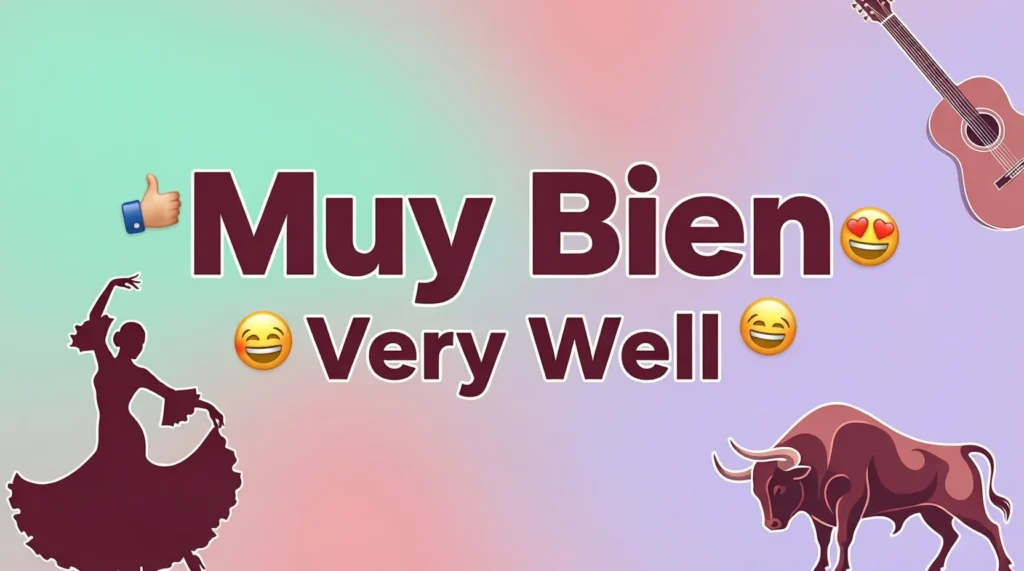
“Muy bien” is a Spanish phrase that literally translates to “very well” in English. It is commonly used to express approval, satisfaction, or agreement, and can be applied in both formal and casual conversations depending on the context.
Spanish is one of the most widely spoken languages in the world, and phrases like “Muy Bien” Mean in English are frequently used in daily interactions. Understanding what it means, when to use it, and how to respond appropriately can improve your Spanish communication skills and cultural awareness.
Origin of “Muy Bien”

The phrase muy bien comes from two Spanish words:
Together, they emphasize that something is done very well or is going satisfactorily. The structure follows a typical Spanish adjective-adverb combination, where the intensity of the quality (muy) is highlighted before the adjective or adverb (bien).
Historical Context:
Spanish evolved from Latin, and expressions like muy bien have been used for centuries to convey approval or positivity. The phrase has spread globally due to Spanish colonization and modern globalization, making it a common expression even outside Spanish-speaking countries.
Popularity and Real-World Usage
Muy bien is one of the most common positive expressions in Spanish. It is used in schools, workplaces, casual conversations, and even in formal settings.
- Everyday Conversation: People use it to agree or show something is satisfactory.
Example: “¿Cómo estás?” – “Muy bien.” (How are you? – Very well.) - Professional Settings: In meetings or presentations, muy bien can convey approval or confirmation.
Example: “El proyecto está terminado.” – “Muy bien, gracias por el esfuerzo.” (The project is finished. – Very well, thank you for your effort.) - Entertainment and Media: Songs, movies, and TV shows frequently feature muy bien to express excitement, praise, or acknowledgment.
In short, muy bien is versatile, polite, and widely understood, even among Spanish learners.
Examples
The tone and meaning of muy bien can change depending on the situation. Here’s a breakdown:
| Context | Example in Spanish | English Translation | Tone/Emotion |
|---|---|---|---|
| Friendly/Positive | “¡Lo hiciste muy bien!” | “You did very well!” | Encouraging, supportive |
| Neutral/Informative | “Muy bien, continuemos con la reunión.” | “Very well, let’s continue with the meeting.” | Polite, professional |
| Dismissive/Ironic | “Ah, muy bien…” | “Oh, very well…” | Slightly sarcastic or indifferent |
| Agreement | “¿Terminaste la tarea?” – “Sí, muy bien.” | “Did you finish your homework?” – “Yes, very well.” | Casual, conversational |
| Formal Praise | “Su presentación fue muy bien preparada.” | “Your presentation was very well prepared.” | Formal, professional |
Tips for Real-Life Usage:
- Pairing muy bien with a smile or nod makes it sound natural in casual conversations.
- Tone is key; without proper intonation, it could be interpreted as sarcastic.
- It can be used to compliment skills, agree politely, or acknowledge instructions.
Comparison with Related Spanish Terms
| Spanish Term | English Meaning | Usage Comparison |
|---|---|---|
| Bien | Well | Less intense than muy bien; used for basic approval. |
| Excelente | Excellent | Stronger than muy bien; high praise. |
| Perfecto | Perfect | Indicates perfection, often informal. |
| Muy bueno | Very good | Similar to muy bien but used more for objects or achievements rather than actions. |
Quick Tip: Use bien for casual confirmation, muy bien for polite approval, and excelente or perfecto for strong praise.
Alternate Meanings

While muy bien almost always means “very well”, context can slightly change its nuance:
- Approval – “That’s good” or “Sounds good.”
- Agreement – “Alright” or “Okay, understood.”
- Sarcasm – Can imply indifference or mild annoyance if spoken with a certain tone.
Polite and Professional Alternatives to “Muy Bien”
In formal or professional contexts, you might want to vary your language. Alternatives include:
- Está bien → “It’s fine”
- Perfecto → “Perfect”
- Excelente → “Excellent”
- De acuerdo → “Agreed” or “Okay”
These variations help you match the tone of your conversation without overusing muy bien.
Common Expressions Using “Muy Bien”
Spanish often combines muy bien with other words or phrases:
- ¡Muy bien hecho! → “Very well done!”
- ¡Muy bien, seguimos! → “Very well, let’s continue!”
- ¡Muy bien, gracias! → “Very well, thank you!”
- Muy bien, entonces… → “Alright then…”
These expressions are practical in daily life, from casual chats to classroom instructions.
FAQs
- What does “muy bien” literally mean in English?
It literally means “very well,” used to indicate approval, satisfaction, or agreement. - How do you pronounce “muy bien”?
Pronunciation: /mwee byen/ – “mwee” rhymes with “see,” “bien” rhymes with “yen.” - Can “muy bien” be used sarcastically?
Yes, depending on tone and context, it can convey mild sarcasm or indifference. - Is “muy bien” formal or informal?
It is versatile; appropriate in both casual and formal conversations. - What is a shorter alternative to “muy bien”?
Simply using bien works for casual approval or confirmation. - How do you respond to “muy bien”?
Responses include gracias (“thank you”), ¡perfecto! (“perfect!”), or me alegra (“I’m glad”). - Is there an emoji that fits “muy bien”?
👍, 😊, or 👏 can emphasize positivity when texting or online messaging. - Can “muy bien” be used in professional emails?
Yes, it’s polite and can be combined with other formal expressions like gracias or atentamente.
Practical Tips for Using “Muy Bien”
- Use it often to show positivity, agreement, or encouragement.
- Pay attention to tone – sarcasm or indifference can change its meaning entirely.
- Combine with gestures like nodding or smiling for conversational fluency.
Conclusion
Muy bien is more than just a Spanish phrase it’s a simple, versatile way to convey approval, agreement, or satisfaction. Whether you’re learning Spanish, communicating with friends, or navigating professional settings, understanding its meaning, context, and tone is essential.
Mastering muy bien will help you sound natural in Spanish, make conversations smoother, and express positivity effectively.
Search More Related Articles:
- UG Meaning in Texting :Insider Guide for Social Media Users (2026)
- YK Meaning in Texting, Chat, and Social Media (2026)

Jessica Brown is a language-focused writer who creates well-researched articles on word meanings, abbreviations, and everyday expressions. She contributes to meanvoro.com, delivering simple, reliable, and reader-friendly content designed to make complex terms easy to understand.