
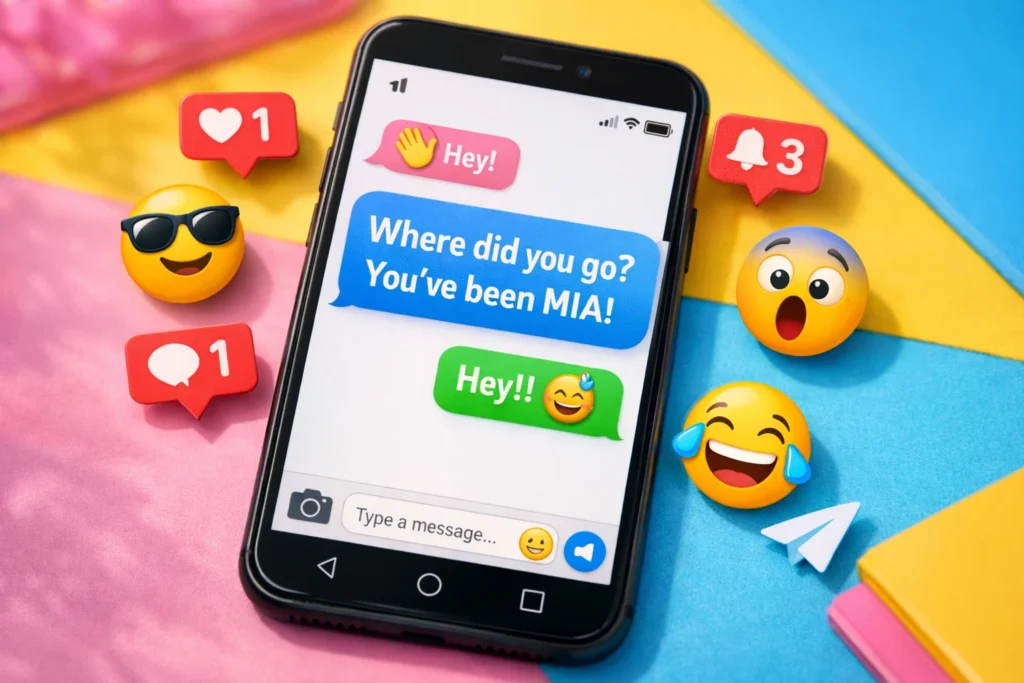
Definition
MIA in slang means “Missing in Action.”
It’s commonly used in texting and online conversations to describe someone who has disappeared, stopped replying, or hasn’t been seen or heard from for a while.
In the fast-moving world of texting and online conversations, slang terms pop up everywhere. One moment someone is chatting regularly, and the next they disappear and someone might say, “You’ve been MIA!”
But what exactly does MIA mean in slang? Is it negative, friendly, or just a casual way to call someone out?
Let’s break it down in simple terms so you can understand how MIA is used in texting, social media, and everyday conversations.
For example:
- “You’ve been MIA all week. Where were you?”
- “Sorry I went MIA yesterday. My phone died.”
In modern slang, the phrase is usually casual and friendly, though it can sometimes imply mild frustration if someone disappears without explanation.
What Does MIA Mean in Texting?
In texting, MIA simply means someone hasn’t been around or hasn’t responded for a while.
People often use it when:
- A friend hasn’t replied to messages
- Someone disappears from a group chat
- A person is inactive on social media
- Someone hasn’t shown up for a while
Example Text Messages
- “Bro you’ve been MIA since Friday 😅”
- “Why did you go MIA on us?”
- “Sorry I was MIA, work has been crazy.”
The tone usually depends on context it can be playful, curious, or slightly annoyed.
The Origin of MIA
The slang term MIA originally comes from military terminology.
MIA = Missing in Action
It was used during wars to describe soldiers who:
- Could not be located
- Were lost during combat
- Had an unknown status
Over time, the phrase moved into everyday language where people started using it metaphorically.
Instead of soldiers, it now refers to friends, coworkers, or online users who disappear temporarily.
How It Shifted Into Slang
| Stage | Meaning |
|---|---|
| Military term | Soldier missing during combat |
| Early pop culture | Someone unreachable |
| Modern slang | A person who disappeared from communication |
Today, it’s one of the most common internet slang phrases.
Why MIA Became Popular
Several factors helped MIA become widely used in modern conversations.
1. Social Media Culture
People notice when someone suddenly stops posting or replying.
Example:
- “She went MIA on Instagram for a month.”
2. Texting Habits
When someone normally replies quickly but suddenly disappears, people use MIA jokingly.
Example:
- “You went MIA after that message 👀”
3. Short and Easy to Type
Like many internet abbreviations, MIA is:
- Short
- Recognizable
- Easy to understand
Because of this, it spread quickly across messaging platforms.
Common Situations Where MIA Is Used
People use MIA in many everyday situations.
Someone Stops Replying
Example:
- “You went MIA in the middle of the conversation.”
Someone Hasn’t Been Seen in a While
Example:
- “Where have you been? You’ve been MIA!”
Someone Leaves a Group Chat
Example:
- “Jake has been MIA from the group lately.”
Social Media Absence
Example:
- “I went MIA from social media for mental health.”
Examples of MIA in Conversations
Below are real-world style examples showing how the slang is used.
| Situation | Example Sentence | Tone |
|---|---|---|
| Friendly teasing | “You went MIA on us last night 😂” | Playful |
| Concern | “Hey, you’ve been MIA lately. Everything okay?” | Caring |
| Mild annoyance | “You disappeared and went MIA again.” | Frustrated |
| Explanation | “Sorry I went MIA, I had exams.” | Neutral |
| Social media | “Taking a break and going MIA for a bit.” | Casual |
Tone and Meaning: Is MIA Rude?
Most of the time, MIA is not rude.
However, tone depends on context.
Friendly Tone
Used jokingly among friends.
Example:
- “Look who’s back after going MIA 😄”
Concerned Tone
Used when someone hasn’t been around.
Example:
- “You’ve been MIA for days. Are you okay?”
Slightly Negative Tone
Used when someone ignores messages.
Example:
- “You always go MIA when we need you.”
So while the phrase itself isn’t rude, the tone of the conversation matters.
MIA vs Similar Slang Terms
Many slang expressions describe disappearing or not replying. Here’s how MIA compares with them.
| Slang Term | Meaning | Example |
|---|---|---|
| MIA | Missing or absent from communication | “You’ve been MIA all week.” |
| Ghosting | Suddenly cutting off communication | “He ghosted me after the date.” |
| AFK | Away from keyboard (temporary absence) | “BRB, I’m AFK.” |
| Off the grid | Completely unreachable | “I went off the grid for the weekend.” |
| Silent mode | Not responding to messages | “Sorry, my phone was on silent mode.” |
Key Difference
- MIA → temporary absence
- Ghosting → intentional ignoring
Alternate Meanings of MIA
While slang usually means “missing in action,” MIA can also have other meanings depending on context.
1. Airport Code
MIA is the airport code for Miami International Airport.
Example:
- “My flight lands at MIA at 6 PM.”
2. Celebrity Name
M.I.A. is also the stage name of the British rapper and singer Mathangi Arulpragasam.
3. Medical Context
Sometimes used informally in workplaces to mean someone is absent without notice.
Example:
- “The manager was MIA today.”
Polite or Professional Alternatives to MIA
Because MIA is slang, it might not always be appropriate in formal communication.
Here are some professional alternatives.
| Casual Phrase | Professional Alternative |
|---|---|
| You’ve been MIA | You’ve been unavailable |
| He went MIA | He has been absent |
| She’s MIA today | She is not present today |
| I went MIA | I was unavailable |
Example (professional email):
Instead of:
“Sorry I went MIA yesterday.”
Say:
“I apologize for being unavailable yesterday.”
How to Use MIA Naturally
If you want to sound natural when texting or posting online, here are a few tips.
1. Use It Casually
It works best in informal settings.
Example:
- “I went MIA this weekend.”
2. Avoid Overusing It
Using it too often may sound repetitive.
3. Add Context
Explain why you disappeared.
Example:
- “Sorry I went MIA — I was traveling.”
Social Media Examples
MIA is very common on platforms like:
- Snapchat
- Twitter/X
- TikTok
Caption Examples
- “Went MIA for a few days but I’m back.”
- “Sorry for being MIA, life got busy.”
- “Taking a short MIA break from social media.”
FAQs:
What does MIA mean in slang?
MIA means “Missing in Action.” In slang, it refers to someone who has disappeared, stopped replying to messages, or hasn’t been around for a while.
What does MIA mean in texting?
In texting, MIA describes someone who hasn’t responded or has been inactive in a conversation for some time.
Is MIA rude to say to someone?
No, MIA is usually not rude. It’s often used in a friendly or joking way, though it can sound slightly critical depending on the tone and situation.
What does “going MIA” mean?
“Going MIA” means becoming unavailable or disappearing temporarily, such as not replying to texts or being absent from social media.
Is MIA the same as ghosting?
No. MIA usually suggests a temporary absence, while ghosting means intentionally cutting off communication completely.
What does MIA mean on social media?
On social media, MIA refers to someone who hasn’t posted or interacted online for a while.
Can MIA be used in professional communication?
It’s generally better to avoid slang like MIA in professional settings. Instead, use phrases like “unavailable,” “absent,” or “away.”
Where did the term MIA originate?
The term MIA comes from military language, where it originally meant “Missing in Action,” referring to soldiers whose whereabouts were unknown.
Conclusion
The slang term MIA is a simple yet widely used way to describe someone who has temporarily disappeared from communication. Originally a military term meaning “Missing in Action,” it has evolved into a casual expression used in texting, social media, and everyday conversations.
Today, people use MIA to:
- Playfully call out friends who disappear
- Explain their own absence
- Describe someone who hasn’t been around for a while
The key thing to remember is that MIA usually implies a temporary absence, not permanent disappearance. Tone and context determine whether it sounds playful, concerned, or slightly frustrated.
When used naturally and appropriately, MIA is a fun, simple piece of modern internet slang that keeps conversations relatable and expressive.
Discover More Related Articles:
- VOC Paint Meaning: Low-VOC vs Traditional Paints Compared (2026)
- The Meaning of the Rainbow in the Bible : Explained for Christians (2026)

Madison Taylor is an experienced content writer who focuses on researching and explaining word meanings, slang, and texting terms. She writes for meanvoro.com, creating clear and accurate to help readers understand language easily.