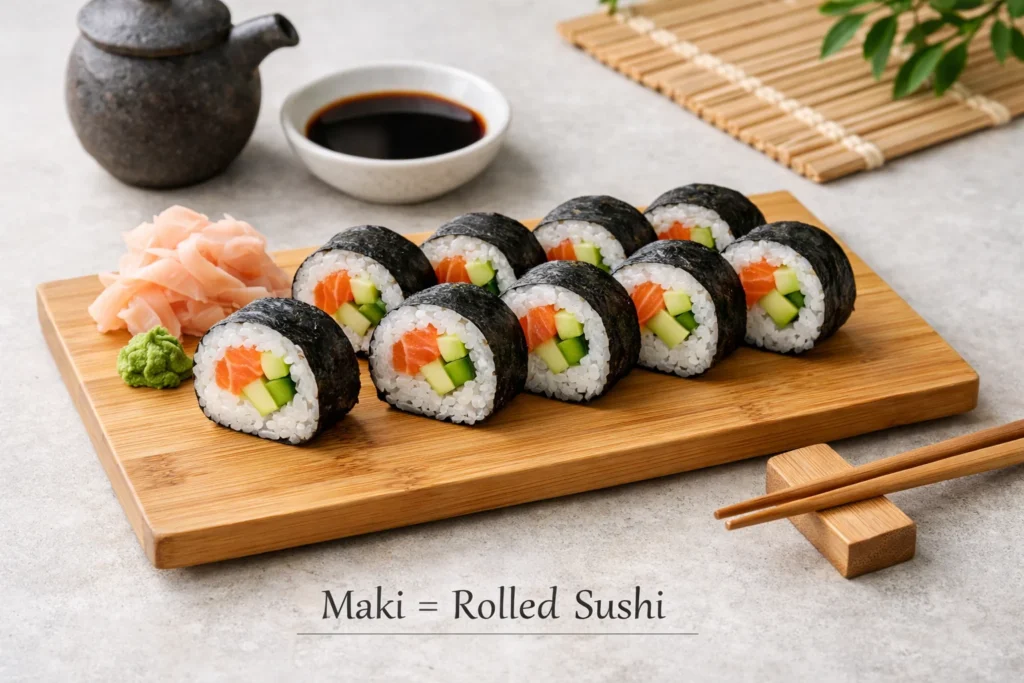
Maki in sushi refers to a type of rolled sushi made by layering rice and fillings (such as fish or vegetables) onto seaweed (nori), then rolling it into a cylinder and slicing it into bite-sized pieces. The word “maki” comes from the Japanese verb meaning “to roll.”
If you’ve ever browsed a sushi menu and seen terms like maki, uramaki, or futomaki, you might have wondered what exactly makes maki different from other sushi types. While many people use “sushi” as a catch-all term, maki is actually a specific category within sushi.
In this article, we’ll explore what maki means, its origin, different types, how it compares to other sushi styles, and how to order it confidently.
Origin of the Word “Maki”
The word maki comes from the Japanese verb “maku,” which means “to roll” or “to wrap.”
In Japan, rolled sushi is known as makizushi, which translates literally to “rolled sushi.” Over time, the shorter term maki became widely used internationally, especially on restaurant menus outside Japan.
Rolled sushi became popular during the Edo period (1603–1868), when sushi evolved into a faster, more portable food option in urban areas like Tokyo.
What Is Maki Sushi?
Maki is made using:
- Sushi rice (seasoned with vinegar)
- Nori (dried seaweed sheet)
- Fillings (fish, seafood, vegetables, or cooked ingredients)
- Bamboo rolling mat (used to shape the roll)
The ingredients are placed on the nori sheet, rolled tightly into a cylinder, and sliced into 6 to 8 pieces.
Key characteristics of maki:
- Cylindrical shape
- Seaweed on the outside (traditional style)
- Bite-sized pieces
- Often served with soy sauce, wasabi, and pickled ginger
Types of Maki
Not all maki rolls are the same. Here are the most common types:
| Type of Maki | Description | Common Fillings |
|---|---|---|
| Hosomaki | Thin roll with one main filling | Tuna, cucumber, avocado |
| Futomaki | Thick roll with multiple fillings | Egg, vegetables, seafood |
| Uramaki | Inside-out roll (rice on outside) | California roll, spicy tuna |
| Temaki | Hand roll shaped like a cone | Salmon, crab, vegetables |
1. Hosomaki
Small, simple rolls with one ingredient. Great for beginners.
2. Futomaki
Thicker rolls packed with multiple flavors.
3. Uramaki
Popular outside Japan. Rice is on the outside instead of seaweed.
4. Temaki
Rolled by hand into a cone shape, not sliced.
Examples of Maki in Real Life
Here’s how maki appears in everyday dining:
| Situation | Example Order | What It Means |
|---|---|---|
| Beginner-friendly | Cucumber maki | Simple vegetarian roll |
| Popular choice | California maki | Crab, avocado, cucumber |
| Spicy option | Spicy tuna maki | Tuna mixed with spicy sauce |
| Vegetarian | Avocado maki | Creamy, mild flavor |
| Party platter | Mixed maki | Variety of different rolls |
Maki vs Other Types of Sushi
Many people confuse maki with other sushi styles. Here’s how they differ:
| Sushi Type | Shape | Seaweed Placement | Description |
|---|---|---|---|
| Maki | Rolled, sliced | Outside (usually) | Rolled sushi |
| Nigiri | Oval rice base | No wrapping | Fish placed on top of rice |
| Sashimi | No rice | None | Sliced raw fish only |
| Uramaki | Rolled, sliced | Inside | Rice outside, seaweed inside |
Quick Tip:
If it’s sliced into round pieces, it’s likely maki.
Flavor and Texture of Maki
Maki offers balanced textures:
- Soft rice
- Slightly chewy seaweed
- Fresh or cooked filling
- Creamy or crunchy additions
Because of this balance, maki is often considered the most approachable sushi type for beginners.
Is Maki Always Raw?
No. Maki can include:
- Raw fish (like tuna or salmon)
- Cooked seafood (shrimp, crab)
- Vegetarian ingredients
- Fried or tempura-style fillings
This makes maki very versatile.
Polite Ordering Tips at a Sushi Restaurant
If you’re dining out:
- “I’d like a tuna maki roll, please.”
- “Can I get a mixed maki platter?”
- “Do you have vegetarian maki options?”
In Japan, saying “makizushi” is more traditional, but internationally, “maki roll” is widely accepted.
Cultural Notes
In Japan, simpler rolls like hosomaki are more traditional.
Outside Japan, creative versions like California rolls and spicy mayo variations are extremely popular.
Western sushi culture often adds:
- Cream cheese
- Fried toppings
- Sweet sauces
Traditional Japanese maki is typically simpler and lighter.
FAQs
- What does maki literally mean?
It means “roll” in Japanese. - Is maki the same as sushi?
No. Maki is one type of sushi. - What is the difference between maki and a roll?
“Maki” literally means roll, so they are often the same. - Is maki healthy?
It can be, especially vegetable or simple fish rolls. - Does maki always contain raw fish?
No. Many maki rolls use cooked or vegetarian fillings. - What is the most popular maki roll?
The California roll is one of the most popular worldwide. - How many pieces are in a maki roll?
Typically 6 to 8 pieces. - Is maki good for beginners?
Yes. It’s often the easiest sushi style to start with.
Practical Tips for Choosing Maki
- Start with simple rolls like cucumber or avocado if you’re new.
- Try spicy tuna if you like bold flavors.
- Choose futomaki if you want variety in one roll.
- Ask your server for recommendations if unsure.
- Share a mixed platter to explore different types.
Conclusion
Maki is one of the most recognizable and beginner-friendly types of sushi. The word literally means “roll,” and it describes sushi that is wrapped in seaweed, rolled into a cylinder, and sliced into bite-sized pieces.
Understanding maki helps you order confidently and appreciate the variety within sushi culture.
Discover More Related Articles:
- Lamentation Mean in the Bible: Why It Matters for Christians in 2026
- Adam Mean in the Bible: Symbolism, and Impact in 2026

Jessica Brown is a language-focused writer who creates well-researched articles on word meanings, abbreviations, and everyday expressions. She contributes to meanvoro.com, delivering simple, reliable, and reader-friendly content designed to make complex terms easy to understand.