
Definition
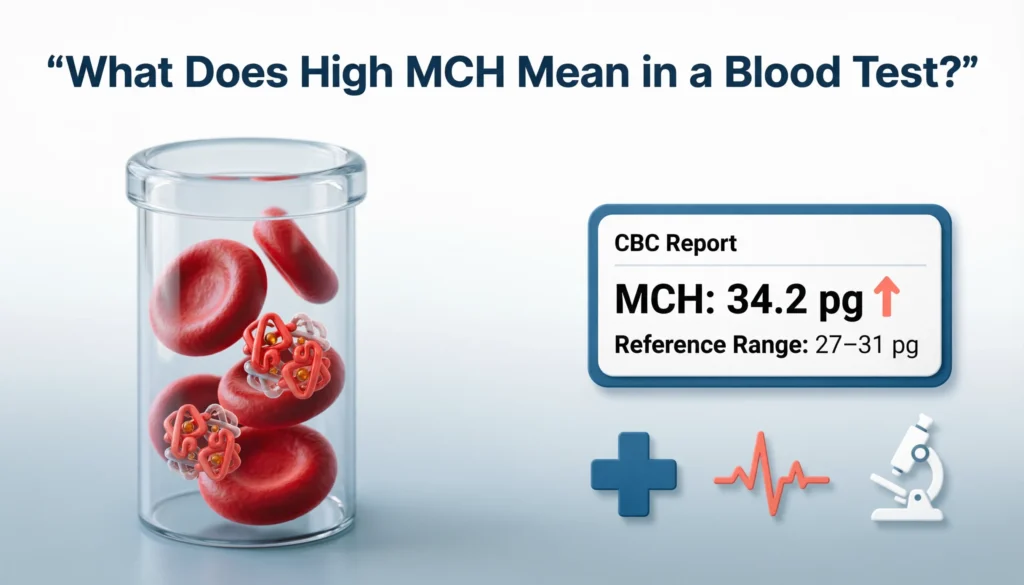
High MCH in a blood test means that the average amount of hemoglobin inside your red blood cells is higher than normal.
MCH stands for Mean Corpuscular Hemoglobin, a measurement included in a Complete Blood Count (CBC) test. When MCH levels are high, it usually indicates that red blood cells are larger than normal or contain more hemoglobin than typical.
Normal MCH levels generally range from 27 to 33 picograms (pg) per cell. Values above this range may suggest certain medical conditions such as vitamin deficiencies, anemia, or liver disease, although the interpretation always depends on other blood test results and medical context.
Understanding MCH in a Blood Test
A Complete Blood Count (CBC) is one of the most common laboratory tests doctors order to evaluate overall health. It measures different components of your blood, including:
- Red blood cells (RBCs)
- White blood cells (WBCs)
- Hemoglobin
- Hematocrit
- Platelets
- Red blood cell indices like MCH, MCV, and MCHC
Mean Corpuscular Hemoglobin (MCH) specifically measures how much hemoglobin is present in each red blood cell on average.
Hemoglobin is important because it:
- Carries oxygen from your lungs to the rest of your body
- Helps transport carbon dioxide back to the lungs
- Supports energy production in cells
If your MCH is high, it means each red blood cell contains more hemoglobin than usual, which often happens when the cells themselves are larger than normal.
What Is the Normal MCH Range?
Doctors interpret MCH levels using reference ranges. While values can vary slightly depending on the laboratory, typical ranges are:
| MCH Level | Measurement | Meaning |
|---|---|---|
| Low MCH | Below 27 pg | Red blood cells contain less hemoglobin than normal |
| Normal MCH | 27–33 pg | Healthy amount of hemoglobin per red blood cell |
| High MCH | Above 33 pg | Red blood cells contain more hemoglobin than normal |
Example:
If a CBC result shows MCH = 35 pg, this would typically be considered high MCH.
However, doctors rarely interpret MCH alone. They usually compare it with:
- MCV (Mean Corpuscular Volume)
- MCHC (Mean Corpuscular Hemoglobin Concentration)
- Hemoglobin levels
- RBC count
Together, these values help identify possible health conditions.
Why Is MCH Important?
MCH helps healthcare professionals understand how well red blood cells carry oxygen throughout the body.
When MCH is abnormal, it can signal:
- Problems with red blood cell production
- Nutritional deficiencies
- Bone marrow disorders
- Chronic illnesses
In many cases, MCH is especially useful in diagnosing different types of anemia.
Common Causes of High MCH
High MCH levels are often associated with larger-than-normal red blood cells, a condition known as macrocytosis.
Here are some common causes.
1. Vitamin B12 Deficiency
One of the most frequent reasons for high MCH is vitamin B12 deficiency.
Vitamin B12 is essential for:
- Red blood cell production
- DNA synthesis
- Nervous system function
When B12 levels are low, red blood cells grow larger and contain more hemoglobin.
Common symptoms include:
- Fatigue
- Weakness
- Pale skin
- Numbness or tingling
- Memory problems
2. Folate (Vitamin B9) Deficiency
Folate deficiency can also cause macrocytic anemia, which leads to high MCH.
Possible causes of folate deficiency include:
- Poor diet
- Alcohol use
- Certain medications
- Pregnancy
- Digestive disorders
Foods rich in folate include:
- Leafy green vegetables
- Beans
- Citrus fruits
- Fortified cereals
3. Liver Disease
Liver problems can affect the structure and size of red blood cells, leading to elevated MCH levels.
Common liver-related conditions linked to high MCH include:
- Fatty liver disease
- Hepatitis
- Cirrhosis
The liver plays an important role in metabolism and blood production, so disorders can influence blood cell measurements.
4. Alcohol Consumption
Regular or heavy alcohol consumption can cause red blood cells to become larger than normal.
Even without liver disease, alcohol may:
- Interfere with vitamin absorption
- Affect bone marrow function
- Alter red blood cell development
This can result in higher MCH and MCV levels.
5. Hypothyroidism
An underactive thyroid gland may also contribute to macrocytosis and high MCH.
Hypothyroidism can slow down many body processes, including:
- Red blood cell production
- Metabolism
- Oxygen transport
Symptoms may include:
- Weight gain
- Fatigue
- Cold sensitivity
- Dry skin
6. Certain Medications
Some medications can affect red blood cell formation.
Examples include:
- Chemotherapy drugs
- Anticonvulsants
- HIV medications
These medications may lead to larger red blood cells, increasing MCH levels.
Symptoms Associated With High MCH
High MCH itself does not cause symptoms directly. Instead, symptoms come from the underlying condition.
Possible symptoms include:
- Fatigue
- Weakness
- Shortness of breath
- Pale or yellowish skin
- Dizziness
- Heart palpitations
- Difficulty concentrating
If these symptoms occur along with abnormal blood test results, doctors usually perform additional tests.
High MCH vs Other Blood Test Markers
MCH is often confused with other red blood cell indices. Understanding the differences can help make sense of blood test results.
| Blood Marker | Full Name | What It Measures |
|---|---|---|
| MCH | Mean Corpuscular Hemoglobin | Average hemoglobin per red blood cell |
| MCV | Mean Corpuscular Volume | Size of red blood cells |
| MCHC | Mean Corpuscular Hemoglobin Concentration | Hemoglobin concentration in red blood cells |
| RBC | Red Blood Cell Count | Number of red blood cells in blood |
Key Differences
- MCH measures hemoglobin amount in each cell.
- MCV measures cell size.
- MCHC measures hemoglobin concentration.
High MCH usually appears alongside high MCV, indicating larger red blood cells.
Real-World Example of High MCH in Lab Results
Below is a simplified example of a blood test result.
| Test | Result | Normal Range | Interpretation |
|---|---|---|---|
| Hemoglobin | 11.5 g/dL | 12–16 g/dL | Slightly low |
| MCV | 102 fL | 80–100 fL | High |
| MCH | 35 pg | 27–33 pg | High |
| MCHC | 33 g/dL | 32–36 g/dL | Normal |
Interpretation:
These results may suggest macrocytic anemia, possibly caused by vitamin B12 or folate deficiency.
A doctor would likely order additional tests to confirm the cause.
How Doctors Diagnose the Cause of High MCH
If your MCH level is high, doctors may recommend additional tests such as:
- Vitamin B12 blood test
- Folate level test
- Thyroid function test
- Liver function tests
- Peripheral blood smear
- Reticulocyte count
These tests help identify the underlying reason for abnormal red blood cell measurements.
How High MCH Is Treated
Treatment depends on the underlying cause.
Common treatments include:
1. Vitamin supplements
- Vitamin B12 injections or tablets
- Folate supplements
2. Dietary changes
Increasing foods rich in:
- Vitamin B12 (meat, eggs, dairy)
- Folate (leafy greens, beans)
3. Managing underlying conditions
Treating conditions such as:
- Thyroid disorders
- Liver disease
- Alcohol-related health issues
4. Medication adjustments
If medications are causing high MCH, doctors may change or adjust them.
Lifestyle Tips to Support Healthy Blood Levels
Healthy habits can help maintain balanced blood values.
Consider these tips:
- Eat a balanced diet rich in vitamins
- Limit alcohol intake
- Stay hydrated
- Exercise regularly
- Get regular medical checkups
- Follow your doctor’s recommendations
Alternate Meanings of MCH
In medical contexts, MCH almost always refers to Mean Corpuscular Hemoglobin.
However, in other fields the abbreviation may mean different things, such as:
- Manufactured Chemical Handling
- Mental Health Counseling (MHC)
In blood tests and healthcare discussions, the meaning is always related to red blood cells and hemoglobin levels.
FAQs
1. Is high MCH dangerous?
High MCH itself is not dangerous, but it may indicate underlying conditions such as vitamin deficiencies, anemia, or liver disease. Doctors evaluate it alongside other blood test results.
2. What causes MCH to be high?
Common causes include:
- Vitamin B12 deficiency
- Folate deficiency
- Liver disease
- Alcohol consumption
- Hypothyroidism
- Certain medications
3. Can dehydration cause high MCH?
Dehydration usually affects other blood markers more than MCH. However, severe dehydration may slightly alter blood test values.
4. What does high MCH and high MCV mean together?
High MCH combined with high MCV often indicates macrocytic anemia, where red blood cells are larger than normal.
5. Can high MCH be temporary?
Yes. Temporary changes may occur due to:
- Illness
- Medications
- Nutritional deficiencies
Once the cause is treated, levels often return to normal.
6. Should I worry if my MCH is slightly high?
A slightly elevated MCH may not be serious, especially if other blood markers are normal. Doctors typically evaluate the complete blood count before diagnosing any condition.
7. How can I lower high MCH naturally?
You can support healthy levels by:
- Eating foods rich in vitamin B12 and folate
- Limiting alcohol
- Treating underlying medical conditions
- Following medical advice
8. What foods help improve blood health?
Foods rich in essential nutrients include:
- Spinach
- Lentils
- Eggs
- Fish
- Red meat
- Fortified cereals
- Citrus fruits
These nutrients support healthy red blood cell production.
Conclusion
Understanding what high MCH means in a blood test can help you better interpret your lab results and overall health.
MCH measures the average amount of hemoglobin in each red blood cell, and higher levels usually indicate that the cells are larger than normal. While this may sound concerning, high MCH is typically a clue rather than a diagnosis.
Common causes include vitamin B12 deficiency, folate deficiency, liver disease, alcohol use, and thyroid disorders. Doctors evaluate MCH alongside other blood markers like MCV and MCHC to determine the underlying issue.
The good news is that many causes of high MCH are treatable through diet, supplements, or medical care. If your blood test shows elevated MCH, the best step is to consult a healthcare professional who can interpret the results and recommend appropriate treatment.
Regular checkups, a balanced diet, and healthy lifestyle habits can go a long way toward maintaining optimal blood health and overall well-being.
Discover More Related Articles:

Jessica Brown is a language-focused writer who creates well-researched articles on word meanings, abbreviations, and everyday expressions. She contributes to meanvoro.com, delivering simple, reliable, and reader-friendly content designed to make complex terms easy to understand.