

GP in football stands for “Games Played.” It represents the total number of matches a player, team, or coach has participated in during a specific season or career.
If you’re a football fan or just diving into sports discussions online, you’ve likely come across the abbreviation GP. But what does it actually mean in football? 🤔 Understanding these short, jargon-like terms can make following games, analyzing stats, or participating in fantasy leagues much easier.
This simple abbreviation is one of the most common statistics used in football reporting, fantasy leagues, and sports analytics. Knowing what GP means helps you interpret player stats, evaluate performance trends, and compare athletes accurately.
In this article, we’ll break down GP in football, explore its origins, real-world usage, examples, comparisons with similar terms, and provide practical tips for understanding player statistics.
Origin of GP in Football
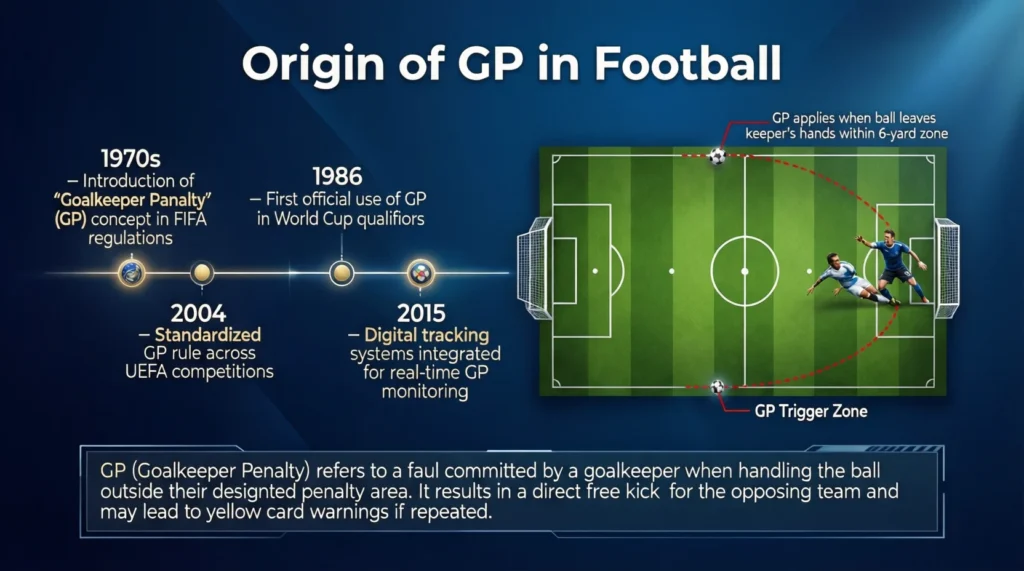
The term GP comes directly from standard sports statistics terminology. It has its roots in traditional record-keeping, where concise abbreviations were used to save space in printed scorecards, match reports, and sports almanacs.
- Historical Context: Sports statisticians in the early 20th century began using abbreviations like GP (Games Played), G (Goals), A (Assists), and W (Wins) to efficiently track player and team performances.
- Popularity: As football became globally popular, these abbreviations carried over into digital platforms, fantasy football leagues, and mainstream sports media.
- Modern Usage: Today, GP is universally recognized in football stats tables, match reports, fantasy football apps, and sports analytics dashboards.
How GP Is Used in Football
GP is a crucial statistic in evaluating players and teams. Here’s how it’s commonly used:
- Tracking Player Participation
- Shows how many matches a player has played in a season or career.
- Useful for determining player consistency and reliability.
- Comparing Player Performance
- GP allows analysts to compare goal rates, assists, and other metrics per game.
- Example: A striker with 10 goals in 20 GP has a higher goal-per-game rate than a player with 10 goals in 30 GP.
- Fantasy Football Relevance
- Many fantasy leagues use GP to assess player availability.
- Players with higher GP stats are more likely to earn points consistently.
- Team Analytics
- Coaches track team GP to evaluate squad rotation and player fatigue.
- Teams with players having low GP might struggle with cohesion or experience.
Examples of GP in Context
Here are some practical examples to help you see GP in action:
| Player Name | GP (Games Played) | Goals | Assists | Notes |
|---|---|---|---|---|
| Lionel Messi | 34 | 25 | 18 | High participation, key player |
| Mohamed Salah | 32 | 22 | 10 | Slightly fewer games due to rotation |
| Young Squad Player | 12 | 2 | 1 | Low GP, still developing |
Example Sentences:
- Neutral: “Messi’s GP this season is 34, showing his consistency.”
- Friendly: “Salah is always on the pitch—32 GP, what a machine! ⚡”
- Critical/Dismissive: “The young player only has 12 GP; he’s not contributing much yet.”
GP Compared With Related Terms
GP is often seen alongside other abbreviations in football stats. Understanding the differences can prevent confusion:
| Abbreviation | Meaning | Comparison with GP |
|---|---|---|
| G | Goals | Measures scoring, GP measures participation |
| A | Assists | Tracks team contribution, not games played |
| W | Wins | Reflects team success, GP counts appearances |
| MP | Matches Played | Essentially the same as GP, sometimes used in European leagues |
| P | Points | Total points from wins/draws; unrelated to GP |
Tip: GP is universal, but some leagues or websites may use MP instead. Always check the table legend.
Alternate Meanings of GP
While GP primarily means “Games Played” in football, it can have other meanings in different contexts:
- General Practitioner (Medicine) – unrelated to sports
- Grand Prix (Motorsport) – racing context
- Game Point (Tennis/Volleyball) – different sports usage
Professional Alternatives:
- In formal sports reports, you might see “Appearances” instead of GP: “Lionel Messi made 34 appearances this season.”
Here are some frequently asked questions from football fans and fantasy players:
Practical Tips for Using GP Stats
- Combine GP with other stats: Goals, assists, and minutes played provide deeper insights.
- Check the competition scope: Clarify whether GP includes all competitions or league games only.
- Track trends: Compare GP over multiple seasons to see consistency or injury patterns.
- Fantasy Football Strategy: Prioritize players with high GP for consistent point scoring.
- Avoid misinterpretation: GP alone doesn’t reflect quality; combine it with performance metrics.
FAQs
1. Does GP include appearances as a substitute?
Yes! Any time a player takes part in a match, even if they come on as a substitute, it counts toward their GP.
2. Is GP the same as MP?
Basically, yes. Some leagues use “Matches Played” (MP) instead of GP, but both track the number of games a player has participated in.
3. Does GP reset every season?
It can. GP can refer to a single season or a player’s career total, depending on the stats table you’re looking at.
4. Can a player have 0 GP?
Absolutely. If a player misses all matches due to injury, suspension, or not being selected, their GP for that season would be zero.
5. How is GP used in fantasy football?
GP helps you see how often a player is likely to be on the pitch. Players with higher GP stats are usually more reliable for earning points consistently.
6. Does GP include cup matches or only league games?
It depends on the source. Some stats include all competitions, while others count only league matches. Always check what the table specifies.
7. Why is GP important for evaluating players?
GP shows how consistent and fit a player is. Someone with a high GP is generally reliable and less likely to miss matches.
8. Can GP indicate a player’s experience?
Yes. Players with more GP over their career typically have more professional experience and exposure in matches.
Conclusion
Understanding GP in football is essential for fans, analysts, and fantasy players alike. It’s a simple abbreviation, but it conveys a lot about a player’s participation, consistency, and experience. Whether you’re comparing stats, building a fantasy team, or analyzing team performance, GP is a foundational metric.
By keeping an eye on GP, you can better understand football statistics, make informed fantasy picks, and impress your friends with your stat-savvy insights. ⚽📊
Search More Related Articles :
- BOT Mean in Baseball: Complete Guide for Fans & Players (2026)
- GIR Mean in Golf: Tips to Hit More Greens in Regulation (2026)

Jessica Brown is a language-focused writer who creates well-researched articles on word meanings, abbreviations, and everyday expressions. She contributes to meanvoro.com, delivering simple, reliable, and reader-friendly content designed to make complex terms easy to understand.