
Definition:
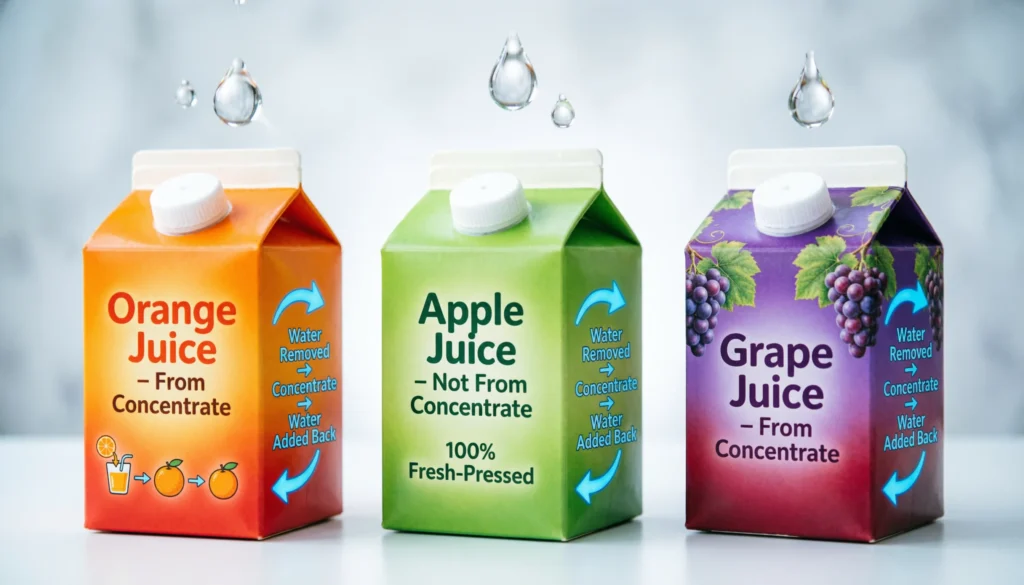
Concentrate in juice refers to a form of juice where most of the water content has been removed to create a more compact, shelf-stable product. To consume, water is usually added back to restore the juice to its original flavor and consistency.
Whether you’re reading labels at the grocery store or trying to understand why some juices taste sweeter than others, knowing what “concentrate” means can help you make informed choices. 🍊🥤
Origin of Juice Concentrate
Juice concentrate has a history dating back to the early 20th century. The process was first developed as a way to preserve fruit juice without refrigeration, especially during transportation and storage.
- Early 1900s: Scientists discovered that removing water from juice extended shelf life.
- World War II: Concentrated juice became popular as a compact, vitamin-rich food source for soldiers.
The popularity of concentrate grew because it allows producers to ship juice more economically and store it longer without losing most of the original flavor.
How Concentrate Works
The process of making juice concentrate is fairly straightforward:
- Extraction: Juice is squeezed from fresh fruits.
- Filtration: Pulp and solids are removed for a smoother liquid.
- Evaporation: Most of the water is removed, leaving a thicker, concentrated juice.
- Storage: The concentrate can be frozen or stored in cans for extended shelf life.
This process preserves the flavor, vitamins, and natural sugars, although some delicate nutrients like vitamin C may degrade slightly during concentration.
Real-World Usage
Juice concentrate is everywhere even if you don’t realize it!
- Smoothies: Pre-made smoothies often use concentrate to intensify flavor and reduce bulk.
- Cooking & Baking: Concentrate can add fruit flavor without adding excess water, perfect for sauces, marinades, and desserts.
- Commercial Beverages: Soft drinks, fruit punches, and cocktails frequently include juice from concentrate.
Examples of Juice Concentrate
Here’s a helpful table showing examples of common juice types and how concentrate works for each:
| Juice Type | From Concentrate | Not From Concentrate | Notes / Context |
|---|---|---|---|
| Orange Juice | Reconstituted with water, often frozen or refrigerated | Freshly squeezed, pasteurized | From concentrate may taste sweeter 🍊 |
| Apple Juice | Thick syrup-like concentrate shipped in cans | Pressed fresh and bottled | Concentrate is easier to store and transport |
| Grape Juice | Often used in commercial beverages and wines | Fresh grape juice | Concentrate enhances flavor intensity |
| Cranberry Juice | Highly tart in concentrate form, diluted for drinking | Raw or pressed | Concentrate allows long-term storage without preservatives |
Example in context:
- Friendly tone: “I bought orange juice from concentrate just add water and it’s ready! 🥤”
- Neutral tone: “Apple juice from concentrate is common in most supermarkets.”
- Negative/dismissive tone: “Fresh juice tastes better; concentrate just feels processed.”
Comparison with Related Terms
Understanding juice labels can be confusing. Here’s a comparison:
| Term | Meaning | Usage Example |
|---|---|---|
| From Concentrate | Juice with water removed, then later re-added | “Orange juice from concentrate” |
| Not From Concentrate / Fresh | Juice squeezed and pasteurized without water removal | “Freshly squeezed apple juice” |
| Juice Cocktail / Drink | Contains less than 100% juice; often blended with water or sugar | “Grape juice cocktail” |
Alternate Meanings of “Concentrate”
While in juice, concentrate refers to water removal, the term “concentrate” can also mean:
- Focus / Attention: “I need to concentrate on my work.”
- Substance / Extract: A highly potent form of any liquid, such as cannabis concentrate.
In juice context, it’s always about reducing water content to preserve and intensify flavor.
Polite & Professional Alternatives
If you want to sound more neutral or professional when describing juice concentrate:
- Reconstituted juice – emphasizes that water is added back.
- Filtered and concentrated juice – highlights the process.
- Packaged juice for long-term storage – emphasizes convenience over processing.
FAQs
- Is juice from concentrate less healthy than fresh juice?
Not necessarily. It retains most vitamins and minerals but may lose some vitamin C during processing. - How do I know if juice is from concentrate?
Check the label it will usually say “from concentrate.” - Can I drink concentrate without adding water?
Technically yes, but it will be extremely sweet and thick. Reconstitution is recommended. - Why does juice from concentrate taste sweeter?
Removing water concentrates natural sugars, making the flavor more intense. - Is frozen juice concentrate better than shelf-stable juice?
Frozen concentrate often preserves more flavor and nutrients than long-term canned versions. - Can juice concentrate be used in cooking?
Absolutely! It’s perfect for sauces, marinades, and desserts. - What is the difference between concentrate and juice cocktail?
Juice cocktail contains less than 100% juice and often added sugar, whereas concentrate is still 100% juice before reconstitution. - Does concentrate affect shelf life?
Yes! Concentrated juice lasts longer and is easier to transport without refrigeration.
Practical Tips for Using Juice Concentrate
- Always read the label to know how much water to add.
- Use concentrate in smoothies to save space and boost flavor.
- Consider taste: concentrate can be sweeter or slightly less fresh tasting than “not from concentrate” juice.
Conclusion
Juice concentrate is a clever, practical way to enjoy fruit flavors conveniently. By understanding what “from concentrate” means, you can choose the right juice for drinking, cooking, or baking. 🍎🍊
Next time you’re at the grocery store, you’ll confidently know whether that carton of orange juice is concentrated or freshly squeezed and why it matters!
Discover More Related Articles:
- Perseverance Mean in the Bible: Lessons from Paul, Job, and Jesus for 2026
- Subdue Meaning in the Bible: Lessons for 2026

Jessica Brown is a language-focused writer who creates well-researched articles on word meanings, abbreviations, and everyday expressions. She contributes to meanvoro.com, delivering simple, reliable, and reader-friendly content designed to make complex terms easy to understand.