
Definition:
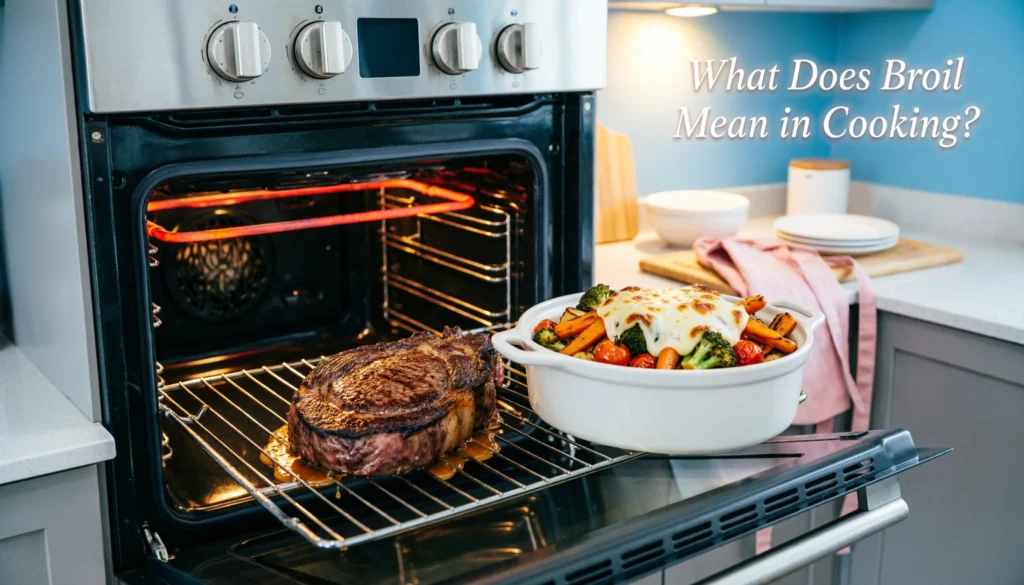
Broil (verb): In cooking, to broil means to cook food using direct, high heat from above, typically in an oven or under a broiler, resulting in a browned, caramelized surface while keeping the inside tender.
Whether you’re a beginner home cook or a seasoned chef, understanding the term “broil” can take your culinary skills to the next level. From perfectly seared steaks to golden-brown vegetables, broiling is a technique that’s quick, efficient, and delivers rich flavor.
Origin of the Term “Broil”
The word “broil” comes from the Middle English broilen, which originated from the Old French broiller, meaning “to roast or cook over direct heat.” Historically, broiling was done over an open flame or fire in hearths before modern ovens made the technique accessible at home.
Over the centuries, broiling has gained popularity in both home kitchens and professional culinary settings. It’s now a staple term in recipes across cookbooks, food blogs, and cooking shows.
Understanding Broiling – How It Works
Broiling is different from baking or roasting:
| Cooking Method | Heat Source | Temperature | Typical Result |
|---|---|---|---|
| Broil | Direct overhead heat | Very high (500°F+ / 260°C+) | Quick browning, caramelization, seared exterior, tender interior |
| Bake | Indirect heat, usually from all sides | Moderate (325–450°F / 160–230°C) | Even cooking, soft texture, minimal browning |
| Roast | Indirect heat with dry air | Moderate to high (375–475°F / 190–245°C) | Crispy exterior, evenly cooked inside |
Key points about broiling:
- Heat comes from above, unlike grilling where it’s from below.
- Food should be placed on a broiler pan or oven rack close to the heat source.
- Cooking times are usually short due to the intensity of the heat.
- Perfect for thin cuts of meat, fish, vegetables, and even fruits.
Why Broiling is Popular
Broiling has surged in popularity because it’s:
- Fast: Ideal for weeknight meals or last-minute dinner prep.
- Flavorful: The high heat caramelizes sugars and browns proteins, giving a savory, “grilled” taste.
- Healthy: Excess fats drip away from the food if using a broiler pan.
- Versatile: Works with meat, seafood, vegetables, and even some desserts.
👍 Pro Tip: Preheat the broiler for a few minutes to achieve the best browning effect.
How to Broil Food – Step-by-Step Guide
Here’s a beginner-friendly approach to broiling:
- Preheat the Broiler: Most ovens have a broil setting. Preheat for 5–10 minutes.
- Prepare the Food: Pat meats dry for better searing. Brush vegetables with oil or marinade.
- Position the Rack: Place the oven rack 3–6 inches from the heat source depending on desired doneness.
- Monitor Closely: Broiling happens fast; keep an eye to prevent burning.
- Turn if Needed: Some foods, like fish or chicken, benefit from flipping halfway through.
- Rest Before Serving: Allow meat to rest for 3–5 minutes to redistribute juices.
Broil in Action – Friendly Examples 🍳
Here’s how “broil” might appear in different contexts:
| Example | Tone | Explanation |
|---|---|---|
| “Broil the salmon for 6–8 minutes until the top is golden brown.” | Friendly | Instructional, casual tone suitable for home cooks |
| “You could broil the steak, but make sure you don’t overdo it.” | Neutral | Practical advice with slight caution |
| “I tried to broil the chicken, and it ended up burnt 😅.” | Negative / humorous | Expresses a mistake or kitchen mishap |
Broiling isn’t just for meats think caramelized fruits, cheese-topped casseroles, or quick-toasted breadcrumbs.
Broiling vs. Grilling – What’s the Difference?
Many beginners confuse broiling with grilling. Here’s a clear comparison:
| Feature | Broiling | Grilling |
|---|---|---|
| Heat Source | Overhead / inside oven | Direct below (charcoal, gas, electric) |
| Flavor | Caramelized, similar to grilled taste | Smoky, charred, outdoor flavor |
| Cooking Environment | Indoor | Typically outdoor |
| Best For | Thin cuts, quick searing | Thick cuts, smoky flavor |
✅ Tip: Broiling is like indoor grilling you get a similar effect without stepping outside.
Alternate Meanings of Broil
While “broil” in cooking is the most common, it can also mean:
- Figurative / Literary: To be in a state of intense heat or turmoil, e.g., “The city was broiling under the midday sun.”
- Verb Usage: Rarely used outside culinary contexts in modern English, mostly in literature or formal writing.
Polite or Professional Alternatives to Broil
If you want to sound more professional in recipes, you can use terms like:
- “Cook under a broiler” – explicit and clear
- “Use direct oven heat” – slightly technical
- “High-heat searing in oven” – descriptive for culinary training materials
These alternatives ensure clarity for beginners and professional chefs alike.
FAQs
1. What is the difference between broil and bake?
Broiling uses high, direct heat from above, while baking uses moderate, indirect heat. Broiling is faster and browns food, while baking cooks evenly.
2. Can I broil food in a toaster oven?
Yes! Most toaster ovens have a broil function. Keep food close to the heat element and monitor carefully.
3. How long should I broil a steak?
Thin steaks (½ inch) typically take 3–5 minutes per side. Thicker cuts may require slightly longer, but keep a close eye to prevent burning.
4. Can vegetables be broiled?
Absolutely! Broiling caramelizes vegetables like bell peppers, asparagus, or tomatoes, enhancing their flavor.
5. Is broiling healthier than frying?
Yes, broiling lets excess fat drip away, reducing overall fat content while preserving nutrients.
6. Should I preheat the broiler?
Yes, preheating ensures even browning and prevents sticking. 5–10 minutes is usually sufficient.
7. Can I broil frozen food?
Yes, but adjust cooking times and monitor closely to avoid uneven cooking or burning.
8. What temperature is best for broiling?
Most ovens reach 500°F (260°C) on the broil setting. Some allow adjustable temperatures; higher heat gives faster browning.
Practical Tips for Perfect Broiling
- Always use a broiler pan or rimmed baking sheet to catch drippings.
- Keep a close eye food can go from perfect to burnt in minutes.
- Rotate pans for even cooking if your oven has hot spots.
- Marinate or oil foods to prevent sticking.
- Thin cuts of meat and vegetables broil best.
Conclusion:
Broiling is a quick, high-heat cooking method that can elevate your meals from ordinary to restaurant-quality. By understanding its mechanics, differences from baking or grilling, and proper techniques, you can:
- Achieve perfectly browned, flavorful meals.
- Cook healthily with minimal oil.
- Save time in the kitchen while experimenting with meats, vegetables, and even desserts.
Next time a recipe says “broil,” you’ll confidently know it’s about high heat, quick cooking, and delicious results! 🍽️
Discover More Related Articles:
- Biblical Meaning of Defiled: What It Really Means According to Scripture (2026)
- The Meaning of the Rainbow in the Bible : Explained for Christians (2026)

Jessica Brown is a language-focused writer who creates well-researched articles on word meanings, abbreviations, and everyday expressions. She contributes to meanvoro.com, delivering simple, reliable, and reader-friendly content designed to make complex terms easy to understand.