
Understanding insurance terminology can be confusing, especially when abbreviations like PIP appear in your auto policy without explanation. If you have ever asked yourself, “PIP Insurance Coverage” this guide will give you clear, practical answers.
Definition:
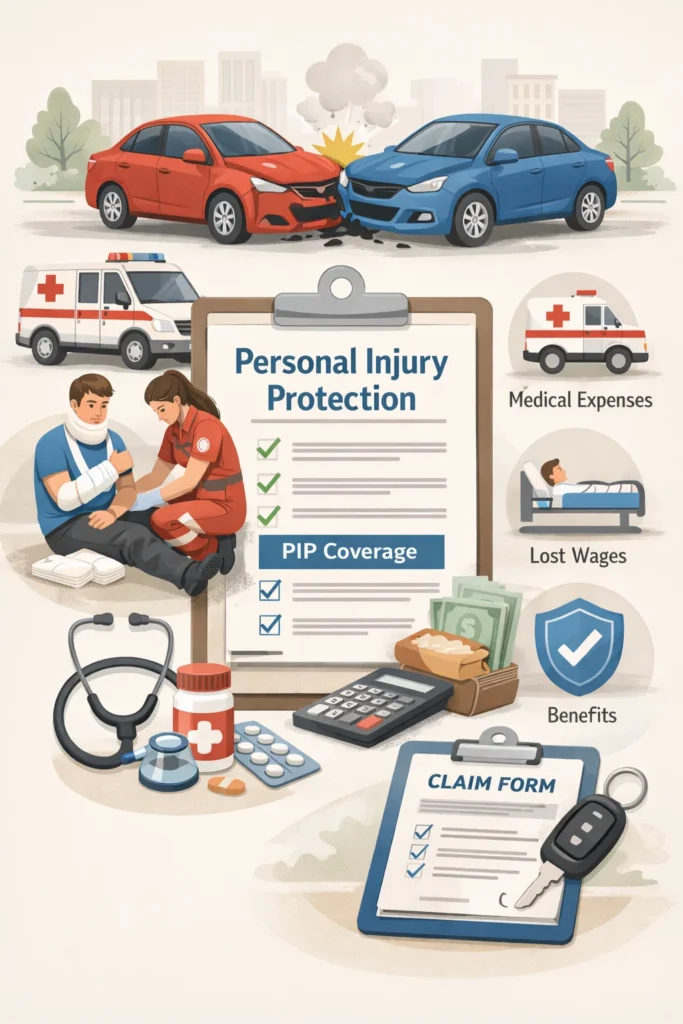
PIP in insurance stands for Personal Injury Protection. It is a type of auto insurance coverage that pays for medical expenses, lost wages, and certain related costs after a car accident, regardless of who was at fault.
This article explains what PIP insurance is, how it works, where it is required, what it covers, and how it compares to similar types of coverage. You will also find real-world examples, common misconceptions, and helpful tips to decide whether PIP coverage makes sense for you.
What Is PIP Insurance?
Personal Injury Protection, commonly called PIP, is a type of auto insurance coverage designed to pay for injury-related expenses after a car accident. Unlike liability insurance, PIP pays benefits no matter who caused the accident.
The main purpose of PIP is to provide fast financial support so accident victims can receive medical care and recover without waiting for fault to be determined.
What PIP Typically Covers
PIP coverage varies by state and insurance policy, but it usually includes:
- Medical expenses such as hospital visits, surgery, rehabilitation, and prescription medications
- Lost wages if injuries prevent you from working
- Essential services such as childcare, housekeeping, or transportation related to medical treatment
- Funeral expenses in the event of a fatal accident
The focus of PIP is immediate financial relief during recovery.
Why PIP Insurance Matters
Car accidents often result in unexpected medical bills and time away from work. PIP insurance helps reduce financial stress during these situations.
Key benefits include quick claim processing, no-fault coverage, protection for drivers and passengers, and supplemental support alongside health insurance.
Origin and Popularity of PIP Insurance
Where PIP Came From
PIP insurance developed as part of the no-fault auto insurance system in the United States during the 1970s. The goal was to reduce lawsuits and speed up compensation for injured drivers by allowing each person to file injury claims with their own insurance company.
States Where PIP Is Common
Some states require PIP coverage, while others offer it as an option. States commonly associated with PIP include Florida, New York, New Jersey, Michigan, Pennsylvania, Massachusetts, Hawaii, and Minnesota.
State laws vary, so it is important to review local requirements before selecting coverage.
How PIP Insurance Works After an Accident
When an accident occurs, PIP coverage follows a simple process.
First, you receive medical treatment. Then you submit a PIP claim to your own insurance provider. The insurer pays covered expenses up to your policy limit. Lawsuits are usually only allowed for serious injuries, depending on state law.
Real World Examples of PIP Coverage
A friendly example would be someone who receives emergency medical care after a minor collision and uses PIP to cover hospital bills and missed work days.
A professional example might involve a policy explanation stating that PIP provides a fixed amount of medical and disability benefits regardless of fault.
A negative experience could involve a driver who underestimated medical costs and exhausted their PIP limit quickly.
These examples show how PIP works in everyday situations.
What PIP Insurance Does Not Cover
PIP coverage has limitations. It does not pay for vehicle repairs, damage to another driver’s property, or pain and suffering. It also does not cover injuries to other drivers involved in the accident.
PIP Coverage Limits and Costs
PIP policies include a maximum payout limit. Common limits range from a few thousand dollars to much higher amounts depending on state regulations.
Some policies pay a percentage of medical expenses and lost wages rather than the full amount. Deductibles may also apply.
Example
| Expense Type | Covered by PIP | Notes |
| Emergency medical care | Yes | Paid regardless of fault |
| Rehabilitation services | Yes | Up to policy limit |
| Lost wages | Yes | Usually partial replacement |
| Childcare or household help | Yes | If injury-related |
| Vehicle repairs | No | Covered under collision insurance |
| Pain and suffering | No | Requires liability claim |
PIP vs Other Types of Auto Insurance
PIP vs Medical Payments Coverage
Medical Payments coverage is similar to PIP but more limited. MedPay usually covers medical expenses only and does not include lost wages or essential services.
PIP vs Bodily Injury Liablity
PIP covers you and your passengers. Bodily injury liability covers other people if you are responsible for an accident.
Understanding the difference helps ensure proper coverage.
Other Meanings of PIP
Outside insurance, the term PIP can have different meanings. In finance, it refers to a small price movement in trading. In the workplace, it may mean a performance improvement plan. In insurance contexts, however, PIP almost always means Personal Injury Protection.
Alternatives and Related Terms
Depending on your state and insurer, PIP may also be referred to as no-fault medical coverage or auto medical benefits. Medical Payments coverage is often considered a partial alternative.
Tips for Choosing the Right PIP Coverage
Check your state’s minimum requirements. Review your health insurance benefits. Consider how much income protection you may need. Select coverage limits that reflect realistic medical costs. Ask your insurer how benefits coordinate with other policies.
These steps can help you choose appropriate protection.
FAQs
What does PIP mean in insurance policies?
PIP stands for Personal Injury Protection, a no-fault auto insurance coverage.
Is PIP required in every state?
No. Requirements vary by state
Does PIP cover passengers?
Yes, PIP typically covers passengers in your vehicle.
Is PIP the same as health insurance?
No. PIP is auto insurance and applies only to accident-related injuries.
Does PIP cover lost wages?
Most PIP policies include partial wage replacement.
What happens when PIP coverage runs out?
Remaining costs may fall to health insurance or personal payment.
Does PIP increase insurance premiums?
Higher limits usually increase premiums but provide more protection.
Can PIP be waived?
In some states, yes, usually with proof of health insurance.
Conclusion
Understanding what PIP means in insurance helps you make better decisions about auto coverage. Personal Injury Protection provides quick, no-fault financial support for medical expenses, lost wages, and essential services after a car accident.
Coverage rules vary by state, but when chosen wisely, PIP can protect both your health and your income. Reviewing your policy and understanding your options ensures you are prepared when accidents happen.

Jessica Brown is a language-focused writer who creates well-researched articles on word meanings, abbreviations, and everyday expressions. She contributes to meanvoro.com, delivering simple, reliable, and reader-friendly content designed to make complex terms easy to understand.