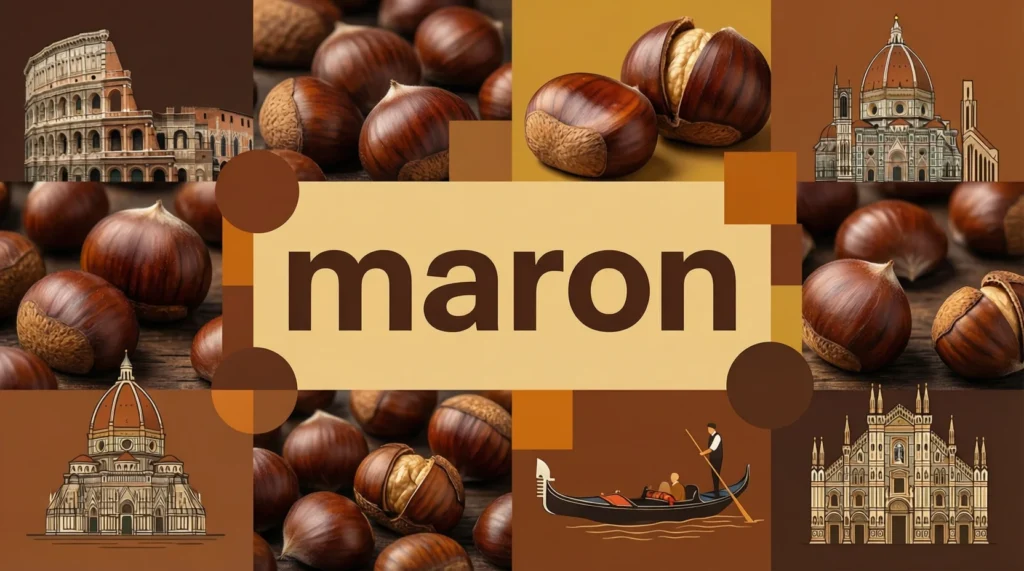
In Italian, “maron” (more commonly “marrone” or “marone”) refers to brown or a type of chestnut, depending on context. However, “maron” itself is mostly used in regional dialects, informal speech, or slang, rather than standard Italian.
If you’ve seen or heard maron in conversation, music, or online, its meaning can shift based on region, tone, and spelling, which makes it especially interesting for learners.
Origin and Popularity of “Maron”
The word maron comes from the Latin marrō, meaning chestnut. Over time, this evolved into several forms across Italy:
- Marrone (standard Italian)
- Marone (specific chestnut variety)
- Maron (dialectal or slang form)
Unlike widely used Italian words, “maron” is not standard Italian, but it appears frequently in Northern Italian dialects, especially Venetian and Lombard speech.
Its popularity today comes mostly from:
- Regional dialects
- Informal spoken Italian
- Slang expressions
- Online comments and memes
How “Maron” Is Used in Italian
1. “Maron” as Brown (Dialect Usage)
In some regions, maron is a shortened or dialectal form of marrone, meaning the color brown.
Examples:
- Scarpe maron → Brown shoes
- Cappotto maron → Brown coat
Tone: Neutral and informal
Common in: Spoken dialect, not formal writing
2. “Marone” as a Chestnut
In standard Italian, marone refers to a large, sweet chestnut, often used in cooking.
Examples:
- Maroni arrostiti → Roasted chestnuts
- Dolce di marone → Chestnut dessert
Tone: Neutral and culinary
Common in: Food, markets, recipes
3. “Maron!” as an Exclamation (Slang)
In some dialects, especially Venetian, “Maron!” can be used as an emotional exclamation, similar to:
- “Wow!”
- “Oh no!”
- “Damn!”
Examples:
- Maron! Che freddo oggi → Wow, it’s really cold today
- Maron! Non ci credo → Damn, I can’t believe it
Tone depends on context:
- Surprise
- Frustration
- Emphasis
Example
| Context | Italian Example | Meaning in English | Tone |
|---|---|---|---|
| Color (dialect) | Giacca maron | Brown jacket | Informal |
| Food | Maroni caldi | Hot chestnuts | Neutral |
| Exclamation | Maron! Che casino | Wow, what a mess | Emotional |
| Regional speech | Parla in maron veneto | Speaks Venetian dialect | Informal |
Comparison With Related Italian Words
| Word | Meaning | How It Differs From “Maron” |
|---|---|---|
| marrone | Brown (standard) | Correct and formal version |
| marone | Chestnut variety | Food-related, standard |
| castagna | Chestnut | General chestnut term |
| bruno | Brown (rare use) | Mostly poetic or literary |
Tip:
If you’re writing or speaking standard Italian, always use marrone, not maron.
Alternate Meanings of “Maron”
Depending on region and tone, maron may also imply:
- Informal slang expression
- Dialect pronunciation of marrone
- Emotional reaction word
- Culinary reference (via marone)
It does not have a fixed universal meaning across Italy, which is why context is critical.
Polite and Professional Alternatives
For clear and professional Italian, replace maron with:
- marrone for the color brown
- castagna for chestnut
- marone when referring to food or desserts
Example:
- Tavolo marrone elegante → Elegant brown table
Common Mistakes to Avoid
- Using maron in formal writing
- Incorrect: Giacca maron elegante
- Correct: Giacca marrone elegante
- Confusing marone with castagna
- Marone is a specific chestnut type
- Castagna is the general term
- Assuming all Italians understand “maron”
- Some regions may not use or recognize it
FAQs
1. What does “maron” mean in Italian?
It usually refers to brown or chestnut, but mainly in dialect or informal speech.
2. Is “maron” standard Italian?
No. The standard Italian word is marrone.
3. Does “maron” mean chestnut?
Indirectly. Marone refers to a type of chestnut, while maron is a shortened or dialectal form.
4. Can “maron” be slang?
Yes. In some dialects, it’s used as an emotional exclamation.
5. Is “maron” polite to use?
It’s casual and informal. Avoid it in professional or academic settings.
6. What is the correct word for brown in Italian?
Marrone is the correct and universal term.
7. Do Italians use “maron” daily?
Only in certain regions or informal conversations.
8. Can “maron” have a negative meaning?
Not inherently. Any negativity depends on tone and context.
Conclusion:
“Maron” is a fascinating example of how Italian changes across regions. While it can mean brown, chestnut, or even act as an emotional expression, it is not standard Italian.
“Maron” is a unique word that highlights the richness of Italian dialects. Depending on context, it can mean brown, refer to a type of chestnut, or even serve as an informal exclamation in regional speech.
While it is widely recognized in certain areas, it is not standard Italian, so using the correct standard terms marrone for the color brown or marone/castagna for chestnuts is recommended in formal writing and professional settings.
Search More Related Articles :
- VOC Paint Meaning: Low-VOC vs Traditional Paints Compared (2026)
- The Meaning of the Rainbow in the Bible : Explained for Christians (2026)

Jessica Brown is a language-focused writer who creates well-researched articles on word meanings, abbreviations, and everyday expressions. She contributes to meanvoro.com, delivering simple, reliable, and reader-friendly content designed to make complex terms easy to understand.