Definition
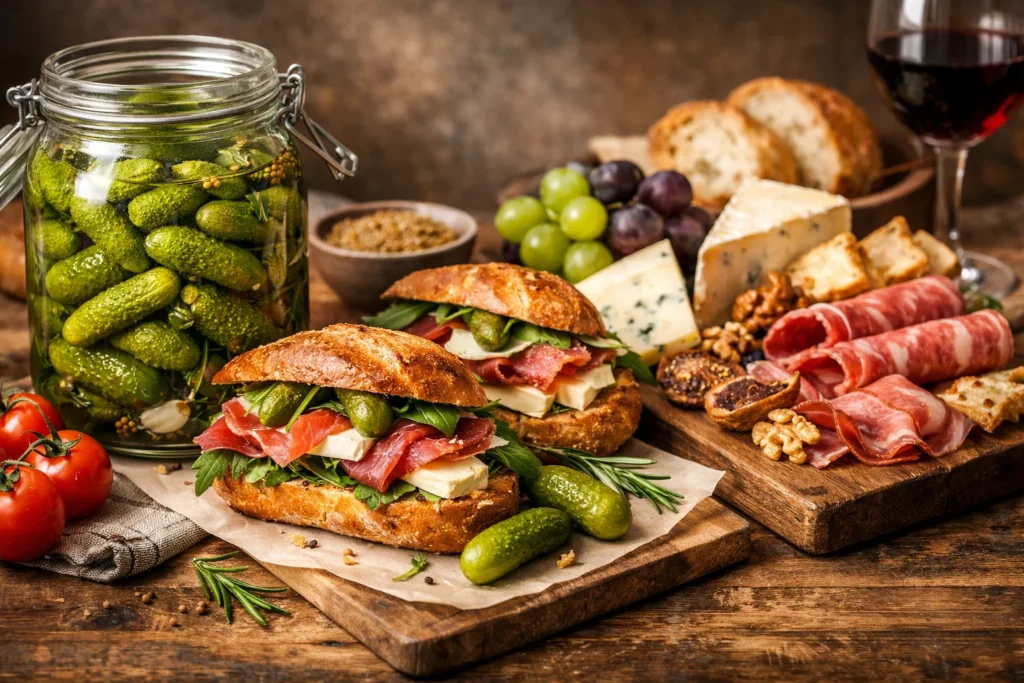
A cornichon is a small, tart French pickle made from tiny gherkin cucumbers that are pickled in vinegar, herbs, and spices. Cornichons are known for their crunchy texture and sour flavor and are commonly served with cheese boards, sandwiches, pâté, and charcuterie dishes.
Food-related words from different languages often become popular worldwide, and one such interesting term is cornichon.
If you’ve seen the word “cornichon” on a restaurant menu, cooking video, or food blog and wondered what it means, you’re not alone. Many people confuse cornichons with regular pickles, but they actually have a unique taste, texture, and culinary purpose.
Cornichons are especially popular in French cuisine and are often paired with gourmet foods because of their sharp and tangy flavor.
In this guide, we’ll break down:
- What cornichon means
- How cornichons differ from pickles
- Their origin and pronunciation
- Common uses in food
- Examples in sentences
- Nutritional information
- FAQs
What Does Cornichon Mean?
A cornichon is a small pickled cucumber, usually made from tiny gherkin cucumbers.
The word comes from the French language, where “cornichon” directly refers to these small sour pickles.
Unlike regular sweet pickles, cornichons are:
- More sour
- Crunchier
- Smaller in size
- Less sweet
They are commonly pickled with:
- Vinegar
- Tarragon
- Mustard seeds
- Onions
- Herbs and spices
Example:
- “The sandwich came with cornichons on the side.”
- “Cornichons add a tangy flavor to cheese platters.”
How to Pronounce Cornichon
Cornichon is pronounced as:
KOR-nee-shon
It is a French word, so the pronunciation sounds softer than typical English words.
Cornichon vs Pickle
Many people think cornichons and pickles are exactly the same, but there are differences.
| Feature | Cornichon | Regular Pickle |
|---|---|---|
| Size | Very small | Larger |
| Taste | Sour and tangy | Often sweet or salty |
| Texture | Crunchy | Softer |
| Origin | French cuisine | Various cuisines |
| Sweetness | Usually not sweet | May contain sugar |
Cornichons are often considered more gourmet or artisanal compared to standard pickles.
Origin of the Word Cornichon
The word cornichon comes from the French language and has been used in European cuisine for centuries.
Traditionally, French chefs served cornichons with:
- Charcuterie boards
- Meat dishes
- Cheese platters
- Pâté
Over time, the word became popular internationally in cooking and food culture.
How Cornichons Are Used in Food
Cornichons are commonly used as a side item or flavor enhancer.
Popular food pairings:
- Burgers
- Sandwiches
- Hot dogs
- Cheese boards
- Salads
- Roast meats
- Charcuterie platters
Example:
- “The restaurant served steak tartare with cornichons.”
- “Cornichons make sandwiches more flavorful.”
Their acidity helps balance rich or fatty foods.
Cornichon Meaning in Different Contexts Table
| Context | Meaning | Usage |
|---|---|---|
| Food | Small sour pickle | Served with meals |
| French Cuisine | Gourmet pickle | Charcuterie pairing |
| Cooking | Flavor enhancer | Adds tanginess |
| Restaurant Menus | Pickled cucumber side | Gourmet presentation |
Why Cornichons Are Popular
People enjoy cornichons because:
- They have a strong tangy flavor
- They are crunchy and refreshing
- They pair well with rich foods
- They add texture to dishes
- They are popular in gourmet cooking
Cornichons are especially common in:
- French cuisine
- European recipes
- Fine dining restaurants
- Modern food boards
Nutritional Information About Cornichons
Cornichons are generally low in calories.
Typical nutritional traits:
- Low calorie
- Low fat
- Crunchy snack option
- Contains sodium due to pickling
- May contain probiotics depending on preparation
However, because they are pickled, they can be high in salt.
Examples of Cornichon in Sentences
Restaurant Context
- “The burger came with cornichons and fries.”
- “Cornichons were served beside the cheese platter.”
Cooking Context
- “Add chopped cornichons to the sauce.”
- “Cornichons improve the flavor of sandwiches.”
Casual Food Conversation
- “I love the sour taste of cornichons.”
- “These cornichons are crunchier than regular pickles.”
Cornichons in French Cuisine
In French cuisine, cornichons are considered an important condiment.
They are traditionally served with:
- Pâté
- Terrines
- Cured meats
- Raclette cheese dishes
Their sourness balances heavy or creamy foods.
Common Mistakes About Cornichons
1. Thinking all pickles are cornichons
Not all pickles are cornichons. Cornichons are specifically small sour gherkin pickles.
2. Assuming they are sweet
Cornichons are usually tart and acidic, not sweet.
3. Mispronouncing the word
Many people pronounce it incorrectly because it is French.
Is Cornichon Formal or Informal?
The word “cornichon” itself is neutral and commonly used in:
- Restaurants
- Food blogs
- Recipes
- Cooking shows
It is not slang and is appropriate in both casual and professional culinary discussions.
FAQs
What does cornichon mean?
Cornichon means a small French pickled cucumber known for its sour taste.
Are cornichons the same as pickles?
They are a type of pickle, but they are smaller, tangier, and less sweet.
What does cornichon taste like?
Cornichons taste sour, tangy, and crunchy.
How do you pronounce cornichon?
It is pronounced “KOR-nee-shon.”
Where are cornichons commonly used?
They are used in sandwiches, charcuterie boards, burgers, and French cuisine.
Are cornichons healthy?
They are low in calories but can contain a high amount of sodium.
What is the difference between gherkins and cornichons?
Cornichons are made from tiny gherkin cucumbers pickled in vinegar and spices.
Why are cornichons popular in French food?
Their tangy flavor balances rich foods like cheese and cured meats.
Conclusion
Cornichon is a French word used for small, tangy pickled cucumbers that are popular in gourmet cuisine and everyday meals. Known for their crunchy texture and sour taste, cornichons are commonly served with sandwiches, cheese boards, meats, and French dishes.
Although they are technically a type of pickle, cornichons have a more refined flavor and unique culinary role. Understanding what cornichons are can help you better enjoy restaurant menus, recipes, and international cuisine.
Discover More Related Articles:
- IDTS Mean in Text | TikTok, Snapchat, Instagram In 2026
- What Does Surreal Mean | Art & Literature In 2026

Madison Taylor is an experienced content writer who focuses on researching and explaining word meanings, slang, and texting terms. She writes for meanvoro.com, creating clear and accurate to help readers understand language easily.