
Definition
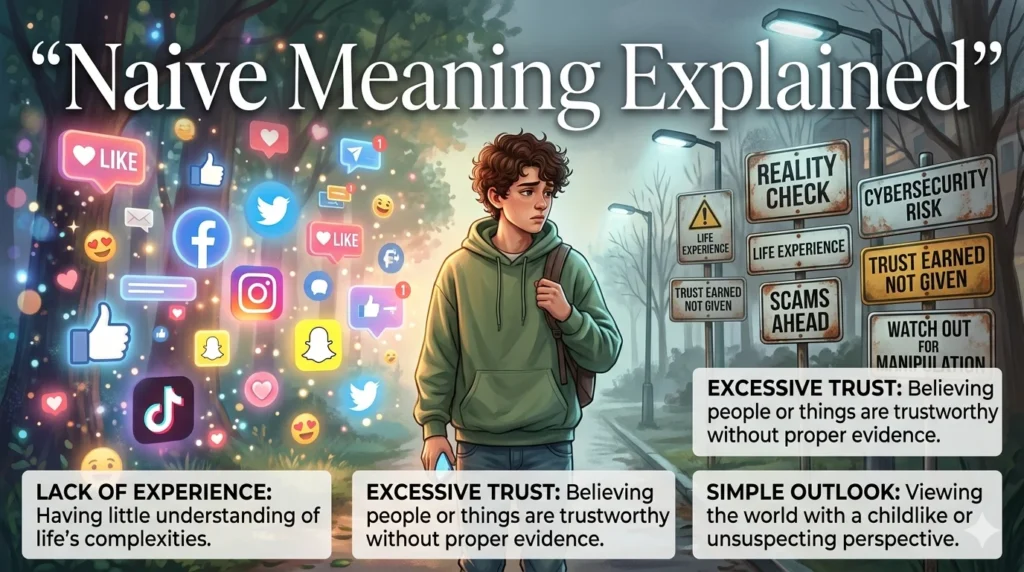
Naive means lacking experience, judgment, or knowledge about the real world, often resulting in being too trusting, innocent, or simple-minded.
Have you ever heard someone say, “Don’t be so naive,” and wondered what they actually meant? The word naive is commonly used in conversations, books, movies, workplaces, and social media to describe someone who is overly trusting, inexperienced, or unaware of how things really work.
Some people use the term kindly, while others may use it critically. That’s why understanding the true meaning, tone, and usage of “naive” is important.
In simple words, a naive person may believe things too easily because they do not yet fully understand reality or human behavior.
Origin and History of the Word “Naive”
The word naive comes from the French word naïf, meaning “natural” or “innocent.” It originally described someone who was pure, genuine, and unaffected by the complexities of society.
Over time, the meaning evolved and became associated with:
- Innocence
- Inexperience
- Lack of worldly understanding
- Being overly trusting
Today, the word is widely used in English conversations, psychology discussions, education, and social media.
What Does Naive Mean in Everyday Life?
In daily life, “naive” usually refers to someone who:
- Trusts people too easily
- Does not recognize danger or manipulation
- Believes unrealistic ideas
- Lacks practical experience
- Thinks the world is simpler than it actually is
Simple Example:
- “She was naive enough to believe every promise he made.”
This means she trusted too easily without questioning the situation.
Different Types of Naivety
Naivety can appear in different forms depending on the situation.
1. Social Naivety
When someone struggles to understand social behavior or hidden intentions.
Example:
- Being tricked by fake compliments.
2. Emotional Naivety
When someone is inexperienced in relationships or emotions.
Example:
- Trusting someone immediately after just meeting them.
3. Financial Naivety
When someone lacks practical money knowledge.
Example:
- Falling for online scams promising quick wealth.
4. Professional Naivety
When a person lacks workplace experience.
Example:
- Believing office politics never exist.
Examples of Naive in Sentences
Friendly or Gentle Usage
- “He’s naive, but he has a kind heart.”
- “She was naive when she first started college.”
Neutral Usage
- “It would be naive to ignore the risks.”
- “His naive assumptions caused problems.”
Negative or Critical Usage
- “You’re naive if you think everyone is honest.”
- “That plan sounds naive and unrealistic.”
Example Table: Naive Meaning in Context
| Situation | Example Sentence | Tone |
|---|---|---|
| Trusting strangers | “She was naive enough to share personal details online.” | Warning |
| First job experience | “He had a naive understanding of office life.” | Neutral |
| Romantic relationship | “I was naive to believe every excuse.” | Reflective |
| Optimistic thinking | “Her naive positivity was refreshing.” | Friendly |
| Unrealistic expectations | “It’s naive to think success comes instantly.” | Critical |
Emotional Tone of the Word “Naive”
The tone of “naive” changes depending on context.
1. Positive Tone 🌸
Sometimes it refers to innocence or purity.
- “He has a naive charm.”
2. Neutral Tone 🙂
Used simply to describe lack of experience.
- “She’s naive about business.”
3. Negative Tone ⚠️
Can imply foolishness or unrealistic thinking.
- “That’s a naive decision.”
Because of these mixed tones, it’s important to use the word carefully.
Signs Someone May Be Naive
A naive person may:
- Believe promises too quickly
- Ignore warning signs
- Trust strangers easily
- Assume everyone has good intentions
- Struggle with manipulation or sarcasm
- Lack real-world experience
However, being naive does not mean someone is unintelligent. Often, it simply means they have limited experience in certain situations.
Naive vs Similar Words
Many people confuse “naive” with similar words. Here’s the difference:
| Word | Meaning | Difference |
|---|---|---|
| Naive | Inexperienced and trusting | Main focus on innocence |
| Innocent | Pure or harmless | More positive meaning |
| Gullible | Easily fooled | Stronger negative meaning |
| Ignorant | Lacking knowledge | Not always trusting |
| Idealistic | Unrealistically hopeful | Focus on beliefs and ideals |
Key Difference:
- Naive = inexperienced and trusting
- Gullible = easily deceived
- Innocent = pure-hearted
Is Being Naive Always Bad?
Not necessarily.
Positive Side of Being Naive
- Optimistic outlook
- Trusting nature
- Open-minded personality
- Emotional sincerity
Negative Side of Being Naive
- Easier to manipulate
- Vulnerable to scams
- Poor decision-making
- Unrealistic expectations
Most people become less naive over time as they gain life experience.
How to Stop Being Naive
If someone feels overly naive, these practical tips can help:
1. Ask More Questions
Avoid believing everything immediately.
2. Learn From Experience
Past mistakes can teach valuable lessons.
3. Observe Patterns
Notice how people behave over time.
4. Research Before Trusting
Especially online or in financial matters.
5. Set Healthy Boundaries
Trust should be earned gradually.
Naive in Relationships
The word is often used in romantic situations.
Examples:
- Believing every compliment instantly
- Ignoring red flags
- Assuming love alone solves all problems
Example sentence:
- “I was naive to think the relationship would fix itself.”
Relationship naivety usually decreases with emotional maturity and experience.
Naive in Social Media and Internet Culture
On social media, people sometimes use “naive” jokingly or sarcastically.
Examples:
- “Me thinking I’d sleep early tonight… so naive 💀”
- “You’re naive if you think the internet forgets anything.”
In meme culture, the word often refers to unrealistic expectations versus reality.
Professional Alternatives to the Word “Naive”
In formal or professional settings, softer alternatives may sound more respectful.
Polite Alternatives:
- Inexperienced
- Unfamiliar
- Idealistic
- Optimistic
- New to the situation
Example:
Instead of:
- “Your idea is naive.”
Say:
- “Your idea may need more practical consideration.”
This sounds more professional and respectful.
Common Mistakes When Using “Naive”
Mistake 1: Using it as a direct insult
Calling someone naive aggressively can sound rude.
Mistake 2: Confusing naive with stupid
Naive people are not necessarily unintelligent.
Mistake 3: Overusing it in arguments
It can sound dismissive or judgmental.
Why the Word “Naive” Is Still So Popular
The word remains popular because it describes a universal human experience. Everyone is naive about something at some stage in life.
It is commonly used in:
- Psychology discussions
- Self-improvement content
- Social media memes
- Relationship advice
- Workplace communication
- Movies and literature
Its emotional depth and flexibility make it a powerful descriptive word.
FAQs:
1. What does naive mean?
Naive means lacking experience or judgment, often causing someone to trust too easily.
2. Is naive a negative word?
Not always. It can describe innocence positively or inexperience negatively depending on context.
3. What is the difference between naive and gullible?
Naive means inexperienced, while gullible means easily fooled.
4. Can adults be naive?
Yes. Anyone can be naive in unfamiliar situations.
5. Is being naive the same as being innocent?
Not exactly. Innocent is usually more positive, while naive suggests lack of real-world understanding.
6. How do you use naive in a sentence?
Example: “He was naive to trust the scammer.”
7. Can naive be used professionally?
Yes, but softer alternatives are often better in workplace settings.
8. How can someone become less naive?
By gaining experience, asking questions, and learning from mistakes.
Conclusion
Understanding the naive meaning helps improve communication and emotional awareness. The word describes someone who lacks experience or practical understanding, often leading them to trust too easily or believe unrealistic ideas.
While naivety can sometimes create vulnerability, it can also reflect kindness, optimism, and innocence. Context matters greatly when using the term because it may sound gentle, neutral, or critical depending on tone.
As people grow and gain life experience, they usually become more aware, balanced, and less naive over time.
Discover More Related Articles:

Jessica Brown is a language-focused writer who creates well-researched articles on word meanings, abbreviations, and everyday expressions. She contributes to meanvoro.com, delivering simple, reliable, and reader-friendly content designed to make complex terms easy to understand.