

Provision in the Bible refers to God’s act of supplying, protecting, and caring for His people’s needs, both spiritual and physical, according to His wisdom and timing.
When you hear the word “provision”, what comes to mind? For many, it may evoke thoughts of food, money, or necessities. In the Bible, however, the term provision carries a deeper, spiritual meaning that touches on God’s care, faithfulness, and timely support for His people.
Understanding what provision means in the Bible can transform the way we perceive challenges, blessings, and even our daily responsibilities.
From manna in the wilderness to Jesus feeding the 5,000, provision highlights God’s unchanging faithfulness and His desire to meet our needs. This article dives deep into its meaning, origin, usage, examples, comparisons, alternatives, and practical applications.
Origin and Meaning of Provision
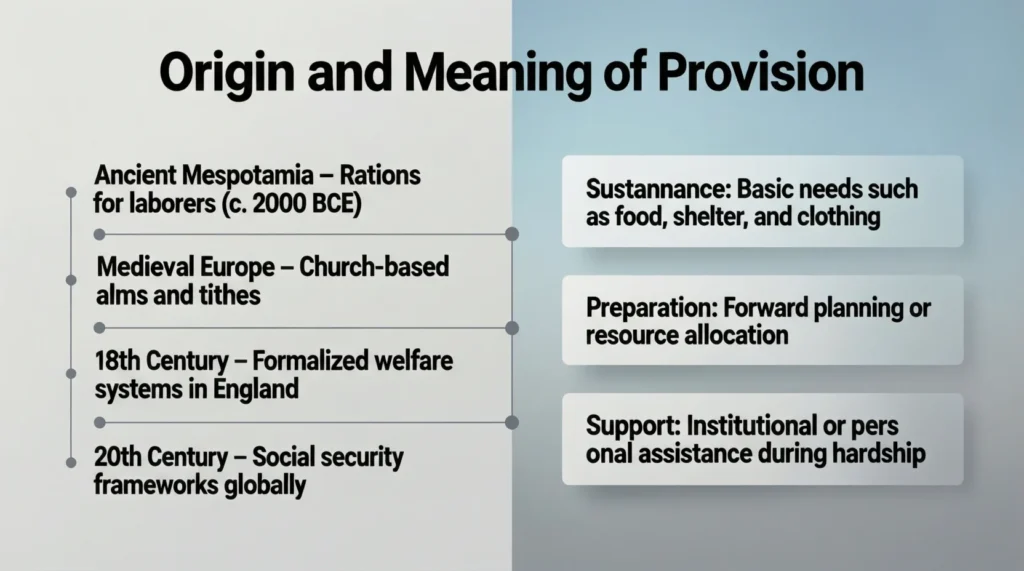
The word provision comes from the Latin providere, meaning “to foresee” or “to provide in advance.” Over time, it evolved to signify the act of preparing, supplying, or arranging necessary resources for a person, group, or situation.
In Biblical terms, provision is more than material supply it’s a reflection of God’s care and foresight. He knows our needs before we ask (Matthew 6:8) and often provides in ways we do not expect.
Biblical Context
- Old Testament: God provided manna, water from rocks, and protection for the Israelites during their journey in the desert (Exodus 16:4, 17:6).
- New Testament: Jesus exemplified provision by feeding the multitudes with loaves and fish (John 6:11).
The emphasis is not only on physical provision but also on spiritual provision strength, wisdom, and guidance for life’s challenges.
Usage of Provision in the Bible
Provision appears in several contexts in Scripture, highlighting God’s multifaceted care:
- Physical Needs
- Food, shelter, clothing, and safety.
- Example: Abraham received provision in the form of livestock, land, and wealth (Genesis 24:35).
- Spiritual Needs
- Guidance, forgiveness, and grace.
- Example: God provides wisdom to those who seek it (James 1:5).
- Future or Contingent Needs
- God prepares ahead for His people.
- Example: Joseph’s interpretation of Pharaoh’s dream led to provision during seven years of famine (Genesis 41:33-36).
Examples
Here’s a simple table illustrating different types of Biblical provision:
| Type of Provision | Biblical Example | Meaning & Lesson |
|---|---|---|
| Food & Sustenance | Manna in the wilderness (Exodus 16) | God provides for physical survival even in scarcity |
| Wealth & Resources | Abraham’s prosperity (Genesis 24:35) | God blesses those who trust Him with abundance |
| Protection | Daniel in the lion’s den (Daniel 6) | God provides safety and deliverance in danger |
| Guidance | Solomon’s wisdom (1 Kings 3:9-12) | God provides wisdom for decisions and leadership |
| Spiritual Strength | Paul’s endurance in prison (Philippians 4:13) | God strengthens believers through trials |
| Miracles | Feeding of 5,000 (John 6:11) | God provides abundantly, often beyond human expectation |
These examples show that provision is holistic covering physical, emotional, and spiritual dimensions.
Real-World Usage and Popularity
Today, the word provision is widely used outside of religious texts:
- Everyday Language: Refers to preparing or supplying essentials. Example: “The charity made provisions for the homeless during winter.”
- Business Context: Often means budgeting or allocation of resources. Example: “The company made provisions for unexpected expenses.”
In religious circles, especially Christian teachings, provision remains a central theme, frequently tied to trust in God and reliance on His timing. The term is popular in sermons, devotionals, and Christian literature because it communicates God’s reliability and foresight.
Comparison with Related Terms
| Term | Difference from Provision | Example in Context |
|---|---|---|
| Supply | More general; provision implies planning and intentionality | “God supplies our needs” vs. “God provides provision in His timing” |
| Support | Focuses on help during difficulty | “Family support” vs. “God’s provision” |
| Resources | Neutral term for available assets | “Available resources” vs. “Divine provision” |
| Care | Emphasizes emotional or relational attention | “Parental care” vs. “God’s provision” |
Key Takeaway: Provision carries a sense of foresight and intentionality, unlike general terms like supply or resources.
Alternate Meanings of Provision
While primarily spiritual in the Bible, provision can also refer to:
- Legal or contractual provisions – clauses outlining requirements.
- Preparedness – planning ahead for emergencies or events.
However, in Biblical usage, it always reflects God’s active role in anticipating and fulfilling needs rather than human planning alone.
Polite or Professional Alternatives
If you want to use a gentler or more formal term instead of “provision,” consider:
- Support
- Assistance
- Supply
- Foresight
- Arrangements
Example: Instead of “God’s provision for the people,” you could say “God’s care and support for His people,” which is slightly more conversational.
Common Examples in Daily Life
- Financial Planning: Setting aside funds for unexpected emergencies mirrors Biblical provision.
- Parenting: Parents anticipate needs of children (food, clothes, education) as a reflection of God’s provision.
- Community Support: Charitable organizations providing resources demonstrate human provision inspired by God’s example.
FAQs
- What does provision mean in the Bible in simple terms?
It means God providing what you need physically, emotionally, or spiritually. - Is provision always material?
No, it can include spiritual guidance, wisdom, or strength. - Does God provide for everyone equally?
God provides according to His plan and timing, which may not always match human expectations. - Can provision be delayed?
Yes, timing is part of God’s wisdom; patience is often required. - Is provision the same as miracles?
Provision includes miracles but is broader, covering everyday care and preparation. - How can I recognize God’s provision?
Look for answered prayers, timely help, wisdom, protection, or unexpected resources. - What Bible verse talks about provision?
Philippians 4:19 – “And my God will supply every need of yours according to his riches in glory in Christ Jesus.” - Can humans provide provision for others?
Yes, God often works through people to meet the needs of others.
Practical Tips for Applying Biblical Provision Today
- Trust God’s Timing: Not every need is met immediately, but His provision is perfect.
- Pray with Expectation: Ask God to meet your needs and remain patient.
- Be a Channel: Just as God provides, help others in your capacity.
- Plan Wisely: Provision doesn’t mean passivity; prepare while trusting God.
- Recognize Blessings: Count everyday resources and guidance as provision.
Conclusion
Understanding what provision means in the Bible shows us that God’s care is comprehensive, intentional, and perfectly timed. Provision is not just about food, money, or survival it’s about holistic support, including spiritual, emotional, and physical needs.
By recognizing God’s provision, trusting His timing, and serving as channels of provision ourselves, we experience a deeper connection to His faithfulness.
Discover More Related Articles:
- IDTS Mean in Text | TikTok, Snapchat, Instagram In 2026
- What Does Surreal Mean | Art & Literature In 2026

Jessica Brown is a language-focused writer who creates well-researched articles on word meanings, abbreviations, and everyday expressions. She contributes to meanvoro.com, delivering simple, reliable, and reader-friendly content designed to make complex terms easy to understand.