Definition
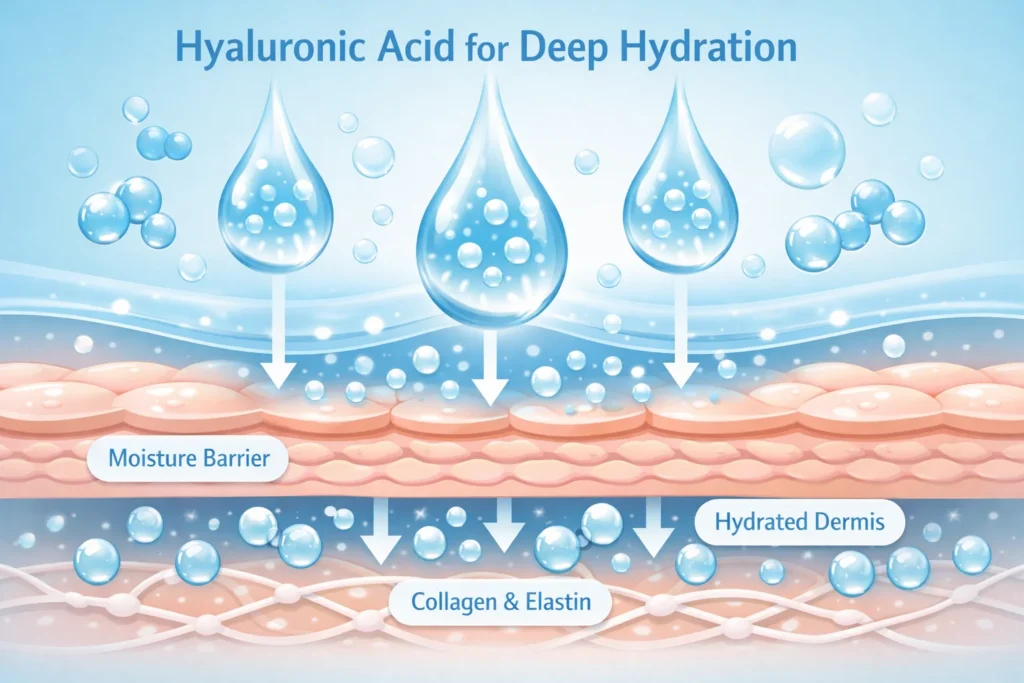
Hyaluronic acid is a naturally occurring substance in the human body that helps retain moisture in the skin, joints, and eyes. In skincare, it is used as a powerful humectant that attracts and holds water, keeping the skin hydrated, plump, and smooth.
If you’ve ever looked at skincare products, you’ve probably seen hyaluronic acid listed almost everywhere—from serums and moisturizers to sheet masks and even makeup. It’s one of the most talked-about skincare ingredients today, but many people still wonder: what does hyaluronic acid actually do?
The short answer is simple: it helps your skin stay hydrated, plump, and smooth. But the real story goes much deeper. This powerful molecule is naturally found in your body and plays a huge role in keeping your skin healthy and youthful.
In this guide, you’ll learn exactly how it works, why it’s so popular, and how to use it correctly for the best results.
What Is Hyaluronic Acid?
Hyaluronic acid (often shortened to HA) is a gel-like molecule that exists naturally in your skin, connective tissues, and eyes. Its main job is to hold water—lots of it.
Key fact:
One gram of hyaluronic acid can hold up to 6 liters of water. That’s why it’s known as a hydration powerhouse.
What Does Hyaluronic Acid Do for Your Skin?
Hyaluronic acid has several important functions when used in skincare.
1. Deep Hydration
It draws moisture from the environment into your skin and helps lock it in.
- Keeps skin soft and moist
- Prevents dryness and flakiness
- Improves overall skin texture
2. Plumps the Skin
Well-hydrated skin looks fuller and healthier.
- Reduces the appearance of fine lines
- Gives a “plump” youthful look
- Smooths rough texture
3. Supports Skin Barrier
A strong skin barrier protects you from pollution and irritation.
- Helps reduce sensitivity
- Strengthens natural defense layer
- Prevents moisture loss
4. Improves Elasticity
Elastic skin looks firm and healthy.
- Helps skin bounce back
- Reduces sagging appearance
- Supports long-term skin health
5. Soothes Irritated Skin
It has calming properties that help with redness and dryness.
- Useful for sensitive skin
- Helps after sun exposure or treatments
- Reduces tight feeling in skin
How Hyaluronic Acid Works
Think of hyaluronic acid like a sponge.
- It absorbs water from the air or skincare products
- It holds that water inside your skin
- It slowly releases moisture to keep skin hydrated
That’s why your skin feels instantly softer after applying it.
Origin and Why It Became So Popular
Although it sounds like a modern skincare trend, hyaluronic acid was discovered in the 1930s in the human eye.
Why it became popular in skincare:
- Dermatology research proved its hydration benefits
- It works for almost all skin types
- It is lightweight and non-greasy
- It pairs well with other skincare ingredients
Today, it is one of the most widely used ingredients in the beauty industry worldwide.
Common Uses of Hyaluronic Acid
Hyaluronic acid is used in many ways:
In skincare:
- Serums
- Moisturizers
- Face masks
- Eye creams
In medical fields:
- Joint injections (for arthritis)
- Eye surgery
- Wound healing treatments
Hyaluronic Acid in Skincare Routine
When to use it:
- After cleansing
- Before moisturizer
Best application tip:
Apply it on slightly damp skin so it can lock in moisture better.
Simple routine example:
- Cleanser
- Toner (optional)
- Hyaluronic acid serum
- Moisturizer
- Sunscreen (morning)
Benefits of Hyaluronic Acid
Here’s a clear breakdown of its main benefits:
- Deep hydration without heaviness
- Suitable for all skin types
- Helps reduce fine lines
- Improves skin texture
- Supports healing and repair
- Gives instant glow
Hyaluronic Acid vs Other Skincare Ingredients
Hyaluronic Acid vs Glycerin
| Feature | Hyaluronic Acid | Glycerin |
|---|---|---|
| Hydration type | Deep, skin-plumping | Surface-level hydration |
| Texture | Lightweight gel | Slightly sticky |
| Skin feel | Smooth, soft | Moist but less plumping |
Hyaluronic Acid vs Vitamin C
- Hyaluronic acid hydrates
- Vitamin C brightens and protects from sun damage
👉 They work best when used together.
Hyaluronic Acid vs Retinol
- HA hydrates and soothes
- Retinol reduces wrinkles and boosts cell turnover
👉 Hyaluronic acid is often used with retinol to reduce dryness.
Types of Hyaluronic Acid
Not all hyaluronic acid is the same. It comes in different molecular sizes:
1. High molecular weight HA
- Sits on skin surface
- Provides instant hydration
2. Low molecular weight HA
- Penetrates deeper into skin
- Long-lasting hydration
3. Hydrolyzed HA
- Broken into smaller particles
- Improves absorption
Example Table: What It Does in Real Life
| Situation | What Hyaluronic Acid Does |
|---|---|
| Dry skin | Restores moisture balance |
| Fine lines | Makes skin look smoother |
| Dull skin | Adds natural glow |
| Sensitive skin | Calms irritation |
| Oily skin | Hydrates without greasiness |
How to Use Hyaluronic Acid Correctly
Do:
- Apply on damp skin
- Follow with moisturizer
- Use daily for best results
Don’t:
- Apply on completely dry skin (it may pull moisture out)
- Skip moisturizer after applying
- Expect instant permanent results
Common Myths About Hyaluronic Acid
Myth 1: It adds moisture to skin
❌ Not exactly—it attracts moisture, it doesn’t create it.
Myth 2: Only dry skin needs it
❌ False—it benefits oily, combination, and sensitive skin too.
Myth 3: It replaces moisturizer
❌ No—it works best with a moisturizer on top.
Real-Life Examples
Example 1: Dry skin relief
“I started using a hyaluronic acid serum and my skin stopped feeling tight after washing.”
Example 2: Makeup improvement
“My foundation looks smoother and less cakey when I use HA underneath.”
Example 3: Anti-aging support
“My fine lines look softer after consistent use.”
Professional Alternatives or Similar Ingredients
If hyaluronic acid is not available, similar ingredients include:
- Glycerin
- Aloe vera
- Panthenol (Vitamin B5)
- Sodium PCA
These also help with hydration but work slightly differently.
Is Hyaluronic Acid Safe?
Yes, it is generally safe for all skin types because:
- It is naturally found in the body
- It is non-irritating
- It is non-comedogenic (won’t clog pores)
FAQs:
1. What does hyaluronic acid do for your face?
It hydrates the skin, reduces dryness, and gives a plump, smooth appearance.
2. Can I use hyaluronic acid every day?
Yes, it is safe for daily use, morning and night.
3. Is hyaluronic acid good for acne-prone skin?
Yes, it hydrates without clogging pores.
4. When should I apply hyaluronic acid?
After cleansing and before moisturizing.
5. Can hyaluronic acid remove wrinkles?
It cannot remove wrinkles permanently but can make them look less visible.
6. Does hyaluronic acid lighten skin?
No, it does not bleach skin; it improves hydration and glow.
7. Can I use it with vitamin C or retinol?
Yes, it works very well with both ingredients.
8. How long does it take to see results?
You can feel hydration immediately, but visible improvements usually take a few days to weeks.
Conclusion:
Understanding what does hyaluronic acid do is simple once you break it down: it is a powerful hydration molecule that helps your skin stay moist, smooth, and healthy-looking.
To summarize:
- It deeply hydrates the skin
- It improves plumpness and elasticity
- It reduces dryness and fine lines
- It works for all skin types
- It is safe and easy to use daily
When used correctly with a good skincare routine, hyaluronic acid can make a noticeable difference in how your skin looks and feels.
Discover More Related Articles:
- What Does a Tick Bite Look Like: Signs, Symptoms & Pictures In 2026
- What Does a Cavity Look Like | Signs, Stages, Causes & Treatment In 2026

Ryan Thompson is an experienced content writer specializing in slang terms, texting abbreviations, and word meanings. He writes for meanvoro.com, where he creates accurate and easy-to-understand language content for readers.