
Definition
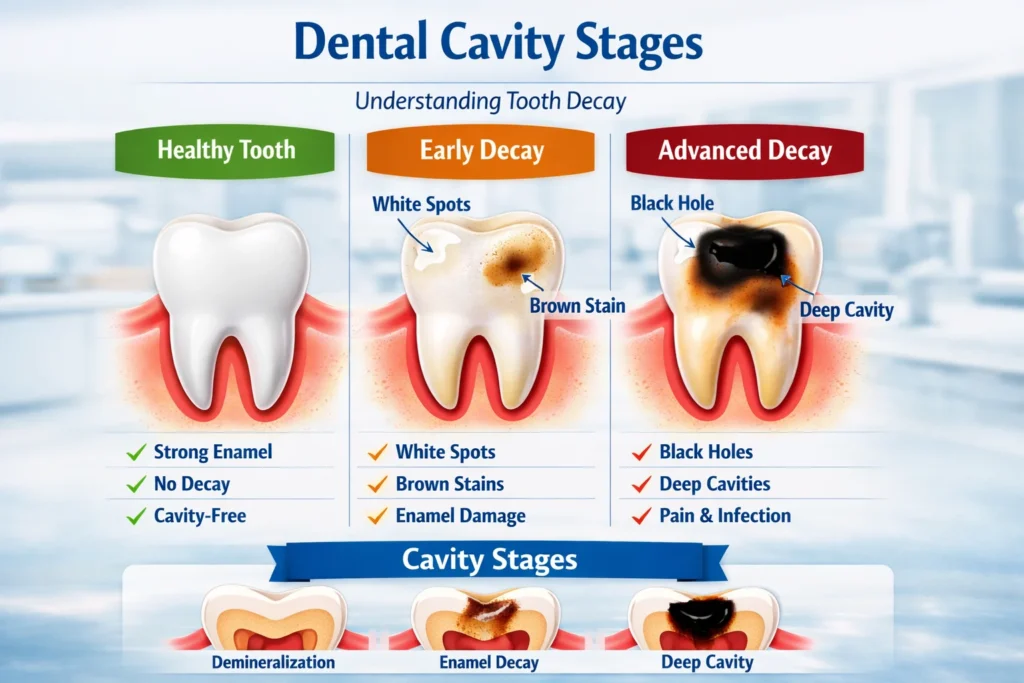
A cavity usually looks like a small hole, dark spot, stain, or damaged area on a tooth caused by tooth decay. Cavities can appear white, brown, or black depending on how severe the decay is.
In early stages, they may look like tiny chalky white patches, while advanced cavities often appear as visible holes or deep dark pits.
Quick Examples:
- Small white spot near the gumline
- Brown stain on the chewing surface
- Tiny black hole in a tooth
- Rough or chipped area that feels sensitive
A cavity may not always hurt at first, which is why many people do not notice one until it becomes serious.
Most people think cavities are always painful black holes in teeth, but that is not true. In reality, cavities often start very small and can easily go unnoticed for weeks or even months.
Learning what a cavity looks like can help you:
- Catch tooth decay early
- Avoid severe pain
- Prevent expensive dental treatment
- Protect your teeth long-term
The earlier a cavity is treated, the easier and cheaper it usually is to fix. That is why recognizing the warning signs matters.
In this guide, you will learn:
- What cavities look like at every stage
- Early cavity symptoms
- Different cavity colors and textures
- Common causes
- Treatment options
- Ways to prevent cavities naturally
What Is a Cavity?
A cavity is a permanently damaged area in a tooth caused by bacteria, acid, and plaque buildup. Dentists also call cavities:
- Tooth decay
- Dental caries
- Decayed tooth areas
Cavities develop when bacteria in the mouth feed on sugars and produce acids that slowly wear away tooth enamel.
If untreated, decay spreads deeper into the tooth and may eventually reach the nerve.
What Does an Early Cavity Look Like?
Early cavities are often difficult to spot because they do not always look dramatic.
Common Early Signs:
| Early Cavity Appearance | Description |
|---|---|
| White spots | Chalky mineral loss on enamel |
| Light brown stains | Beginning decay |
| Rough texture | Tooth surface feels uneven |
| Slight discoloration | Tooth loses its normal shine |
Important:
At this stage, a cavity may:
- Not hurt
- Be invisible from certain angles
- Only appear under bright light
Dentists can often reverse very early decay with fluoride treatments and improved oral hygiene.
What Does a Small Cavity Look Like?
As decay progresses, the cavity becomes more noticeable.
A Small Cavity May Look Like:
- Tiny brown dot
- Small black spot
- Pin-sized hole
- Dark line in a groove
- Slight indentation in the tooth
Common Locations:
- Back molars
- Between teeth
- Near the gumline
- Chewing surfaces
Some people mistake small cavities for food stains, which is why dental checkups are important.
What Does a Severe Cavity Look Like?
Advanced cavities are easier to identify because the tooth structure becomes visibly damaged.
Severe Cavity Signs:
| AppearanceWhat It Means | |
|---|---|
| Large black hole | Advanced decay |
| Cracked tooth | Weak tooth structure |
| Brown or black pits | Deep bacterial damage |
| Missing enamel | Tooth erosion |
| Swelling nearby | Possible infection |
Symptoms Often Include:
- Sharp pain
- Sensitivity to cold or sweets
- Bad breath
- Toothache
- Pain while chewing
At this stage, treatment may require:
- Fillings
- Crowns
- Root canals
- Tooth extraction
What Color Is a Cavity?
Cavities can appear in several colors depending on the stage of decay.
| ColorPossible Meaning | |
|---|---|
| White | Early enamel damage |
| Yellow | Enamel weakening |
| Brown | Active decay |
| Black | Advanced decay |
| Gray | Dying tooth tissue |
Not every dark spot is automatically a cavity, but unusual discoloration should always be checked by a dentist.
What Does a Cavity Feel Like?
Sometimes a cavity is easier to feel than see.
Common Sensations:
- Rough spot on tooth
- Tiny hole felt by tongue
- Sharp pain when eating sweets
- Sensitivity to hot or cold drinks
- Food getting stuck repeatedly
Early Cavities:
May have no noticeable feeling at all.
Pictures and Visual Signs Dentists Look For
Dentists usually identify cavities by checking for:
- Discoloration
- Soft enamel
- Holes or pits
- X-ray shadows
- Surface breakdown
Common Areas Dentists Examine:
- Between teeth
- Molars
- Gumline
- Existing fillings
- Hard-to-brush areas
X-rays help detect hidden cavities that cannot be seen with the naked eye.
What Causes Cavities?
Cavities develop from a combination of bacteria, sugar, and poor oral hygiene.
Main Causes:
| Cause | Effect |
|---|---|
| Sugary foods | Feed harmful bacteria |
| Poor brushing | Plaque buildup |
| Acidic drinks | Weakens enamel |
| Dry mouth | Less saliva protection |
| Skipping flossing | Decay between teeth |
Foods That Increase Risk:
- Candy
- Soda
- Sticky sweets
- Chips
- Sugary coffee drinks
Signs You May Have a Hidden Cavity
Some cavities are hidden between teeth or under the surface.
Warning Signs:
- Tooth sensitivity
- Persistent bad breath
- Pain when biting
- Sudden toothache
- Dark shadow on tooth
- Food constantly getting trapped
If symptoms continue, visit a dentist as soon as possible.
Difference Between a Stain and a Cavity
Many people confuse tooth stains with cavities.
| Tooth Stain | Cavity |
|---|---|
| Flat surface | Often rough or soft |
| Usually painless | May hurt |
| Cosmetic issue | Tooth damage |
| Surface discoloration | Structural decay |
A dentist can confirm the difference using tools and X-rays.
How Dentists Treat Cavities
Treatment depends on how advanced the cavity is.
Common Treatments:
| Treatment | Used For |
|---|---|
| Fluoride treatment | Early decay |
| Dental filling | Small to medium cavities |
| Crown | Large cavities |
| Root canal | Infected tooth nerve |
| Extraction | Severe damage |
Early treatment prevents complications and saves more of the natural tooth.
Can a Cavity Heal on Its Own?
A true cavity cannot completely heal naturally once a hole forms in the tooth.
However, very early enamel damage may improve with:
- Fluoride toothpaste
- Better brushing
- Reduced sugar intake
- Regular flossing
Once decay creates a physical hole, professional dental treatment is usually necessary.
How to Prevent Cavities
Preventing cavities is much easier than treating them.
Best Prevention Tips:
- Brush twice daily
- Floss every day
- Limit sugary snacks
- Drink more water
- Use fluoride toothpaste
- Visit the dentist regularly
Helpful Habits:
- Avoid sleeping after sugary drinks
- Rinse mouth after snacks
- Chew sugar-free gum
Example Table — What Different Cavities Look Like
| Cavity Stage | Appearance | Pain Level |
|---|---|---|
| Early cavity | White spot | Usually none |
| Small cavity | Tiny brown dot | Mild sensitivity |
| Moderate cavity | Visible hole | Occasional pain |
| Severe cavity | Black pit/crack | Significant pain |
FAQs
What does the beginning of a cavity look like?
Early cavities often look like small white or chalky spots on the tooth enamel.
Are cavities always black?
No. Cavities may appear white, yellow, brown, or black depending on the stage.
Can a cavity look like a stain?
Yes. Small cavities are often mistaken for harmless stains.
What does a cavity hole look like?
It usually appears as a small pit, hole, or dark opening in the tooth.
Do cavities hurt immediately?
Not always. Early cavities may cause no pain at all.
How can I tell if I have a cavity or just discoloration?
A dentist can confirm using an examination or X-ray.
Can brushing remove a cavity?
No. Brushing helps prevent cavities but cannot remove established decay.
What happens if a cavity is untreated?
The decay can worsen, causing pain, infection, and possible tooth loss.
Conclusion
Understanding what a cavity looks like is important for protecting your oral health. Cavities do not always start as painful black holes. In many cases, they begin as tiny white spots or small brown stains that are easy to miss.
If you notice unusual spots, sensitivity, or holes in your teeth, it is best to schedule a dental checkup quickly. Early treatment can prevent serious damage and help keep your smile healthy.
Discover More Related Articles:

Madison Taylor is an experienced content writer who focuses on researching and explaining word meanings, slang, and texting terms. She writes for meanvoro.com, creating clear and accurate to help readers understand language easily.