Definition
Strep throat is a bacterial throat infection caused by Group A Streptococcus bacteria that typically makes the throat look red, swollen, and often covered with white patches or pus spots on the tonsils, along with pain and difficulty swallowing.
If you’ve ever woken up with a sore, scratchy throat and wondered whether it’s just a cold or something more serious, you’re not alone. One of the most searched health questions online is “what does strep throat look like”—and for good reason.
Strep throat can appear suddenly, feel intense, and sometimes look quite different from a regular viral sore throat. The visual signs—like redness, white patches, or swollen tonsils—can help you recognize it early and seek proper treatment.
In this guide, we’ll break down everything you need to know in a simple, friendly, and clear way so you can easily identify strep throat and understand what’s happening in your body.
What Is Strep Throat?
Strep throat is a contagious infection of the throat and tonsils caused by bacteria called Streptococcus pyogenes (Group A Streptococcus).
Unlike a common cold (which is viral), strep throat is bacterial, meaning it often requires antibiotics for proper treatment.
Why it’s important to recognize early:
- It spreads easily from person to person
- It can worsen quickly without treatment
- It may lead to complications if ignored
Common age groups affected:
- Children (5–15 years old most commonly)
- Teenagers
- Adults in close-contact environments
What Does Strep Throat Look Like?
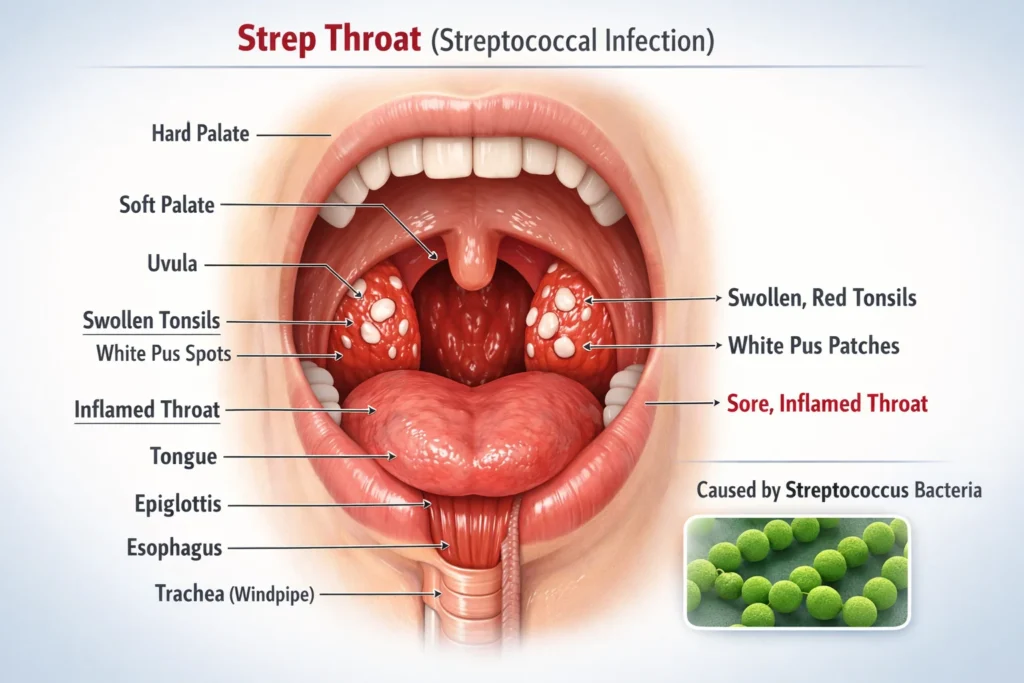
Visually, strep throat has several noticeable signs inside the mouth and throat. While symptoms can vary from person to person, doctors often look for specific features.
🔴 Key visual signs of strep throat:
- Bright red and inflamed throat
- Swollen tonsils (sometimes very enlarged)
- White patches or streaks of pus on tonsils
- Tiny red spots on the roof of the mouth (petechiae)
- Redness extending to the back of the throat
- Swollen lymph nodes in the neck
👀 Simple visual description:
A strep throat often looks like a deep red, irritated throat with white or yellowish patches scattered on the tonsils, sometimes making swallowing painful.
Signs and Symptoms of Strep Throat
Beyond appearance, strep throat also comes with physical symptoms that help identify it.
Common symptoms include:
- Sudden sore throat (often severe)
- Pain when swallowing
- Fever (often above 101°F / 38.3°C)
- Headache
- Fatigue or weakness
- Swollen neck glands
- Loss of appetite (especially in children)
What strep throat usually does NOT include:
- Cough
- Runny nose
- Hoarseness
👉 If those are present, it may be more likely a viral infection instead.
Strep Throat vs Viral Sore Throat (Visual Comparison Table)
| Feature | Strep Throat | Viral Sore Throat |
|---|---|---|
| Throat color | Bright red | Red or mildly inflamed |
| White patches | Common | Rare |
| Cough | Usually absent | Common |
| Fever | High fever likely | Mild or no fever |
| Onset | Sudden | Gradual |
| Cause | Bacteria | Virus |
This table makes it easier to understand why strep throat often feels more intense and looks more severe than a regular sore throat.
Causes and How Strep Throat Spreads
Strep throat spreads very easily, especially in close-contact environments.
Main causes:
- Group A Streptococcus bacteria
How it spreads:
- Coughing or sneezing droplets
- Sharing food or drinks
- Touching contaminated surfaces
- Close physical contact
Common real-life situations:
- Schools and classrooms
- Family homes
- Crowded public places
👉 This is why strep throat is often seen in children and spreads quickly in school environments.
How Doctors Identify Strep Throat
Doctors don’t rely only on appearance—they confirm strep throat with medical tests.
Diagnostic methods:
- Physical examination
- Checking throat redness and tonsil condition
- Rapid strep test
- Quick swab from the throat
- Throat culture
- More accurate lab test if needed
Even if your throat looks like strep, only a test can confirm it with certainty.
When Should You See a Doctor?
You should seek medical help if you notice:
- Severe sore throat lasting more than 2–3 days
- White patches on tonsils
- High fever
- Difficulty swallowing or breathing
- Swollen neck glands
- No cough but strong throat pain
⚠️ Early diagnosis helps prevent complications and speeds up recovery.
Treatment for Strep Throat
Strep throat is treatable and usually improves quickly with the right care.
Medical treatment:
- Antibiotics (commonly penicillin or amoxicillin)
- Fever reducers like acetaminophen or ibuprofen
Why antibiotics matter:
- Kill bacteria
- Reduce symptoms faster
- Prevent complications
- Stop spread to others
Most people start feeling better within 24–48 hours after starting antibiotics.
Home Care Tips for Faster Recovery
Along with medical treatment, home care plays a big role in comfort and recovery.
Helpful tips:
- Drink warm fluids (tea, soup, warm water)
- Gargle salt water
- Rest your voice
- Stay hydrated
- Use throat lozenges
- Avoid spicy or acidic foods
Foods that help:
- Soft soups
- Yogurt
- Mashed potatoes
- Smoothies
Common Misconceptions About Strep Throat
❌ Myth 1: “All sore throats are strep”
Not true—most sore throats are viral.
❌ Myth 2: “White patches always mean strep”
They can also appear in other infections like tonsillitis.
❌ Myth 3: “It goes away on its own quickly”
Without treatment, bacterial infections can last longer and worsen.
Strep Throat vs Tonsillitis vs Common Sore Throat
| Condition | Cause | Appearance | Severity |
|---|---|---|---|
| Strep throat | Bacteria | Red throat + white patches | Moderate to severe |
| Tonsillitis | Virus or bacteria | Swollen tonsils | Varies |
| Common sore throat | Virus | Mild redness | Mild |
👉 Tonsillitis and strep throat often overlap, which is why medical testing is important.
FAQs
1. What does strep throat look like in the early stage?
It usually starts with a red, irritated throat and mild swelling before white patches appear.
2. Can strep throat look like a cold?
Yes, but strep usually has no cough or runny nose, unlike a cold.
3. Do white spots always mean strep throat?
Not always—they can also appear in viral infections or tonsillitis.
4. How quickly does strep throat appear?
Symptoms often come on suddenly within 1–2 days.
5. Can you have strep throat without fever?
Yes, but fever is very common in most cases.
6. Is strep throat contagious?
Yes, it spreads easily through droplets and close contact.
7. How long does strep throat last?
With antibiotics, improvement happens in a few days; without treatment, it may last longer.
8. Can adults get strep throat too?
Yes, although it is more common in children and teenagers.
Conclusion
Strep throat is a bacterial infection that often shows clear visual signs such as a bright red throat, swollen tonsils, and white or yellow patches. Along with these visible changes, it usually comes with symptoms like sudden sore throat, fever, and pain while swallowing.
Understanding what strep throat looks like helps you recognize the infection early and take the right steps for treatment.
If you notice persistent sore throat symptoms along with fever and visible throat changes, it’s always best to get checked rather than wait.
Discover More Related Articles:
- What Does Skin Cancer Look Like: Types & Their Visible Symptoms In 2026
- Third Base Mean in a Relationship: Decoding Relationship Lingo In 2026

Ryan Thompson is an experienced content writer specializing in slang terms, texting abbreviations, and word meanings. He writes for meanvoro.com, where he creates accurate and easy-to-understand language content for readers.