
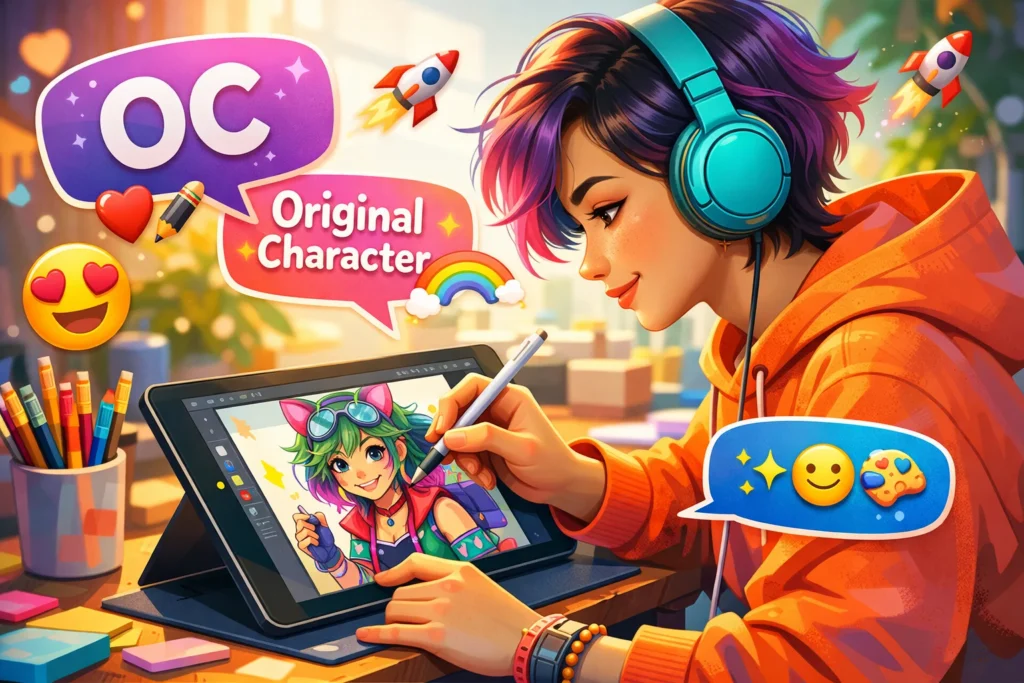
Definition:
OC in text typically stands for “Original Character.” It is commonly used in online communities, social media, and fanfiction to refer to a character created by someone rather than an existing character from a book, movie, game, or show.
In today’s fast-moving digital world, abbreviations and acronyms have become a language of their own. If you’ve been scrolling through fanfiction forums, roleplay chats, or social media, you might have come across “OC” and wondered what it means. Is it some secret code? A new trend? Or just another internet shorthand?
In reality, OC stands for “Original Character” a term that celebrates creativity, personal expression, and storytelling in online communities. From custom-designed characters in artwork to unique personas in games and roleplay, OCs are the cornerstone of countless online fandoms.
Origin of OC
The term OC originated from fanfiction and online roleplaying communities in the early 2000s. Writers and creators wanted a shorthand to differentiate between characters from official media and characters they created themselves.
- Fanfiction & Roleplay Roots: OC became popular on platforms like DeviantArt, FanFiction.net, and Tumblr, where writers would share stories featuring both canonical characters and their unique creations.
- Abbreviation Trend: Internet culture favors abbreviations to save time while chatting or posting online. OC is short, catchy, and instantly recognizable in creative circles.
- Community Recognition: Over time, OC gained wider recognition beyond fanfiction, appearing in discussions about art, storytelling, and gaming.
Popularity and Real-World Usage
OC is widely used among teenagers, young adults, and online content creators. Its usage has expanded to include not only text-based communication but also visual art, memes, and gaming.
Common Contexts:
- Social Media Posts: “Here’s my new OC I designed for my story! 🖤”
- Roleplay Conversations: “I’m introducing my OC to the group chat. Hope you like them!”
- Gaming Communities: “My OC is max level in this RPG!”
The abbreviation has become so mainstream that even casual users might use it when discussing personal creations or characters, often alongside hashtags like #OC on Instagram or Twitter.
Examples of OC in Text
OC can appear in different tones depending on context. Here’s a breakdown:
| Tone | Example | Explanation |
|---|---|---|
| Friendly/Excited | “Check out my OC! I’ve been working on them all week 😍” | Expressing pride and enthusiasm for a personal creation. |
| Neutral/Informative | “This OC is inspired by medieval fantasy, complete with custom armor.” | Sharing facts about the character without emotion. |
| Negative/Dismissive | “Ugh, another OC in the chat… can we stick to canon characters?” | Expressing mild annoyance or disinterest. |
Tip: Emojis and punctuation can subtly change the tone when using OC in text.
Comparison with Related Terms
OC is often compared to similar abbreviations in online communities:
| Term | Meaning | Difference from OC |
|---|---|---|
| Canon | Official character from a story | OC is created by the user, not official |
| AU | Alternate Universe | AU may involve OCs but focuses on a reimagined world |
| FC | Face Claim | FC is an actor or model representing an OC visually |
| IC | In-Character | IC refers to staying true to a character’s personality during roleplay, including OCs |
Knowing these distinctions helps communicate more effectively in fan communities or roleplay spaces.
Alternate Meanings of OC
While Original Character is the most common meaning online, OC can also refer to other things depending on context:
- Orange County – Often used geographically, especially in the U.S.
- Overclock – In gaming or tech communities, referring to increasing the speed of a computer processor.
- Officer Commanding – In military or police contexts.
Context is key—the meaning of OC depends heavily on the platform and conversation topic.
Polite or Professional Alternatives
If you want to avoid abbreviations in formal writing or professional settings:
- “Original Character” (spelled out)
- “Custom-created character”
- “User-generated character”
These alternatives maintain clarity while sounding professional, especially in academic, literary, or creative writing discussions.
FAQs
1. What does OC stand for in texting?
OC usually stands for Original Character, referring to a character created by someone rather than taken from an existing story.
2. Is OC only used in fanfiction?
No. While OC started in fanfiction, it’s also used in gaming, social media, and art communities.
3. Can OC have multiple interpretations?
Yes. OC can also mean Orange County, Overclock, or Officer Commanding, depending on context.
4. How do I introduce my OC online?
You can post a description or artwork with captions like “Meet my new OC” or hashtags such as #OC or #OriginalCharacter.
5. Are OCs important in online roleplay?
Absolutely. OCs allow creativity, world-building, and personal expression in roleplay communities.
6. Can OC be negative?
Sometimes, yes. People might use “another OC” dismissively if they prefer canon characters or stories.
7. How do I use OC professionally?
Spell it out as Original Character when writing essays, articles, or portfolios. Avoid slang abbreviations in formal contexts.
8. What’s the difference between OC and AU?
An OC is a custom character, while an AU (Alternate Universe) is a reimagined setting where OCs or canon characters may exist.
Tips for Using OC Effectively
- Use context clues: Emojis, hashtags, or surrounding text can help clarify the meaning.
- Know your audience: Teenagers and online communities will likely understand OC, but professional readers may need the term spelled out.
- Be respectful: Some people may dislike their OCs being compared or critiqued harshly. Use constructive feedback when interacting online.
- Combine with other tags: #OC, #FanCharacter, or #Roleplay can increase visibility and engagement on social platforms.
Conclusion
In online communication, OC is a versatile abbreviation that mainly means Original Character, symbolizing creativity and personal expression. From fanfiction to social media, OCs let users share their unique ideas, designs, and stories.
Knowing the context and audience ensures your use of OC is clear, respectful, and engaging. Remember to adapt its usage depending on tone friendly, neutral, or professional and leverage hashtags or descriptive captions for wider reach.
Whether you’re a fanfiction writer, gamer, or social media creator, understanding OC enriches your online vocabulary and allows you to participate fully in creative communities.
Discover More Related Articles:
- Pum Pum Mean in Jamaican: Caribbean Music Culture in 2026
- “GLA” Mean in Real Estate: How GLA Impacts Rent and Appraisal for 2026

Madison Taylor is an experienced content writer who focuses on researching and explaining word meanings, slang, and texting terms. She writes for meanvoro.com, creating clear and accurate to help readers understand language easily.