
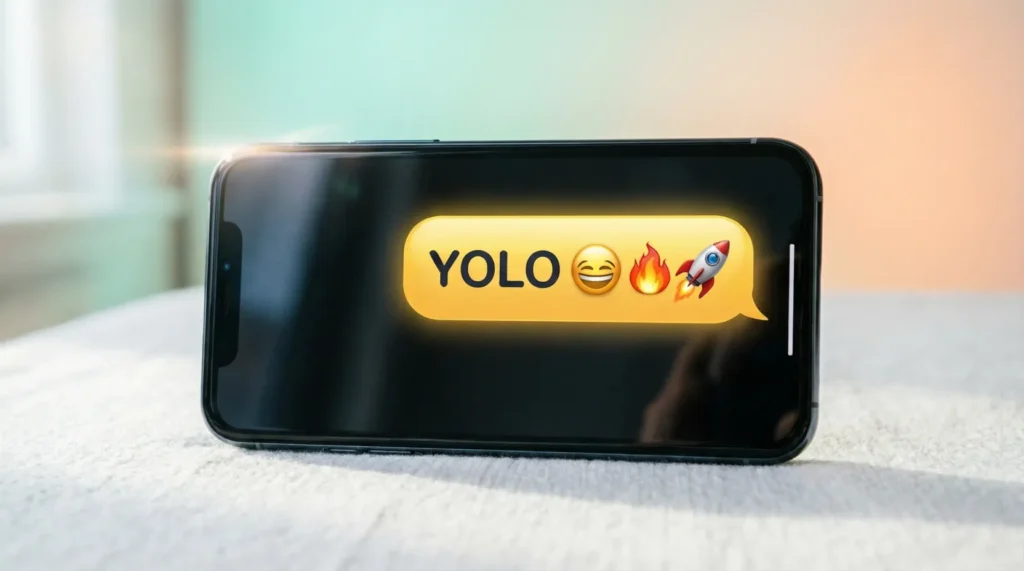
YOLO means “You Only Live Once.”
In texting, it is used to encourage enjoying the moment, taking chances, or justifying a spontaneous or fun decision, usually in a lighthearted or humorous way.
You have probably seen the word YOLO Meaning in Texting in text messages, social media captions, or online conversations. It often appears when someone makes a bold decision, plans something spontaneous, or jokes about doing something impulsive.
But what does YOLO actually mean in texting today, and how should it be used correctly?
In this complete guide, we explain what YOLO means in texting, where it comes from, how people use it in real conversations, and when it works best.
You will also find clear examples, tone explanations, comparisons with similar slang, polite alternatives, FAQs, and practical tips for everyday use.
What Does YOLO Mean in Texting?
In simple terms, YOLO is a mindset expression. It reminds people that life is short and moments should be enjoyed instead of overthinking every decision.
In text messages, YOLO is rarely serious. Most of the time, it is playful, casual, or slightly ironic.
People commonly use YOLO when:
- Encouraging friends to do something fun
- Justifying a last minute decision
- Making a joke about being impulsive
- Adding confidence to a choice
Origin of YOLO
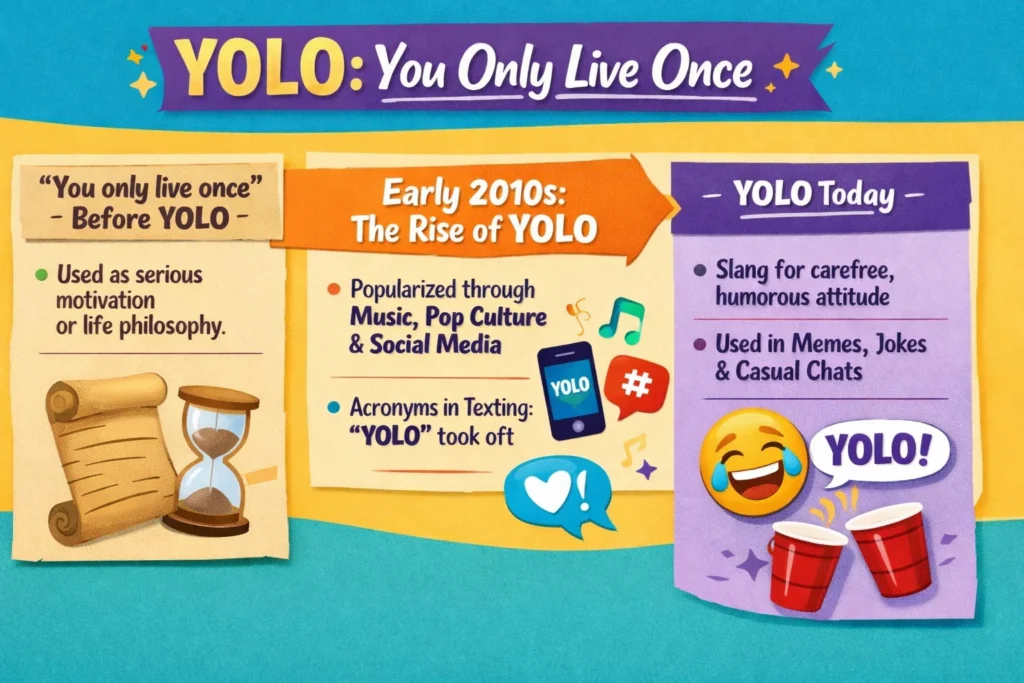
The phrase “you only live once” existed long before texting culture. However, the short form YOLO became popular in the early 2010s through music, pop culture, and social media.
As texting and online platforms grew, people shortened long phrases into acronyms. YOLO quickly became a popular way to express a carefree attitude.
Over time, the meaning shifted from serious motivation to a casual and humorous slang term.
How Popular Is YOLO Today?
YOLO is still widely recognized and understood, even if people use it less seriously now.
Today, YOLO is commonly:
- Used jokingly for small decisions
- Shared in casual texts and captions
- Understood across age groups
Even people who do not actively use the word still understand its meaning instantly.
How YOLO Is Used in Real Text Messages
YOLO changes meaning slightly depending on tone and context.
Playful and Fun Use
This is the most common usage.
Example:
“Let’s get dessert even though it’s late.”
“YOLO 😄”
Encouraging Use
Used to push someone to stop hesitating.
Example:
“You should apply for the trip.”
“YOLO. Just go for it.”
Humorous or Ironic Use
Often used for small or harmless choices.
Example:
“I ordered extra fries.”
“YOLO 😂”
YOLO Text Examples With Tone
Friendly Tone
“Let’s go on a road trip.”
“Yes, YOLO 🚗”
Neutral Tone
“I signed up for the workshop.”
“Nice. YOLO.”
Joking Tone
“I stayed up watching one more episode.”
“YOLO 😴”
Example
| Situation | Text Message | Meaning | Tone |
|---|---|---|---|
| Spontaneous plan | “Let’s go out tonight.” | Enjoy the moment | Playful |
| Encouragement | “Take the opportunity.” | Motivation | Supportive |
| Small decision | “Bought snacks instead of groceries.” | Joke excuse | Humorous |
| Celebration | “Booked the trip.” | Confidence | Positive |
Is YOLO Always Positive?
Most of the time, yes. However, YOLO should not be used to encourage unsafe or irresponsible behavior.
In modern texting, YOLO usually refers to low risk and everyday choices, not serious life decisions.
Using it lightly keeps the tone fun rather than careless.
YOLO Compared With Similar Text Slang
Using YOLO vs FOMO
YOLO means doing something because life is short.
FOMO means doing something because you fear missing out.
Comparing YOLO vs IDGAF
YOLO sounds playful and carefree.
IDGAF sounds more blunt or dismissive.
Distinguishing YOLO vs “Why Not”
YOLO is slang based and expressive.
“Why not” is simpler and more conversational.
Are There Alternate Meanings of YOLO?
In texting, YOLO almost always means You Only Live Once.
In rare cases, it may appear as:
- A hashtag or meme reference
- A brand name or username
- A joke rather than a literal statement
There are no widely accepted alternate definitions.
When You Should Avoid Using YOLO
YOLO is not suitable for every situation.
Avoid using YOLO:
- In professional or formal communication
- During serious emotional discussions
- When talking about important life decisions
- If it could sound careless or dismissive
Clear and thoughtful language works better in these cases.
Polite and Professional Alternatives to YOLO
If YOLO feels too casual, here are better options.
Casual Alternatives
- “Why not?”
- “Go for it.”
- “Might as well.”
Encouraging Alternatives
- “It’s worth trying.”
- “Take the opportunity.”
- “You won’t know unless you try.”
Professional Alternatives
- “This could be a valuable experience.”
- “It’s a good opportunity to explore.”
- “Consider taking the chance.”
Best Practices for Using YOLO
- Use it only in informal conversations
- Keep the tone light and friendly
- Emojis can soften the message
- Do not overuse it
- Avoid using it to dismiss real concerns
FAQs
1. What does YOLO mean in texting slang?
It means You Only Live Once and encourages enjoying the moment.
2. Is YOLO still popular?
Yes, but it is now used more humorously than seriously.
3. Is YOLO positive or negative?
Generally positive, but context matters.
4. Can YOLO be sarcastic?
Yes, it is often used jokingly.
5. Is YOLO appropriate for adults?
Yes, but only in casual conversations.
6. Should YOLO be used in professional texts?
No, it is too informal for professional settings.
7. Does YOLO encourage risky behavior?
Modern usage usually refers to harmless decisions.
8. Are there better alternatives to YOLO?
Yes, especially in serious contexts.
Conclusion
YOLO means “You Only Live Once,” and in texting, it is a fun and casual way to express spontaneity, confidence, or humor. While it remains widely understood, it works best in informal conversations and low pressure situations.
YOLO is an informal and playful expression that is often used humorously in modern texting. It works best in casual conversations with friends but should be avoided in serious or professional situations.
Discover More Related Articles:

Jessica Brown is a language-focused writer who creates well-researched articles on word meanings, abbreviations, and everyday expressions. She contributes to meanvoro.com, delivering simple, reliable, and reader-friendly content designed to make complex terms easy to understand.