
Definition
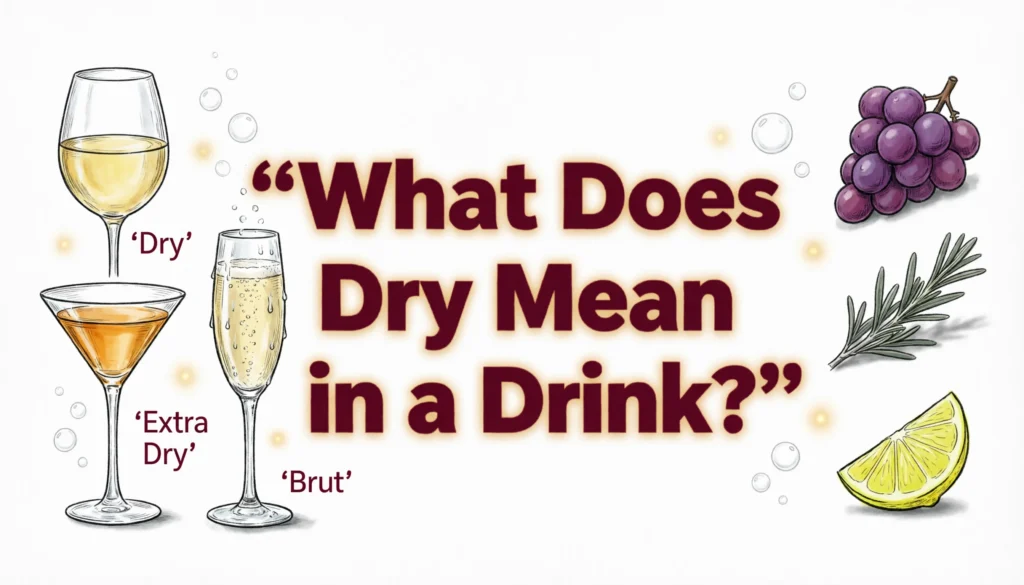
“Dry” in a drink means the beverage contains little to no residual sugar, resulting in a less sweet and often more crisp or bitter flavor profile. The term is commonly used to describe wines, cocktails, and spirits that emphasize sharp, clean, or herbaceous flavors rather than sweetness.
If you’ve ever looked at a cocktail menu or checked a wine label, you’ve probably come across the term “dry.” Drinks like dry martinis, dry wines, and extra dry champagne use this word often—but it can be a bit confusing at first.
At face value, “dry” doesn’t make much sense for a liquid. It’s not about texture or temperature. Instead, in the world of beverages, the term refers mainly to sweetness and how much sugar is left in the drink after it’s made.
Once you understand this idea, it becomes much easier to choose drinks that suit your personal taste. Whether you’re ordering at a bar, picking a bottle of wine, or just exploring drink menus, knowing what “dry” means helps you make more confident choices.
The Origin of the Term “Dry” in Drinks
How the Word “Dry” Became Popular
The use of dry in beverages mainly comes from the wine-making process.
During fermentation:
- Yeast converts grape sugar into alcohol
- The more sugar converted, the less sweet the wine becomes
If almost all sugar is converted, the result is a dry wine.
If some sugar remains, the wine tastes sweeter.
Over time, bartenders and drink makers adopted the same word to describe cocktails and spirits that lack sweetness.
Historical Influence in Cocktails
The term became especially common in the early 20th century cocktail culture.
Classic drinks like the dry martini became symbols of sophistication, where drinkers preferred clean, strong flavors instead of sugary mixes.
Since then, the term “dry” has become standard vocabulary in bars and restaurants worldwide.
How “Dry” Is Used in Different Drinks
Dry in Wine
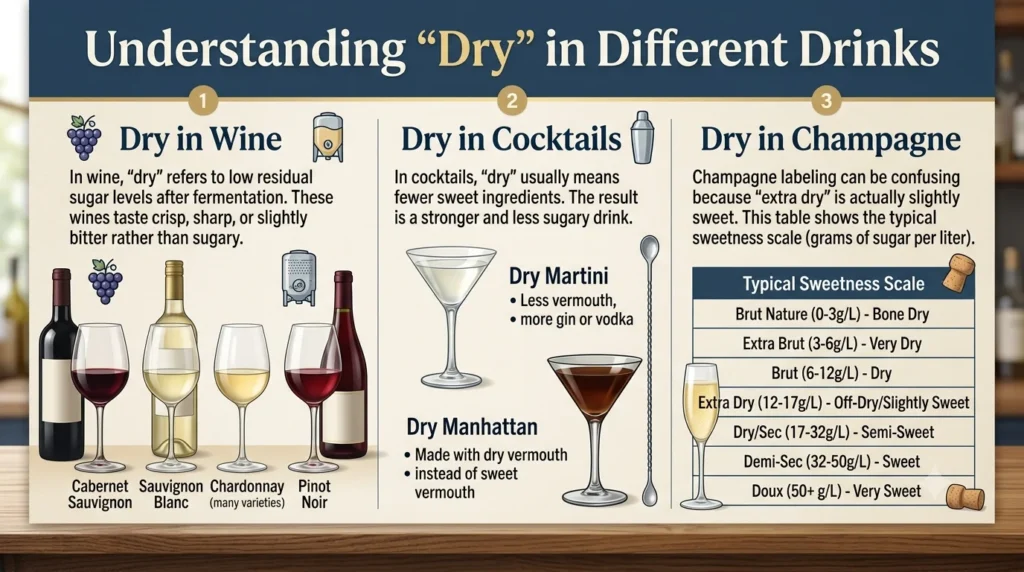
In wine, dry refers to low sugar levels after fermentation.
Common dry wines include:
- Cabernet Sauvignon
- Sauvignon Blanc
- Chardonnay (many varieties)
- Pinot Noir
These wines taste crisp, sharp, or slightly bitter rather than sugary.
Dry in Cocktails
In cocktails, dry usually means less sweet ingredients.
Example:
- Dry Martini – Less vermouth, more gin or vodka
- Dry Manhattan – Made with dry vermouth instead of sweet vermouth
The result is a stronger and less sugary drink.
Dry in Champagne
Champagne labeling can be confusing because “extra dry” is actually slightly sweet.
Typical sweetness scale:
| Champagne Type | Sweetness Level |
|---|---|
| Brut Nature | Extremely dry |
| Extra Brut | Very dry |
| Brut | Dry |
| Extra Dry | Slightly sweet |
| Sec | Medium sweet |
| Demi-Sec | Sweet |
So “brut” is actually drier than “extra dry.”
What a Dry Drink Tastes Like
Flavor Characteristics
Dry drinks often have these flavor qualities:
- Crisp
- Sharp
- Clean
- Bitter or herbal
- Less sugary
- More alcohol-forward
Example Flavor Experience
A dry gin martini might taste:
- Herbal 🌿
- Slightly bitter
- Smooth but strong
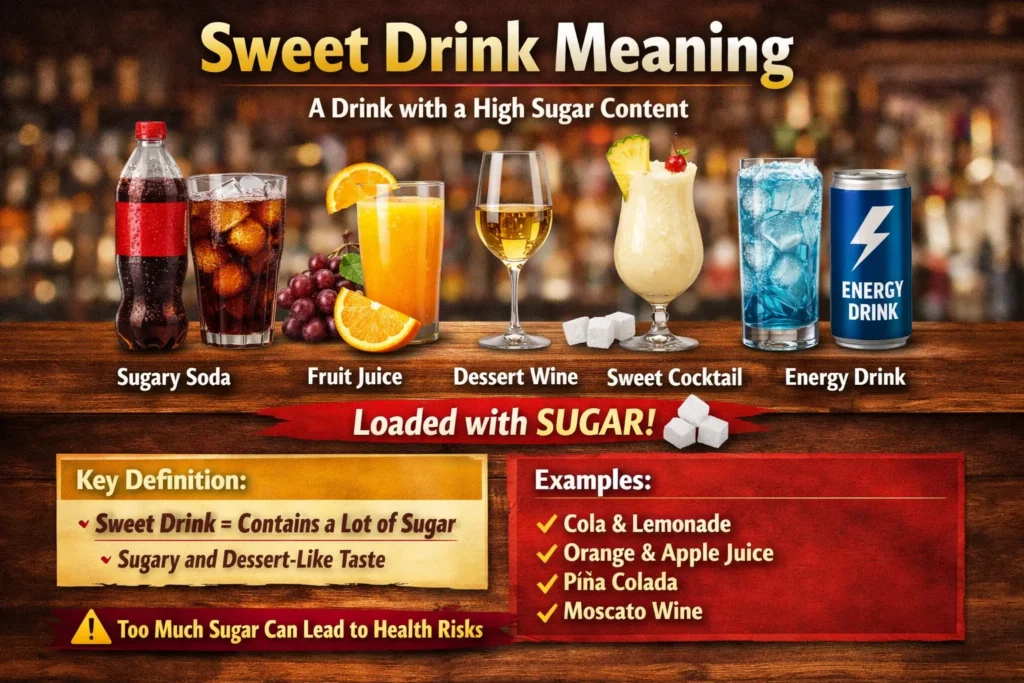
Meanwhile, a sweet cocktail might taste:
- Sugary
- Fruity
- Dessert-like
Examples of “Dry” Drinks
Common Dry Wines
- Sauvignon Blanc
- Pinot Grigio
- Cabernet Sauvignon
- Merlot
- Chardonnay (dry versions)
Popular Dry Cocktails
- Martini
- Dry Manhattan
- Negroni (relatively dry and bitter)
- Gin and tonic
Dry Spirits
Some spirits are considered naturally dry because they contain no added sugar, such as:
- Gin
- Vodka
- Whiskey
- Tequila
However, sweetness can still appear through mixers or flavor notes.
Table: Dry vs Sweet Drinks Comparison
Flavor Differences
| Feature | Dry Drink | Sweet Drink |
|---|---|---|
| Sugar Level | Very low | High |
| Flavor | Crisp, bitter, herbal | Fruity, sugary |
| Aftertaste | Clean, sharp | Smooth, syrupy |
| Examples | Dry martini, brut champagne | Dessert wine, margarita |
When People Prefer Each
| Situation | Dry Drink | Sweet Drink |
|---|---|---|
| Formal dinners | Common | Less common |
| Cocktails | Classic options | Fruity cocktails |
| Dessert pairing | Rare | Common |
Real-World Usage Examples
Friendly Context
Someone might say:
“I like my martinis dry, please.”
Meaning they want less sweetness and stronger alcohol flavor.
Another example:
“This wine is nice and dry.”
Meaning the wine isn’t sweet.
Neutral Usage
Bartender conversation:
“Would you prefer a dry or sweet wine with your meal?”
Enthusiastic Tone
Wine lovers sometimes say:
“I love a crisp dry white wine on a hot day!”
Confused Usage
Sometimes beginners misunderstand the term:
“Why is this wine called dry if it’s a liquid?”
The answer is simply that “dry” refers to sweetness, not texture.
Why Many People Prefer Dry Drinks
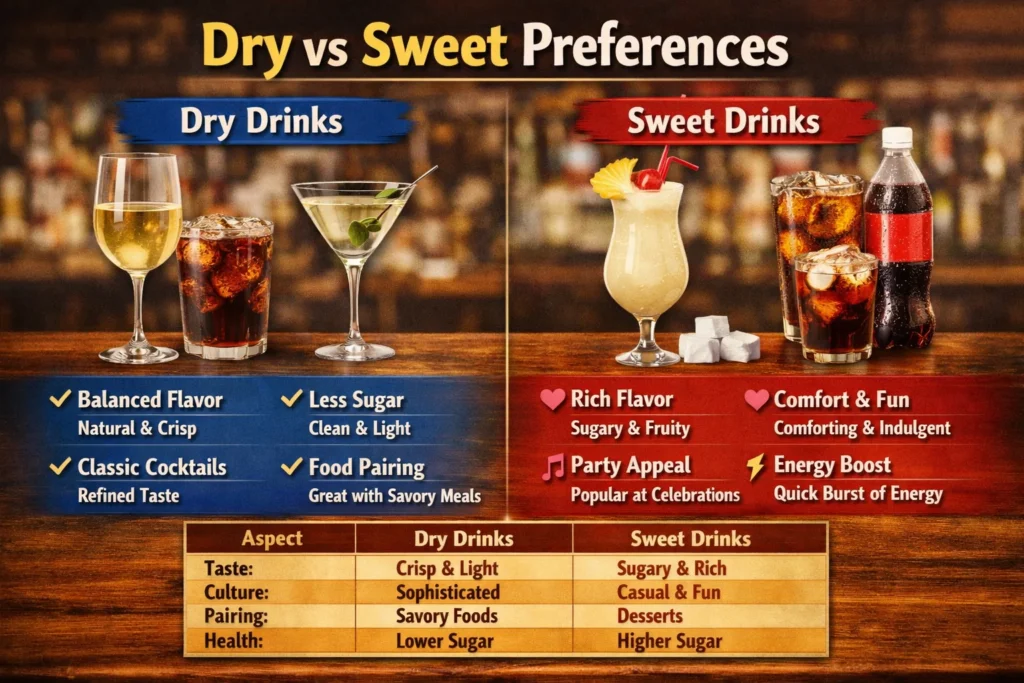
Dry beverages are popular for several reasons.
1. Balanced Flavor
Dry drinks allow natural flavors to stand out without sugar masking them.
2. Less Sugary Taste
Some people prefer drinks that aren’t overly sweet.
3. Classic Cocktail Culture
Many traditional cocktails were designed to be dry and spirit-forward.
4. Food Pairing
Dry wines pair better with many foods because sweetness doesn’t overpower dishes.
Comparison With Related Drink Terms
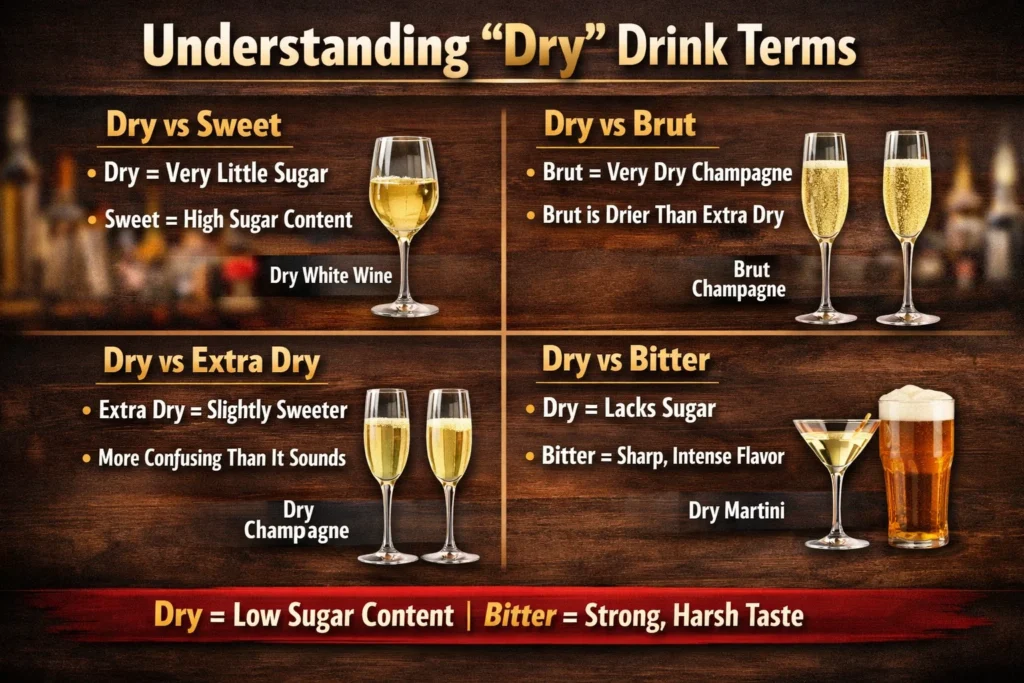
Understanding “dry” becomes easier when you compare it to other drink descriptions.
Dry vs Sweet
- Dry → Very little sugar
- Sweet → High sugar content
Example:
- Dry white wine vs dessert wine
Dry vs Brut
Brut is a wine or champagne category meaning very dry.
Example:
- Brut champagne is drier than extra dry champagne.
Dry vs Extra Dry
This one is confusing.
- Extra Dry champagne is actually slightly sweeter than Brut.
Dry vs Bitter
These terms can overlap but mean different things.
| Term | Meaning |
|---|---|
| Dry | Low sugar |
| Bitter | Strong sharp flavor |
A drink can be both dry and bitter, but not always.
Alternate Meanings of “Dry”
Although the focus here is beverages, “dry” can mean other things depending on context.
Humor
“Dry humor” refers to subtle, deadpan jokes.
Example:
“He has a very dry sense of humor.”
Personality
Someone might say:
“That joke was a bit dry.”
Meaning not very emotional or expressive.
Alcohol Laws
Historically, “dry counties” referred to areas where alcohol sales were prohibited.
Tips for Ordering a Dry Drink
If you’re ordering at a bar or restaurant, these tips can help.
Ask the Bartender
If unsure, ask:
“Is this cocktail dry or sweet?”
Specify Your Preference
You can say:
- “I prefer dry cocktails.”
- “Can you make that extra dry?”
Try Different Styles
If you’re new to dry drinks, try:
- Dry white wine
- Gin martini
- Brut champagne
You may discover new flavors you enjoy.
FAQs:
Does dry mean a drink has no sugar?
Not always zero sugar, but very little residual sugar, making the drink taste less sweet.
Why is wine called dry?
Wine is called dry when most of the natural grape sugar is fermented into alcohol.
Is dry alcohol stronger?
Not necessarily. Dry refers to sweetness, not alcohol content, though some dry cocktails taste stronger.
What is a dry martini?
A dry martini contains less vermouth, emphasizing the gin or vodka.
Is dry wine bitter?
Dry wine can taste slightly bitter or crisp, but bitterness isn’t required.
Is extra dry sweeter than brut?
Yes. Brut champagne is actually drier than extra dry.
Do dry drinks have fewer calories?
Often yes, because less sugar means fewer calories, though alcohol still contains calories.
Is dry better than sweet?
Neither is better. It simply depends on personal taste preference.
Conclusion
The term “dry” in a drink simply means the beverage isn’t sweet. Instead of sugary flavors, dry drinks highlight crisp, sharp, herbal, or spirit-forward tastes.
From dry wines and brut champagne to classic cocktails like martinis, the word helps describe how a drink tastes and how much sugar it contains.
Next time you see “dry” on a drink menu, you’ll know exactly what to expect.
Discover More Related Articles:

Ryan Thompson is an experienced content writer specializing in slang terms, texting abbreviations, and word meanings. He writes for meanvoro.com, where he creates accurate and easy-to-understand language content for readers.