
DWU means “Don’t Wake Up.”
It is commonly used in texting or online chats to ask someone not to wake or disturb a person who is sleeping.
What Does DWU Mean in Texting? is a short and casual texting abbreviation that many people see online but don’t always understand right away. If you’ve ever received a message saying “DWU” and paused to figure it out, you’re not alone.
This guide explains what DWU means in a text, how it’s used in real conversations, the tone behind it, examples, alternatives, and common questions people search online.
Texting has developed its own shorthand language to save time and effort. Abbreviations like LOL, BRB, and IDK are widely known, but others like DWU are less common and can be confusing without context.
DWU usually appears in conversations involving sleep, rest, or privacy, especially in casual messages between people who already know each other well.
What Does DWU Mean in a Text?
DWU stands for Don’t Wake Up.
It’s a direct request asking someone not to disturb another person who is sleeping. While the meaning is simple, the tone can change depending on the situation and how it’s written.
Core Meaning
- Asking someone to avoid waking a sleeping person
- Often related to noise, calls, or physical interruptions
- Used mainly in informal communication
Origin of DWU
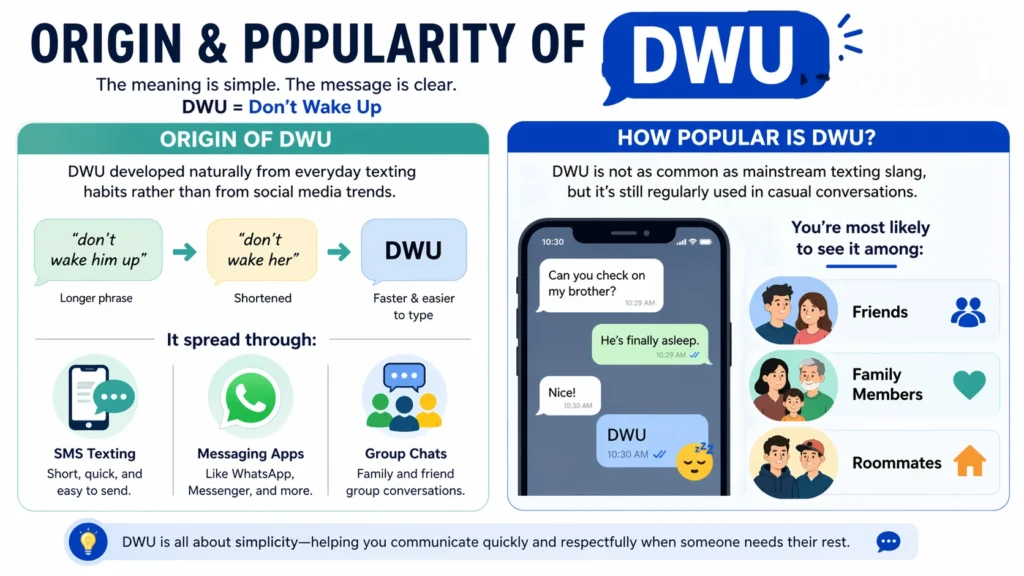
DWU developed naturally from everyday texting habits rather than from social media trends.
As people shortened longer phrases like “don’t wake him up” or “don’t wake her,” the abbreviation DWU became a faster way to communicate the same message.
It spread through:
- SMS texting
- Messaging apps like WhatsApp and Messenger
- Family and friend group chats
How Popular Is DWU?
DWU is not as common as mainstream texting slang, but it’s still regularly used in casual conversations.
You’re most likely to see it among:
- Friends
- Family members
- Roommates
Because it’s informal, it’s rarely used in professional or public communication.
Real-World Usage of DWU
DWU is typically used when someone is sleeping and should not be disturbed.
Common Situations
- A baby or child is napping
- Someone worked late or a night shift
- A sick person is resting
- A roommate is asleep
DWU Tone Explained
The tone of DWU depends heavily on context.
Friendly or Caring Tone
“He finally fell asleep, DWU please 😊”
Neutral Tone
“Mom is resting. DWU.”
Firm or Urgent Tone
“DWU. He just went to sleep.”
Examples
Friendly example
“She’s been up all night studying, DWU ❤️”
Family group chat
“Dad is sleeping after work, DWU when you get home.”
Roommate situation
“I’ll unlock the door. DWU though.”
Late-night message
“I’ll call you later, DWU right now.”
Example
| Context | Example Message | Tone |
| Family | Baby is napping, DWU | Caring |
| Friends | He passed out early, DWU 😂 | Casual |
| Roommates | DWU, meeting tomorrow | Neutral |
| Urgent | DWU. He’s sick | Fir |
Does DWU Have Other Meanings?
In most texting situations, DWU means Don’t Wake Up.
Rare alternate interpretations may include:
- Didn’t wake up
- Don’t wake us
These meanings are uncommon and depend entirely on context.
DWU vs Similar Text Abbreviations
| Abbreviation | Meaning | Usage |
| DWU | Don’t Wake Up | Informal |
| DND | Do Not Disturb | Neutral |
| BRB | Be Right Back | Casual |
| FYI | For Your Information | Neutral |
| AFK | Away From Keyboard | Online chats |
Polite or Professional Alternatives to DWU
Since DWU is informal, it’s best avoided in professional communication.
Polite Alternatives
- Please don’t wake them
- Kindly avoid disturbing them
- They are resting at the moment
Professional Alternatives
- Please allow them to rest uninterrupted
- They are currently unavailable and resting
- Let’s follow up later to avoid disturbance
When Should You Avoid Using DWU?
Avoid using DWU in:
- Emails
- Workplace messages
- Academic communication
- Client conversations
Full sentences are clearer and more respectful in these settings.
Common Mistakes When Using DWU
- Using it in professional messages
- Sending it without context
- Assuming everyone understands the abbreviation
- Using an abrupt or aggressive tone
FAQs
1. What does DWU stand for in texting?
DWU stands for Don’t Wake Up.
2. Is DWU rude?
No, but it can sound abrupt if not explained.
3. Is DWU commonly used?
It’s moderately common in casual texting.
4. Can DWU have a negative meaning?
Not usually. It’s mostly practical or caring.
5. Is DWU appropriate for work messages?
No, it’s best to avoid it in professional settings.
6. Can DWU mean “didn’t wake up”?
Rarely, and only if the context clearly supports it.
7. Should I use emojis with DWU?
Emojis can soften the tone and make it friendlier.
8. What is the best alternative to DWU?
“Please don’t wake them” is the safest option.
Conclusion
DWU is a casual texting abbreviation that means Don’t Wake Up. It’s commonly used among friends, family, and roommates when someone is sleeping and should not be disturbed.
Discover More Related Articles:
- RD Mean in a Text: On Snapchat, WhatsApp & Instagram in 2026
- Nolle Prosequi Mean in Court: Rights, Risks, and Outcomes in 2026

Jessica Brown is a language-focused writer who creates well-researched articles on word meanings, abbreviations, and everyday expressions. She contributes to meanvoro.com, delivering simple, reliable, and reader-friendly content designed to make complex terms easy to understand.