
Definition:
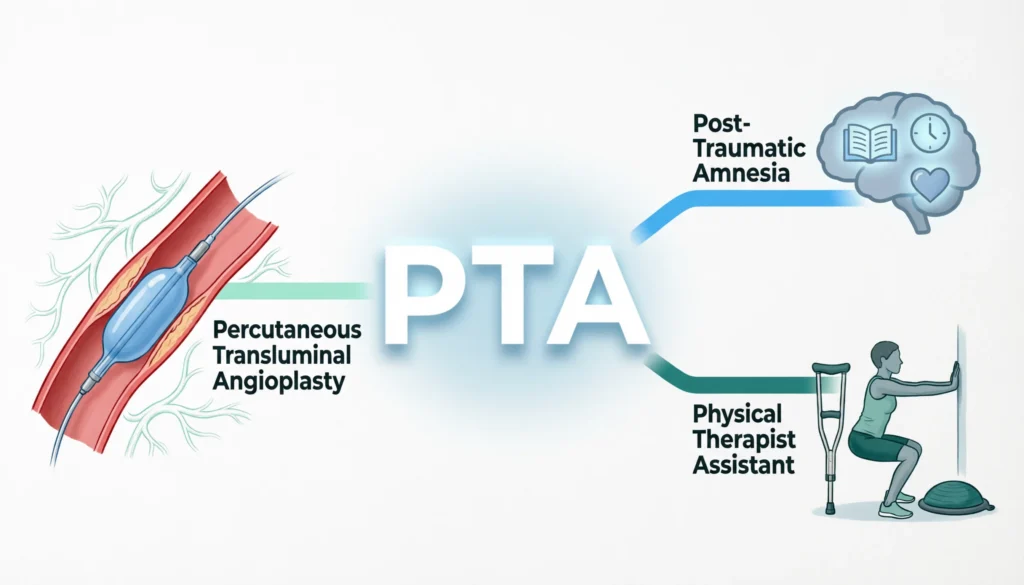
PTA in medical terms most commonly stands for “Percutaneous Transluminal Angioplasty.”
It is a minimally invasive medical procedure used to open narrowed or blocked blood vessels, typically arteries, using a small balloon catheter.
In some contexts, PTA may also mean “Post-Traumatic Amnesia,” a condition involving memory loss after a head injury.
If you’ve ever looked through a hospital report, doctor’s notes, or medical records, you may have noticed the abbreviation PTA and wondered what it stands for. Medical professionals frequently use abbreviations to simplify documentation, but these terms can often be confusing for patients and their families.
In healthcare, the PTA full form in medical can refer to either Prior To Admission or Post-Traumatic Amnesia, depending on the situation. Since many medical abbreviations have more than one meaning, understanding the context is essential to interpreting them correctly.
Knowing what PTA means can help you better understand medical reports, communicate more effectively with healthcare providers, and stay informed about diagnoses, treatments, and patient care. In this article, we’ll explore the different meanings of PTA, how healthcare professionals use the term, and why it plays an important role in medical settings.
PTA Medical Abbreviation
In healthcare, PTA can refer to several medical concepts, but the two most common are:
| Abbreviation | Full Form | Field | Meaning |
|---|---|---|---|
| PTA | Percutaneous Transluminal Angioplasty | Cardiology / Vascular medicine | Procedure to widen blocked arteries |
| PTA | Post-Traumatic Amnesia | Neurology | Memory loss after brain injury |
| PTA | Physical Therapist Assistant | Rehabilitation | Healthcare professional assisting physical therapists |
| PTA | Prior to Admission | Medical documentation | Refers to a patient’s condition before hospital admission |
Among these, Percutaneous Transluminal Angioplasty is the most frequently referenced medical meaning in clinical contexts.
What Is Percutaneous Transluminal Angioplasty?
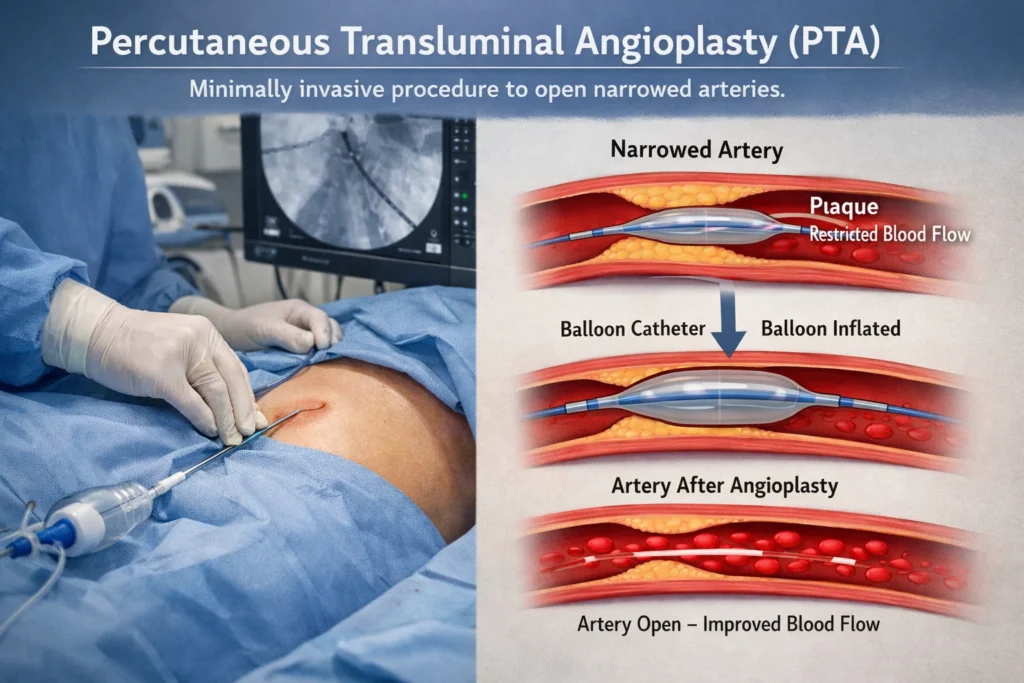
Percutaneous Transluminal Angioplasty (PTA) is a minimally invasive medical procedure used to restore blood flow through narrowed or blocked arteries.
Doctors perform PTA using a thin catheter with a balloon at its tip, which is inserted through a small puncture in the skin and guided to the affected artery.
When the balloon inflates, it widens the artery and improves blood circulation.
Why Doctors Perform PTA
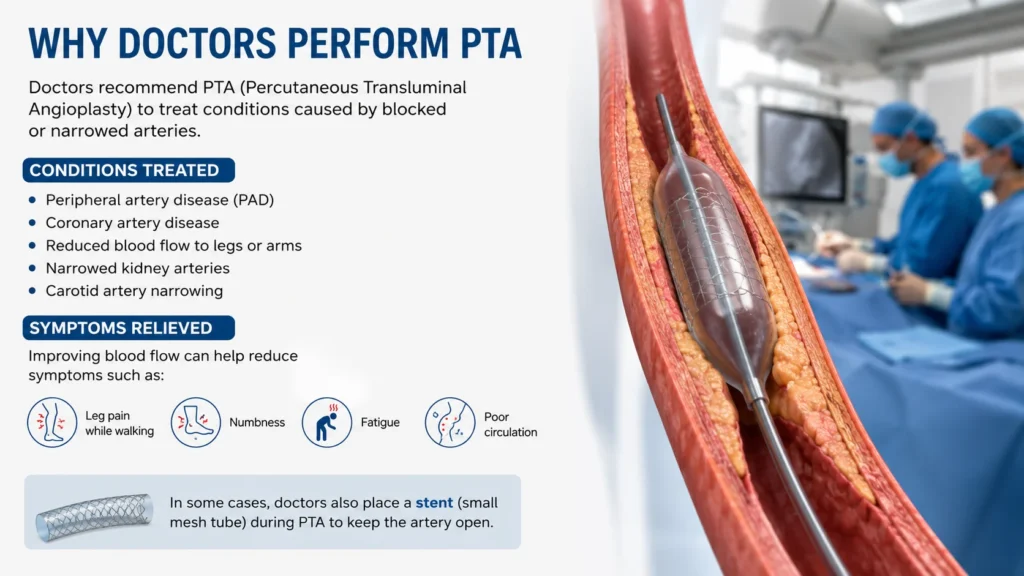
Doctors recommend PTA to treat conditions caused by blocked or narrowed arteries, including:
- Peripheral artery disease (PAD)
- Coronary artery disease
- Reduced blood flow to legs or arms
- Narrowed kidney arteries
- Carotid artery narrowing
Improving blood flow can help reduce symptoms such as:
- Leg pain while walking
- Numbness
- Fatigue
- Poor circulation
In some cases, doctors also place a stent (small mesh tube) during PTA to keep the artery open.
Step-by-Step: How the PTA Procedure Works
Here’s how a typical PTA procedure happens:
- Local anesthesia is applied to numb the insertion area.
- A thin catheter is inserted into a blood vessel (often in the groin or arm).
- The catheter is guided to the narrowed artery using imaging technology.
- A balloon at the catheter tip inflates to widen the artery.
- The balloon is removed once blood flow improves.
- Sometimes, a stent is inserted to keep the artery open.
Most PTA procedures take 30 minutes to 2 hours depending on complexity.
Real-World Usage of PTA in Medical Reports
Doctors and healthcare providers commonly use PTA in patient records and clinical notes.
Here are some examples:
| Medical Note | Meaning |
|---|---|
| “Patient scheduled for PTA of left femoral artery.” | Angioplasty procedure planned |
| “Successful PTA performed with stent placement.” | Blood vessel opened successfully |
| “PTA recommended due to severe arterial narrowing.” | Doctor suggests angioplasty treatment |
| “Symptoms improved following PTA.” | Blood flow improved after procedure |
In these examples, PTA refers specifically to angioplasty.
What Is Post-Traumatic Amnesia?

Post-Traumatic Amnesia refers to the temporary inability to form new memories after a head injury.
During PTA, a person may:
- Feel confused
- Have trouble remembering events
- Ask repeated questions
- Forget conversations or instructions
The duration of PTA can help doctors estimate the severity of a traumatic brain injury (TBI).
PTA Duration and Brain Injury Severity
Doctors often classify head injuries based on how long Post-Traumatic Amnesia lasts.
| PTA Duration | Injury Severity |
|---|---|
| Less than 1 hour | Mild brain injury |
| 1–24 hours | Moderate injury |
| 1–7 days | Serious injury |
| More than 7 days | Severe brain injury |
The longer PTA lasts, the more serious the injury may be.
PTA in Medical Documentation: Prior to Admission
Another meaning of PTA in hospital notes is “Prior to Admission.”
This abbreviation describes a patient’s condition before they were admitted to the hospital.
Example
- “Patient experienced chest pain PTA.”
→ The chest pain happened before hospital admission.
This usage is common in emergency medicine and hospital records.
PTA as Physical Therapist Assistant

In rehabilitation and physical therapy settings, PTA may refer to a Physical Therapist Assistant.
A Physical Therapist Assistant works under the supervision of a licensed physical therapist and helps patients with:
- Exercise therapy
- Mobility training
- Rehabilitation programs
- Injury recovery
They play an important role in physical rehabilitation clinics, hospitals, and sports medicine centers.
Comparison: PTA vs Similar Medical Abbreviations
Medical abbreviations can look similar, which sometimes causes confusion.
Here’s how PTA compares with other related terms.
| Abbreviation | Meaning | Field |
|---|---|---|
| PTA | Percutaneous Transluminal Angioplasty | Vascular medicine |
| PTCA | Percutaneous Transluminal Coronary Angioplasty | Cardiology |
| TIA | Transient Ischemic Attack | Neurology |
| TBI | Traumatic Brain Injury | Neurology |
Key Difference
- PTA refers to angioplasty in any artery
- PTCA specifically refers to angioplasty in coronary (heart) arteries
Why Medical Abbreviations Like PTA Are Used
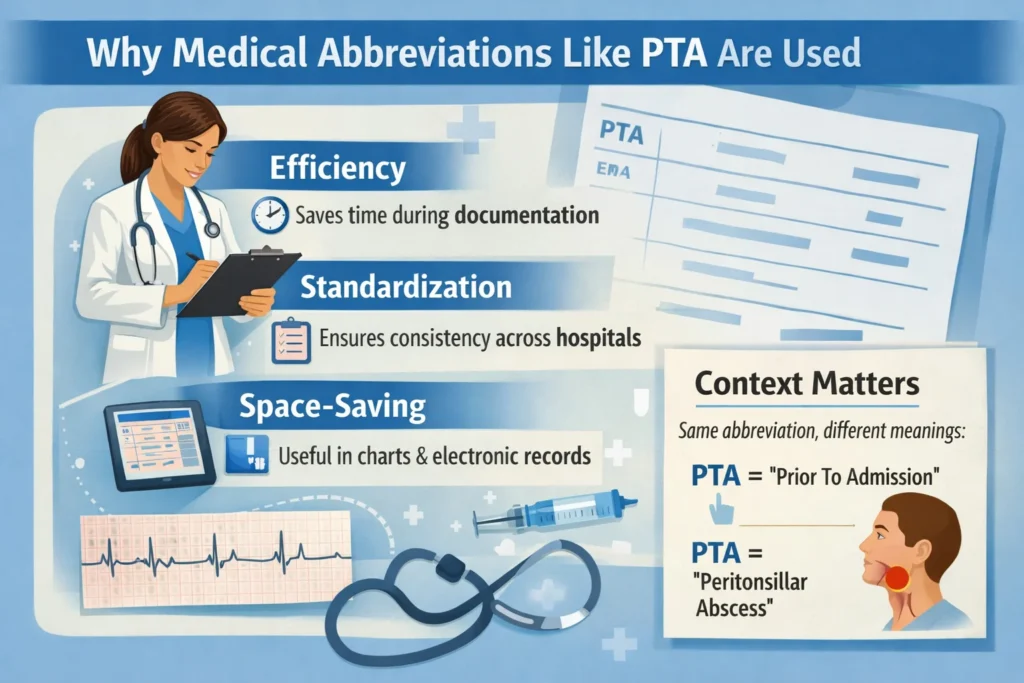
Healthcare professionals rely on abbreviations for several reasons:
- Efficiency: Saves time during documentation
- Standardization: Ensures consistency across hospitals
- Space-saving: Useful in charts and electronic records
However, because some abbreviations have multiple meanings, medical staff interpret them based on context.
Examples of PTA in Conversations
Understanding tone and context can help clarify how the term is used.
Neutral Medical Discussion
“Your doctor recommends PTA to improve blood flow in your leg artery.”
Clinical Documentation
“Patient underwent successful PTA with no complications.”
Neurological Context
“Memory loss lasted several hours after the injury, suggesting PTA.”
Medical Training Discussion
“The PTA assisted the therapist during the rehabilitation session.”
Professional or Patient-Friendly Alternatives
Doctors sometimes replace abbreviations with clearer explanations for patients.
Instead of saying PTA, healthcare providers might say:
- “Angioplasty procedure”
- “Balloon procedure to open arteries”
- “Memory loss after head injury”
- “Physical therapy assistant”
Using full terms helps patients better understand their medical care.
Alternate Meanings of PTA Outside Medicine
Although this article focuses on medical meanings, PTA has several other definitions in everyday language.
| Field | Meaning |
|---|---|
| Education | Parent-Teacher Association |
| Finance | Preferential Trade Agreement |
| Internet slang | Sometimes used informally for “please take action” |
Because of these differences, context always determines the correct meaning.
FAQs
1. What does PTA mean in medical terminology?
In medical terminology, PTA usually stands for Percutaneous Transluminal Angioplasty, a procedure used to open blocked arteries and improve blood flow.
2. What is the PTA procedure used for?
PTA is used to treat narrowed or blocked arteries, often caused by plaque buildup. It improves circulation and reduces symptoms such as pain or fatigue.
3. Is PTA the same as angioplasty?
Yes. PTA is a type of angioplasty, specifically the balloon procedure used to widen blood vessels.
4. What does PTA mean in brain injury cases?
In neurology, PTA stands for Post-Traumatic Amnesia, a temporary memory loss that occurs after a head injury.
5. What does PTA mean in hospital notes?
In medical documentation, PTA can mean “Prior to Admission,” referring to events or conditions that occurred before a patient was admitted to the hospital.
6. Is PTA a surgery?
PTA is considered a minimally invasive procedure, not traditional open surgery.
7. What does PTA mean in physical therapy?
In rehabilitation, PTA stands for Physical Therapist Assistant, a professional who helps physical therapists provide patient care.
8. How do doctors determine which meaning of PTA applies?
Doctors determine the meaning of PTA based on context, medical specialty, and surrounding information in the medical report.
Conclusion
The abbreviation PTA in medical terms can have several meanings, but the most common is Percutaneous Transluminal Angioplasty, a minimally invasive procedure used to open blocked arteries and restore healthy blood flow.
However, depending on context, PTA may also refer to Post-Traumatic Amnesia, Physical Therapist Assistant, or Prior to Admission in medical documentation.
Understanding these meanings can help patients:
- Interpret medical reports
- Communicate better with healthcare providers
- Feel more confident about their medical care
Whenever you see PTA in a medical context, always consider where it appears and what medical field is involved to determine the correct meaning.
Discover More Related Articles:

Ryan Thompson is an experienced content writer specializing in slang terms, texting abbreviations, and word meanings. He writes for meanvoro.com, where he creates accurate and easy-to-understand language content for readers.