Definition
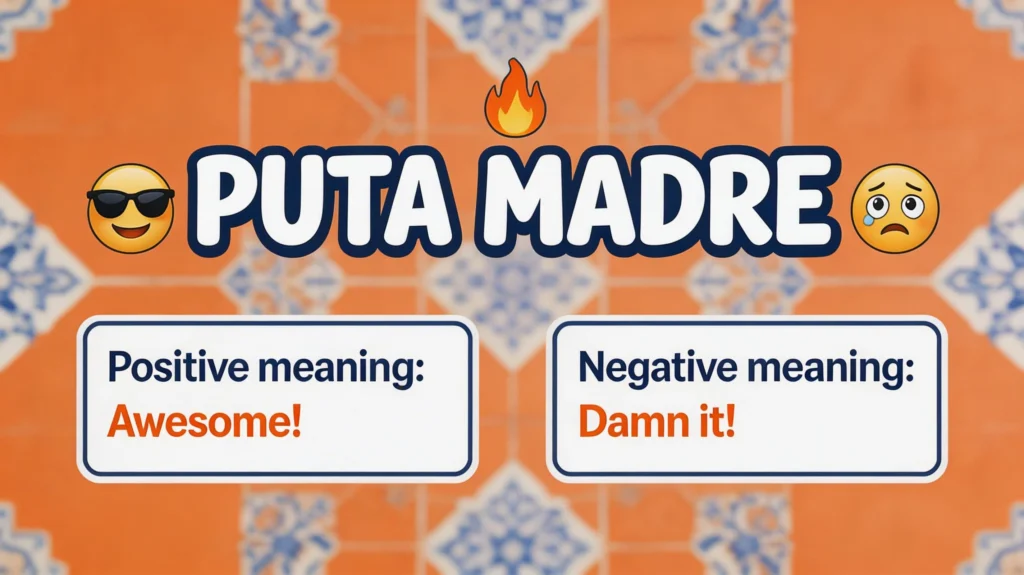
“Puta madre” is a Spanish slang expression that can express surprise, frustration, admiration, or anger. Literally translated, it means “mother prostitute,” but its actual meaning depends on the context:
Positive tone: “¡Está de puta madre!” → “It’s awesome!”
Negative tone: “¡Qué puta madre!” → “What a mess!” / “Damn it!”
Neutral tone: Can be used as an intensifier or exclamation.
When learning Spanish, certain expressions can catch you off guard. One such phrase is “puta madre.” You may have heard it in movies, songs, or casual conversations, but its meaning and usage vary depending on context, tone, and region. This guide breaks down everything you need to know about “puta madre” from its definition and origin to examples, alternatives, and even polite substitutes.
Origin of “Puta Madre”
The phrase “puta madre” originates from Spain but has spread to Latin American countries, especially Mexico, Argentina, and Colombia. It is part of Spanish vulgar slang and stems from expressions that involve expletives for strong emotional emphasis.
Key Points About Its Origin
- Literal meaning: Combines puta (prostitute) and madre (mother).
- Cultural roots: Reflects a long history of using strong language in Spanish to convey emotions emphatically.
- Popularity: Common in informal conversations, movies, and music.
- Regional variation:
- In Spain: Often used casually among friends.
- In Mexico: Can be more intense or vulgar depending on context.
- In Argentina: Used similarly but often softened by tone or context.
Usage of “Puta Madre”
The meaning of “puta madre” changes dramatically depending on context, tone, and punctuation. Here’s a breakdown:
1. Positive Usage
Used to show excitement, admiration, or approval:
- ¡Está de puta madre! – “It’s awesome!”
- Me lo pasé de puta madre en la fiesta. – “I had an amazing time at the party.” 😎🎉
2. Negative or Frustrated Usage
Used to express anger, annoyance, or disappointment:
- ¡Qué puta madre con este tráfico! – “Damn this traffic!” 🚗💥
- ¡Puta madre, olvidé mi tarea! – “Damn it, I forgot my homework!” 😩
3. Neutral Usage
Used as an intensifier, similar to “very” or “really”:
- Está de puta madre complicada la situación. – “The situation is really complicated.”
Examples With Context
| Spanish Phrase | Tone | English Translation | Context / Notes |
|---|---|---|---|
| ¡Está de puta madre! | Positive | “It’s awesome!” | Expressing approval or excitement. |
| ¡Puta madre! | Negative | “Damn it!” | Frustration, anger, or disappointment. |
| Me siento de puta madre | Positive | “I feel amazing” | Informal, friendly tone. |
| ¡Qué puta madre! | Negative | “What a mess!” | Complaining or expressing shock. |
| Todo salió de puta madre | Positive | “Everything went perfectly” | Casual conversation, friendly. |
Comparison With Related Terms
Spanish has several expressions similar to “puta madre” that convey strong emotions:
| Term | Literal Meaning | Tone | Example |
|---|---|---|---|
| La hostia | “The host” | Positive/negative | ¡Es la hostia! – “It’s amazing!” |
| Coño | “C*nt” | Negative/positive | ¡Coño, qué calor! – “Damn, it’s hot!” |
| Carajo | “Hell / damn” | Negative | ¡Vete al carajo! – “Go to hell!” |
| De puta madre | “Of a mother prostitute” | Positive | Todo salió de puta madre – “Everything went perfectly” |
Tip: Unlike English swear words, Spanish phrases like “puta madre” often change meaning with tone, facial expression, and context.
Alternate Meanings
While most commonly an expletive:
- Intensifier: “de puta madre” can mean extremely or very in casual speech.
- Sarcasm: Can be ironic depending on context.
- Song lyrics / slang: Often used in music or youth slang to convey emotions rather than literal meaning.
Polite or Professional Alternatives
If you want to avoid vulgar language but convey a similar sentiment, try these:
| Spanish Phrase | English Translation | Tone / Usage |
|---|---|---|
| ¡Genial! | “Great!” | Positive, friendly |
| ¡Increíble! | “Incredible!” | Positive, neutral |
| ¡Qué mal! | “How bad!” | Negative, mild |
| ¡Vaya problema! | “What a problem!” | Neutral, professional |
| ¡Fantástico! | “Fantastic!” | Positive, professional |
Tip: Using these alternatives in professional or formal settings keeps communication clear without offending anyone.
Usage Tips for Learners
- Understand the context first: Avoid using “puta madre” with strangers or in professional settings.
- Observe tone and body language: The same phrase can be positive or negative.
- Regional differences: What’s casual in Spain might be vulgar in Mexico or vice versa.
- Practice with friends carefully: Only with people familiar with slang.
- Use intensifiers safely: “de puta madre” is a safer version for admiration or fun.
FAQs
1. Is “puta madre” offensive?
Yes, it’s considered vulgar. Context matters: among friends, it can be playful; in formal settings, it’s offensive.
2. Can “puta madre” be positive?
Absolutely. When used as “de puta madre”, it can mean amazing, excellent, or awesome.
3. What is the literal translation of “puta madre”?
Literally, it means “mother prostitute”, but it’s rarely interpreted literally.
4. How do you use “puta madre” in a sentence?
Example: ¡Todo salió de puta madre! – “Everything went perfectly!”
5. Is it used in all Spanish-speaking countries?
Mostly in Spain, Mexico, Argentina, and some Latin American regions. Usage and tone can vary.
6. Are there polite alternatives?
Yes: ¡Genial!, ¡Increíble!, or ¡Fantástico! convey similar emotions without vulgarity.
7. Can it be used in writing?
Yes, in informal writing, social media, or messaging. Avoid in professional documents.
8. Is it okay to mimic in movies or songs?
Yes, but understand context and audience before using it in real life.
Conclusion
“Puta madre” is a versatile, expressive Spanish phrase with a rich history in slang and everyday conversation. Its meaning depends heavily on tone, punctuation, and context, ranging from frustration to excitement. While widely used among friends and in media, caution is advised in professional or unfamiliar settings.
By understanding context and tone, you can navigate this colorful phrase safely and impressively in Spanish conversations.
Discover More Related Articles:
- Biblical Meaning of Defiled: What It Really Means According to Scripture (2026)
- The Meaning of the Rainbow in the Bible : Explained for Christians (2026)

Ryan Thompson is an experienced content writer specializing in slang terms, texting abbreviations, and word meanings. He writes for meanvoro.com, where he creates accurate and easy-to-understand language content for readers.