
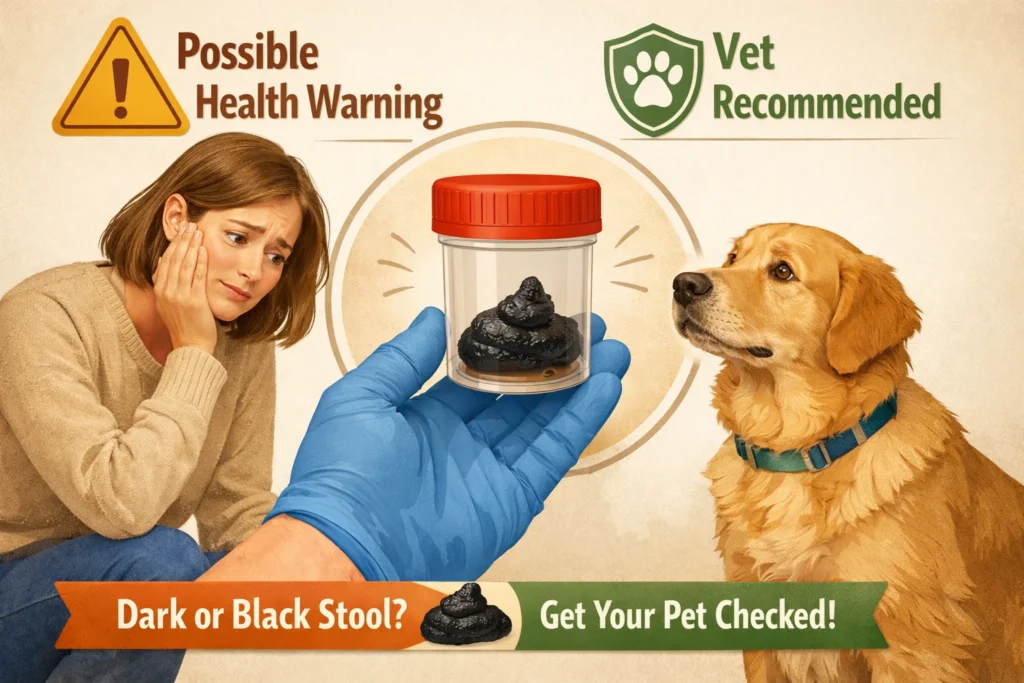
Definition:
Black poop in dogs, medically known as melena, often indicates the presence of digested blood in the stool.
While sometimes harmless, it can also be a sign of internal bleeding or gastrointestinal issues, making it important to identify the underlying cause quickly.
If your dog suddenly has black, tarry stools, it can be alarming. Understanding what black poop means, the possible causes, when it’s an emergency, and how to respond is essential for every dog owner.
Understanding Black Poop in Dogs
Dog stool can vary in color depending on diet, medications, or health conditions. Black or dark stools are not normal in healthy dogs and usually indicate that something is happening in the upper gastrointestinal tract (stomach or small intestine).
- Color indicators: Black, tarry stool
- Consistency: Often sticky or shiny
- Frequency: May appear suddenly or persist
Black poop often results from digested blood, which turns dark as it passes through the digestive system.
Common Causes of Black Poop in Dogs
There are several reasons a dog’s poop might appear black:
1. Dietary Factors
- Consuming human foods like chocolate, licorice, or foods with black coloring
- Dog treats with artificial dyes
- Supplements containing iron
While diet-related black stool is usually harmless, it’s important to rule out medical causes.
2. Internal Bleeding (Melena)
- Caused by bleeding in the stomach or small intestine
- Could result from ulcers, tumors, or ingestion of sharp objects
- The blood appears black and tarry because it has been digested
3. Medications
- Nonsteroidal anti-inflammatory drugs (NSAIDs) like aspirin or ibuprofen for dogs
- Steroids prescribed by a vet
These medications can irritate the stomach lining and cause minor bleeding.
4. Parasites or Infection
- Hookworms and other intestinal parasites
- Bacterial infections affecting the GI tract
These conditions can sometimes cause dark or black stool.
5. Other Health Conditions
- Pancreatitis
- Liver disease
- Coagulation disorders
Any underlying health condition affecting the digestive tract can change stool color.
Symptoms to Watch For Alongside Black Poop
Black poop can be a serious warning sign. Look for these accompanying symptoms:
- Vomiting (sometimes with blood)
- Lethargy or weakness
- Loss of appetite
- Pale gums
- Diarrhea or sudden changes in stool consistency
If these symptoms appear alongside black stool, contact a veterinarian immediately.
When Is Black Poop an Emergency?
Immediate vet attention is necessary if:
- Stool is very dark, sticky, or resembles tar
- Dog shows signs of pain, weakness, or vomiting blood
- Symptoms persist for more than 24 hours
- The dog has eaten something potentially toxic or sharp
Prompt veterinary care can prevent serious complications.
Diagnosis and Treatment
Veterinarians will usually follow these steps:
1. Medical History & Physical Exam
- Ask about diet, medications, and recent activity
- Check vital signs and general condition
2. Laboratory Tests
- Fecal tests to detect parasites or bacteria
- Blood tests to check for anemia or clotting disorders
3. Imaging
- X-rays or ultrasound to detect tumors, ulcers, or foreign objects
4. Treatment Options
- Dietary causes: Change diet or remove harmful foods
- Medication-induced: Adjust or stop offending drugs
- Internal bleeding: Hospitalization, IV fluids, medication, or surgery in severe cases
- Parasites/infections: Prescribed anti-parasitic or antibiotics
Preventing Black Poop in Dogs
Preventive care can help reduce the risk:
- Feed a balanced, dog-safe diet
- Avoid giving human foods or toxic items
- Keep medications under veterinary guidance
- Regular vet checkups and stool tests
- Monitor for sudden changes in behavior, appetite, or stool
FAQs
- Can diet alone cause black poop in dogs?
Yes, some foods, treats, or supplements can temporarily turn stool dark. - Is black poop always serious?
Not always, but it should never be ignored as it can signal internal bleeding. - What does tarry stool indicate?
Tarry, sticky stool often indicates digested blood from the upper GI tract. - Can parasites cause black poop?
Yes, hookworms and other intestinal parasites can lead to dark stools. - How quickly should I see a vet?
If black stool is accompanied by vomiting, weakness, or loss of appetite, see a vet immediately. - Can medications cause black poop in dogs?
Yes, NSAIDs, steroids, and iron supplements may darken stool. - Is black poop in puppies more dangerous?
Yes, because puppies are more vulnerable to dehydration and anemia. - Can black poop resolve on its own?
Only if it is caused by harmless dietary changes, but always monitor your dog closely.
Conclusion
Black poop in dogs is a potentially serious warning sign. While sometimes caused by diet or medications, it often indicates digested blood from the upper gastrointestinal tract, which can result from ulcers, internal bleeding, parasites, or other medical conditions.
Understanding black poop in dogs helps owners respond quickly and responsibly, keeping pets safe and healthy.
Discover More Related Articles:
- Biblical Meaning of Equally Yoked: What Christians Need to Know (2026)
- Biblical Meaning of Defiled: What It Really Means According to Scripture (2026)

Ryan Thompson is an experienced content writer specializing in slang terms, texting abbreviations, and word meanings. He writes for meanvoro.com, where he creates accurate and easy-to-understand language content for readers.