📌Definition:
Proof in baking refers to the process of allowing yeast dough to rest and rise before baking so the yeast can ferment, produce gas, and create a light, airy texture.
In short:
👉 Proofing = letting the dough rise before it goes into the oven.
If you’ve ever followed a bread recipe and paused at the instruction “let the dough proof”, you’re not alone. Many home bakers wonder: Does proof mean bake? Rise? Rest?
Understanding proofing is the difference between flat, dense bread and soft, airy perfection. 🥖✨
Let’s break it down clearly and simply.
What Does Proof Mean in Baking?
In baking, proofing is the final (or sometimes intermediate) rise of yeast-based dough before baking. During proofing:
- Yeast consumes sugars
- Carbon dioxide gas is produced
- The dough expands
- Gluten relaxes
- Flavor develops
Without proper proofing, bread can turn out:
- Dense
- Tough
- Flat
- Underdeveloped in flavor
With proper proofing? You get:
- Fluffy crumb
- Light texture
- Better flavor
- Beautiful oven spring
The Origin of the Word “Proof” in Baking
The word proof comes from the concept of “proving” something works.
Historically, bakers would “prove” their yeast by testing whether it was active. If the yeast bubbled and foamed, it was alive and ready to use.
Over time, the term expanded to refer to the entire rising process of dough.
So when you “proof dough,” you’re essentially:
Proving that the yeast is working and allowing it to do its job.
Why Proofing Is So Important
Proofing isn’t just waiting around. It’s a critical chemical and biological process.
Here’s what happens behind the scenes:
1️⃣ Yeast Fermentation
Yeast eats sugar and releases carbon dioxide.
2️⃣ Gas Formation
The trapped gas stretches gluten networks.
3️⃣ Structure Development
The dough becomes airy and elastic.
4️⃣ Flavor Creation
Fermentation creates subtle sour and complex flavors.
Without proper proofing, bread can taste bland and feel heavy.
The Two Main Types of Proofing
Most yeast bread recipes include two proofing stages:
🥖 1. Bulk Fermentation (First Rise)
- Happens right after mixing and kneading.
- Dough is left in a bowl to rise.
- Usually doubles in size.
- Develops structure and flavor.
🍞 2. Final Proof (Second Rise)
- Happens after shaping the dough.
- Dough rests before baking.
- Critical for final texture.
How Long Does Proofing Take?
Proofing time depends on:
- Room temperature
- Type of yeast
- Dough ingredients
- Humidity
Typical Proofing Times
| Dough Type | First Rise | Second Rise |
|---|---|---|
| Sandwich Bread | 1–2 hours | 30–60 minutes |
| Pizza Dough | 1–2 hours | 30–45 minutes |
| Brioche | 2–3 hours | 1–2 hours |
| Sourdough | 3–6 hours | 2–4 hours |
💡 Warmer rooms speed up proofing. Cooler rooms slow it down.
How to Tell When Dough Is Properly Proofed
One of the most common questions:
“How do I know when proofing is done?”
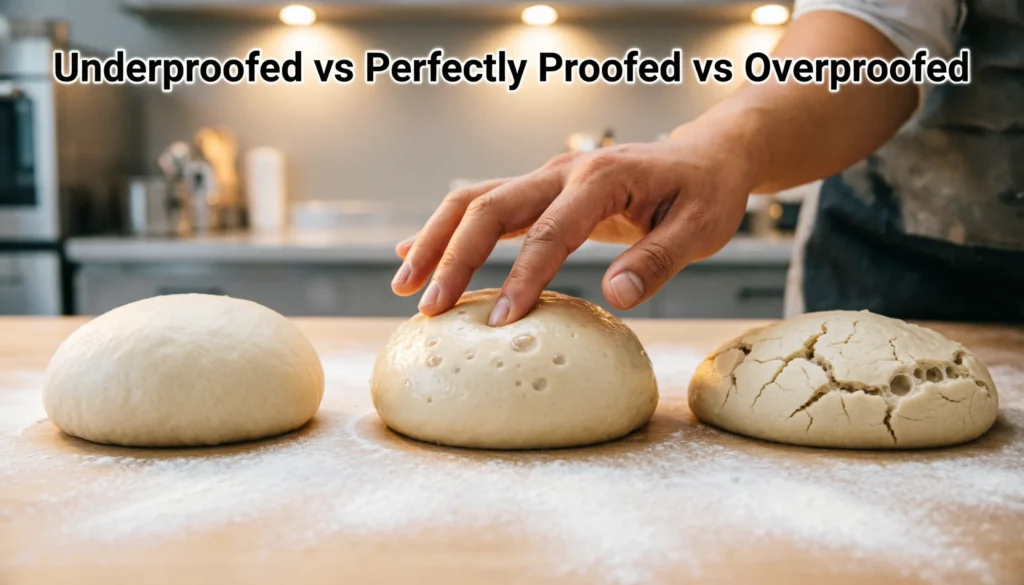
The Poke Test 🖐️
- Gently press your finger into the dough.
- Observe how it responds:
| Result | Meaning |
|---|---|
| Springs back quickly | Underproofed |
| Springs back slowly, slight indentation remains | Perfectly proofed |
| Stays fully indented | Overproofed |
Underproofed vs Overproofed Dough
Understanding the difference is crucial.
| Condition | What Happens | Final Bread Result |
|---|---|---|
| Underproofed | Not enough gas formed | Dense, tight crumb |
| Perfectly proofed | Balanced fermentation | Light and airy |
| Overproofed | Gluten structure weakens | Collapsed or flat loaf |
⚠️ Overproofing can cause bread to deflate in the oven.
What Temperature Is Best for Proofing?
Ideal proofing temperature:
75°F–85°F (24°C–29°C)
Too cold:
- Slow rise
- Weak fermentation
Too hot:
- Yeast dies (above 120°F / 49°C)
Many modern ovens have a “proof” setting to maintain ideal warmth.
What Does “Proof Yeast” Mean?
Sometimes recipes say:
“Proof the yeast in warm water.”
This is slightly different from proofing dough.
It means:
- Dissolve yeast in warm water (100°F–110°F).
- Add a little sugar.
- Wait 5–10 minutes.
- Look for foam.
Foam = yeast is active.
No foam = yeast may be dead.
Real-World Usage Examples
Here’s how “proof” is used in baking conversations:
Friendly Tone 😊
- “Let the dough proof until it doubles in size.”
- “Don’t rush it good bread needs time to proof!”
Neutral Instructional Tone
- “Allow the shaped loaves to proof for 45 minutes.”
- “Transfer dough to a proofing basket.”
Slightly Frustrated Tone 😅
- “I didn’t proof it long enough, and now it’s dense.”
- “I overproofed the dough it collapsed.”
Proofing vs Fermentation: What’s the Difference?
Many people confuse these two terms.
| Term | Meaning | When It Happens |
|---|---|---|
| Fermentation | Yeast producing gas and flavor | Entire rising process |
| Proofing | Final rise before baking | After shaping |
In many casual recipes, the terms are used interchangeably, but technically:
👉 Fermentation is the science.
👉 Proofing is the stage.
Proofing vs Resting
These are also different.
| Term | Meaning |
|---|---|
| Resting | Letting dough relax (short time) |
| Proofing | Letting yeast actively ferment |
Resting may not involve significant rise. Proofing always does.
Proofing vs “Proof” in Alcohol
Outside baking, “proof” has another meaning.
In alcohol, proof measures alcohol content.
Example:
- 80 proof liquor = 40% alcohol.
This meaning is unrelated to baking, but the word often causes confusion.
What Is a Proofing Basket?
A proofing basket (banneton) is used to:
- Hold shaped dough
- Maintain structure
- Create decorative flour patterns
Common in artisan bread and sourdough baking.
Can You Overproof Dough?
Yes and it happens often.
Signs of overproofing:
- Dough spreads out
- Strong sour smell
- Surface wrinkles
- Collapses when touched
If slightly overproofed, you may reshape and let it rise again briefly.
If heavily overproofed, texture may suffer.
Cold Proofing (Retarding)
Some bakers use cold proofing:
- Dough rests in refrigerator.
- Slows fermentation.
- Enhances flavor.
- Improves structure.
Common in:
- Sourdough
- Artisan bread
- Pizza dough
Cold proofing can last 12–48 hours.
Professional Alternatives & Polite Terms
In professional kitchens, you might hear:
- “Final rise”
- “Bench rest”
- “Bulk fermentation”
- “Retard overnight”
These terms all relate to stages of proofing.
Common Baking Mistakes Related to Proofing
❌ Using water that’s too hot
❌ Not waiting long enough
❌ Proofing in a cold kitchen
❌ Overproofing due to warm weather
❌ Skipping the poke test
Example Scenario Table
| Scenario | What Happened | Fix |
|---|---|---|
| Bread dense | Underproofed | Allow longer rise |
| Bread collapsed | Overproofed | Shorten second rise |
| No rise at all | Dead yeast | Proof yeast first |
| Dough sticky & flat | Too warm environment | Shorten proof time |
FAQs
1. What does proof mean in baking bread?
It means allowing yeast dough to rise so fermentation can create air bubbles and structure.
2. Is proofing the same as rising?
Yes, in most baking contexts, proofing refers to the rising stage of yeast dough.
3. How long should dough proof?
Typically 30 minutes to several hours, depending on recipe and temperature.
4. What happens if you don’t proof dough long enough?
The bread will be dense and heavy.
5. Can you proof dough overnight?
Yes. Refrigerated (cold) proofing improves flavor.
6. What temperature is best for proofing?
75°F–85°F (24°C–29°C).
7. What does “proof the yeast” mean?
It means testing yeast in warm water to ensure it’s active.
8. Can you fix overproofed dough?
Sometimes reshaping helps, but severe overproofing weakens structure permanently.
Conclusion
So, what does proof mean in baking?
At its core, proofing is the process of allowing yeast dough to rise before baking so it can develop structure, flavor, and that light, airy texture we all love. It’s not just a waiting period it’s an essential transformation stage where science meets patience.
Here’s what to remember:
- 🥖 Proofing allows yeast to produce gas and expand the dough.
- ⏳ Time and temperature both directly affect results.
- 👆 The poke test is your best tool for checking readiness.
- ⚖️ Underproofed dough turns dense; overproofed dough collapses.
- ❄️ Cold proofing enhances flavor and improves texture.
Discover More Related Articles:
- Lamentation Mean in the Bible: Why It Matters for Christians in 2026
- Adam Mean in the Bible: Symbolism, and Impact in 2026

Madison Taylor is an experienced content writer who focuses on researching and explaining word meanings, slang, and texting terms. She writes for meanvoro.com, creating clear and accurate to help readers understand language easily.