
Definition
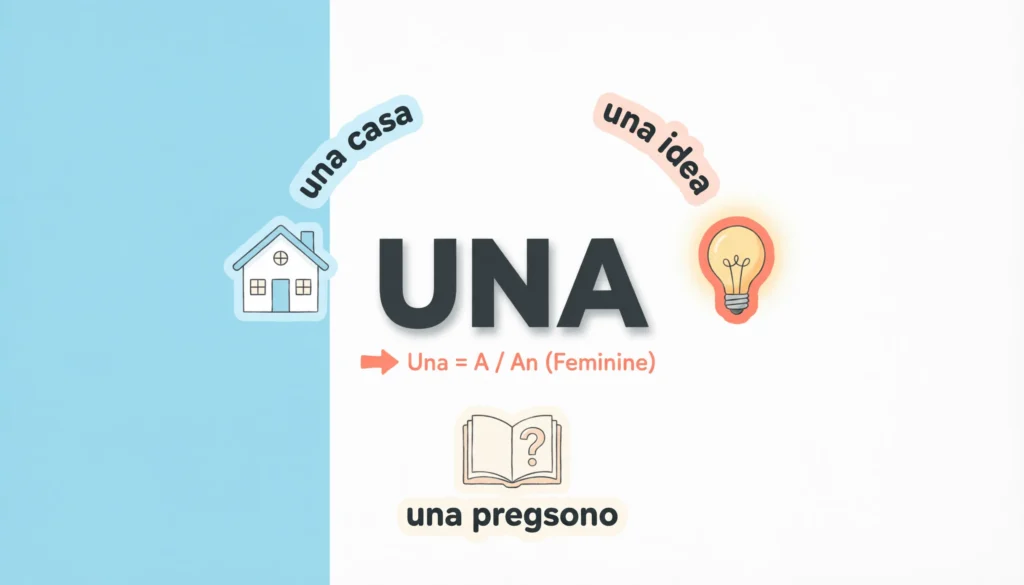
“Una” in Spanish means “a,” “an,” or “one” when referring to a singular feminine noun.
It is the feminine form of the indefinite article used before feminine words.
If you’ve started learning Spanish or noticed Spanish words appearing in music, movies, or social media captions, you may have seen the word “una.” It’s a small word, but it plays a very important role in everyday Spanish conversations.
Understanding what “una” means in Spanish can help you build basic sentences, recognize gendered grammar rules, and sound more natural when speaking or writing Spanish.
Whether you’re a beginner language learner, curious about Spanish vocabulary, or simply came across the word in a song or message, this guide will explain exactly what “una” means, how it’s used, and when to use it correctly.
Example:
- Una casa → A house
- Una idea → An idea
In simple terms, “una” functions the same way as “a” or “an” in English, but it specifically applies to feminine nouns.
Understanding the Meaning of “Una” in Spanish
To fully understand what “una” means in Spanish, it helps to know that Spanish nouns have grammatical gender. Every noun is either masculine or feminine.
Because of this, Spanish articles must match the gender of the noun they describe.
Spanish Indefinite Articles
| Article | Gender | English Meaning | Example |
|---|---|---|---|
| Un | Masculine | A / An | Un libro (A book) |
| Una | Feminine | A / An | Una mesa (A table) |
| Unos | Masculine plural | Some | Unos amigos (Some friends) |
| Unas | Feminine plural | Some | Unas flores (Some flowers) |
So, “una” is simply the feminine version of “a” or “an.”
Origin of the Word “Una”
The word “una” comes from the Latin word “ūna,” which means “one” or “single.”
Over time, Spanish developed from Latin, and the word evolved into two primary uses:
- Indefinite article (a/an)
- Number one in feminine form
This dual meaning still exists today.
For example:
- Una manzana → An apple
- Tengo una → I have one
Because of its Latin roots, similar words appear in many Romance languages, including:
- Italian → una
- Portuguese → uma
- French → une
How “Una” Is Used in Spanish
The word “una” is used in several everyday situations, especially when introducing something for the first time.
Common Uses of “Una”
- Describing a single feminine object
- Introducing something new
- Counting feminine items
- Expressing “one” instead of “a/an”
Let’s break these down.
1. Using “Una” as “A” or “An”
This is the most common use.
It introduces a singular feminine noun.
Examples:
- Una casa → A house
- Una silla → A chair
- Una pregunta → A question
- Una película → A movie
This is very similar to English.
Example sentence:
- Tengo una idea.
I have an idea.
2. Using “Una” to Mean “One”
Sometimes “una” literally means the number one, especially when counting.
Example:
- Una persona vino a la reunión.
One person came to the meeting.
Another example:
- Solo tengo una.
I only have one.
3. Using “Una” in Expressions
Spanish also uses “una” in certain phrases or expressions.
Examples:
- De una vez → Right away / immediately
- Ni una palabra → Not a single word
- A una → At one o’clock
Example sentence:
- Hazlo de una vez.
Do it right now.
Examples of “Una” in Real-Life Spanish Sentences
Seeing the word used in real context helps make the meaning clearer.
Example Sentence Table
| Spanish Sentence | English Meaning | Tone / Context |
|---|---|---|
| Tengo una idea. | I have an idea. | Neutral |
| Ella compró una falda. | She bought a skirt. | Neutral |
| Necesito una respuesta. | I need an answer. | Slightly serious |
| Solo queda una. | Only one is left. | Informational |
| Dame una oportunidad. | Give me a chance. | Emotional |
These examples show how natural and frequent the word “una” is in everyday conversation.
Tone and Context: How “Una” Feels in Conversation
Unlike slang or internet abbreviations, “una” is a completely neutral word.
Its tone depends on the sentence around it.
Friendly Tone 😊
- ¿Quieres una galleta?
Do you want a cookie?
Neutral Tone
- Necesito una computadora nueva.
I need a new computer.
Emotional Tone
- Solo te pido una cosa.
I only ask you for one thing.
Because it’s a grammatical article, the word itself carries no emotion — the sentence provides the tone.
Common Words That Use “Una”
Here are examples of frequently used feminine nouns that require “una.”
| Spanish Word | English Meaning |
|---|---|
| Una casa | A house |
| Una mesa | A table |
| Una puerta | A door |
| Una historia | A story |
| Una ciudad | A city |
| Una pregunta | A question |
| Una canción | A song |
A quick tip: many Spanish nouns ending in “-a” are feminine, though there are exceptions.
“Una” vs Similar Spanish Words
New learners often confuse una with other similar Spanish articles.
Let’s compare them.
Comparison Table
| Word | Meaning | Gender | Example |
|---|---|---|---|
| Un | A / An | Masculine | Un perro (A dog) |
| Una | A / An | Feminine | Una casa (A house) |
| La | The | Feminine | La casa (The house) |
| El | The | Masculine | El perro (The dog) |
Simple Rule
- Un → Masculine noun
- Una → Feminine noun
Common Mistakes with “Una”
Spanish learners often make a few predictable mistakes.
1. Using “Una” with Masculine Words
Incorrect:
- Una libro ❌
Correct:
- Un libro ✔
2. Forgetting Gender Agreement
Articles must match the noun.
Incorrect:
- Un casa
Correct:
- Una casa
3. Confusing “Una” with “La”
Remember:
- Una = a/an
- La = the
Example:
- Una casa → A house
- La casa → The house
Alternate Meanings of “Una”
While “una” usually means “a/an”, it can sometimes appear in other contexts.
1. Number One (Feminine)
Example:
- Tengo una hermana.
I have one sister.
2. Used in Time Expressions
Example:
- Es la una.
It’s one o’clock.
3. Idiomatic Expressions
Spanish has expressions that include una but have unique meanings.
Examples:
- De una vez → Immediately
- Una vez → Once / one time
Polite or Professional Alternatives
Because “una” is simply an article, there aren’t direct alternatives. Instead, formality changes through different sentence structures.
Example:
Casual:
- Dame una respuesta.
Give me an answer.
More polite:
- ¿Podría darme una respuesta?
Could you give me an answer?
Professional Spanish typically changes tone, not the article itself.
Quick Usage Tips for Learners
If you’re learning Spanish, remember these simple tips:
✔ Use una before singular feminine nouns
✔ Think of it as “a” or “an” in English
✔ Match the noun’s gender
✔ Use un for masculine words instead
✔ Watch out for irregular nouns
Practice examples:
- Una oportunidad → An opportunity
- Una respuesta → An answer
- Una solución → A solution
FAQs
1. What does “una” mean in Spanish?
“Una” means “a,” “an,” or “one” when referring to a singular feminine noun in Spanish. For example, una casa means a house, and una idea means an idea.
2. Is “una” masculine or feminine?
“Una” is feminine. It must be used with feminine nouns in Spanish. For example, una mesa means a table.
3. What is the difference between “un” and “una”?
The difference is based on gender.
- Un is used with masculine nouns.
- Una is used with feminine nouns.
Example:
- Un libro → A book
- Una revista → A magazine
4. Can “una” mean the number one?
Yes. In some contexts, “una” means the number one when referring to a feminine noun. For example, Solo tengo una means I only have one.
5. When do you use “una” instead of “la”?
Use “una” when you mean “a” or “an.”
Use “la” when you mean “the.”
Example:
- Una casa → A house
- La casa → The house
6. Is “una” considered Spanish slang?
No. “Una” is not slang. It is a standard grammatical article used in everyday Spanish sentences.
7. Do all Spanish nouns ending in “a” use “una”?
Many feminine nouns end in “a,” but not all. Some exceptions exist, such as el problema, which is masculine even though it ends with “a.”
8. What are some common sentences that use “una”?
Here are a few examples:
- Necesito una respuesta. → I need an answer.
- Ella compró una camisa. → She bought a shirt.
- Dame una oportunidad. → Give me a chance.
Conclusion
The word “una” is one of the most fundamental and frequently used words in Spanish. While it may seem simple, it plays an essential role in Spanish grammar.
Here are the key points to remember:
- “Una” means “a,” “an,” or “one.”
- It is used with singular feminine nouns.
- It comes from Latin origins meaning “one.”
- It appears in everyday speech, expressions, and sentences.
- It must match the gender of the noun it describes.
Once you understand how “una” works, you’ll find it much easier to form basic Spanish sentences and improve your language skills.
Spanish grammar may seem complex at first, but mastering small words like una builds a strong foundation for fluency.
Discover More Related Articles:
- Hallelujah Mean in the Bible: A Guide for Christians in 2026
- “Maron” Mean in Italian: How Italians Use This Word in 2026

Madison Taylor is an experienced content writer who focuses on researching and explaining word meanings, slang, and texting terms. She writes for meanvoro.com, creating clear and accurate to help readers understand language easily.