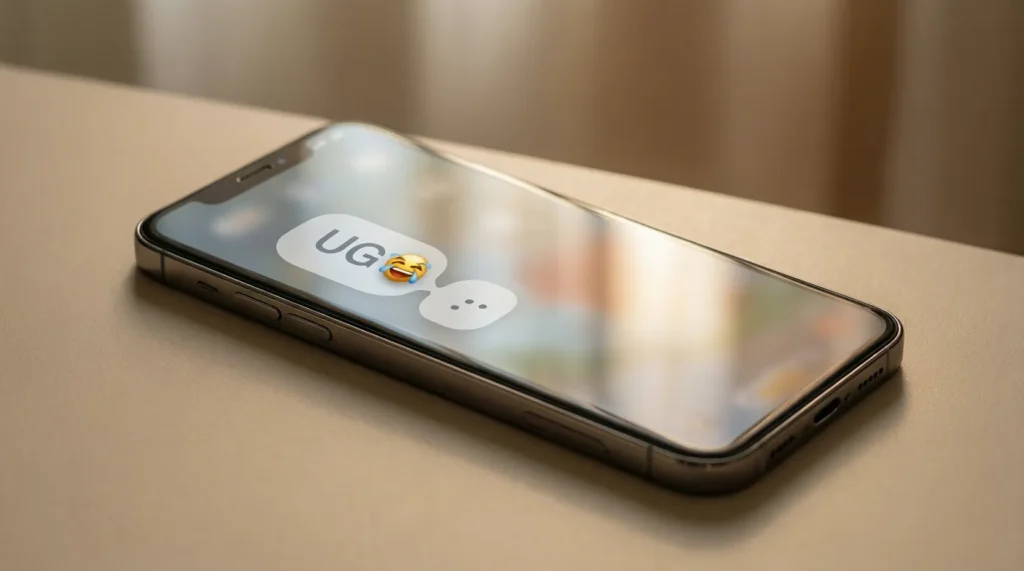
UG in text is an informal expression used to show frustration, annoyance, disappointment, or mild irritation.
Texting has transformed the way people express emotions. Instead of long explanations, we now rely on short reactions to communicate how we feel. One such expression is “UG Meaning in Texting .”
Though small, it carries a clear emotional message.
You may have seen someone reply with “UG” after hearing bad news or dealing with something annoying. But what exactly does it mean? Is it rude? When should you use it and when should you avoid it?
This complete guide explains what UG means in text, where it comes from, how people use it, what tone it carries, and which alternatives are better in polite or professional settings.
What Does UG Mean in Texting?
In texting and online chats, UG is used to express negative emotions such as:
- Frustration
- Annoyance
- Disappointment
- Mild anger
- Boredom
In simple terms, it means:
“I’m irritated” or “This is annoying.”
It is informal and conversational, making it suitable for casual chats rather than formal communication.
Origin of UG
The expression UG comes from the natural human sound “ugh,” which people have used for generations to show displeasure or frustration. As texting became more common, people shortened words to type faster, and “ugh” often turned into “ug.”
This shortening is typical in digital language, where speed and simplicity matter more than spelling accuracy.
Popularity and Real World Usage
UG is not as universally popular as expressions like LOL or OMG, but it is still widely understood. It appears most often in:
- Text messages
- Social media comments
- Chat apps
- Informal online discussions
People mainly use it as a quick emotional response rather than part of a full sentence.
How UG Is Commonly Used
UG usually appears at the beginning of a message or as a short reaction by itself.
Common situations include:
- When plans fail
- When something is boring
- When technology does not work
- When tasks feel overwhelming
- When reacting to disappointing news
Tone and Emotional Meaning of UG
The tone of UG depends on context and delivery.
- Mild frustration: Everyday annoyance
- Playful frustration: Often paired with emojis
- Dismissive tone: When used alone without explanation
- Sarcastic tone: When combined with humor
It is generally not aggressive but can feel cold or dismissive if used carelessly.
Examples of UG in Text With Context
Friendly or Casual Use
- UG I forgot my headphones again 😩
- UG this weather ruined everything
Neutral Reaction
- UG the app crashed during submission
- UG that test was harder than expected
Negative or Dismissive Use
- UG whatever
- UG this is pointless
Adding emojis or extra words often makes the message sound softer and less rude.
Example
| Situation | Example Message | Tone | Meaning |
|---|---|---|---|
| School stress | UG I have too much homework | Mild frustration | Feeling overwhelmed |
| Technical issue | UG the internet stopped | Annoyed | Tech problem |
| Casual chat | UG lol that was awkward | Playful | Light embarrassment |
| Short reply | UG | Dismissive | Disinterest or irritation |
Is UG Considered Rude?
UG itself is not rude, but how and where you use it matters.
UG is acceptable when:
- Talking with friends
- Casual conversations
- Expressing personal frustration
- Messaging teachers or supervisors
- Writing professional emails
- Discussing serious matters
Short emotional replies without explanation can sometimes feel disrespectful.
Polite and Professional Alternatives to UG
If you want to sound respectful or professional, consider these options.
Professional Alternatives
- This is frustrating
- That is unfortunate
- I am disappointed with this outcome
Casual but Polite Options
- That is annoying
- Not ideal
- That did not go as planned
These alternatives express the same emotion without sounding dismissive.
UG Compared With Similar Text Expressions
Using UG vs UGH
UG is shorter and more casual.
UGH is more expressive and shows stronger frustration.
Comparing UG vs SMH
UG shows emotional irritation.
SMH shows disappointment or disbelief.
Distinguishing UG vs IDC
UG expresses emotion.
IDC shows indifference or lack of concern.
Alternate Meanings of UG
Although rare in casual texting, UG can mean other things in specific contexts.
Undergraduate
Used in education or academic discussions.
User Group
Used in technical or professional communities.
In everyday texting, UG almost always refers to frustration or annoyance.
When You Should Avoid Using UG
Avoid UG when:
- Writing formal messages
- Speaking with authority figures
- Handling sensitive topics
- Communicating in professional settings
Tone can be easily misunderstood in text, especially with short reactions.
Tips for Using UG Correctly
- Use it in informal conversations only
- Add context or emojis if needed
- Avoid replying with only “UG” in serious discussions
- Do not overuse it
- Consider the relationship with the recipient
FAQs
What does UG mean in texting?
UG means frustration, annoyance, or mild disappointment.
Is UG the same as ugh?
Yes, UG is a shortened version of ugh.
Is UG rude?
It can sound dismissive depending on context, but it is not automatically rude.
Can UG be used professionally?
No, it is best avoided in professional communication.
What emotion does UG show?
It usually shows irritation or frustration.
Do people still use UG?
Yes, especially in casual and quick chats.
What is a polite alternative to UG?
That is frustrating or not ideal.
Does UG have other meanings?
In some contexts, it can mean undergraduate or user group.
Conclusion
UG is a short but expressive texting term that communicates frustration or annoyance quickly. It works well in casual conversations where tone is understood, but it should be avoided in formal or professional settings.
UG is an informal expression used to show mild negative emotion. Its tone often depends on the context, and adding emojis can help soften its meaning.
However, UG is not suitable for professional or formal communication and is best reserved for casual conversations.
Used thoughtfully, UG can make digital communication feel natural and expressive.
Search More Related Articles :
- VOC Paint Meaning: Low-VOC vs Traditional Paints Compared (2026)
- The Meaning of the Rainbow in the Bible : Explained for Christians (2026)

Ryan Thompson is an experienced content writer specializing in slang terms, texting abbreviations, and word meanings. He writes for meanvoro.com, where he creates accurate and easy-to-understand language content for readers.