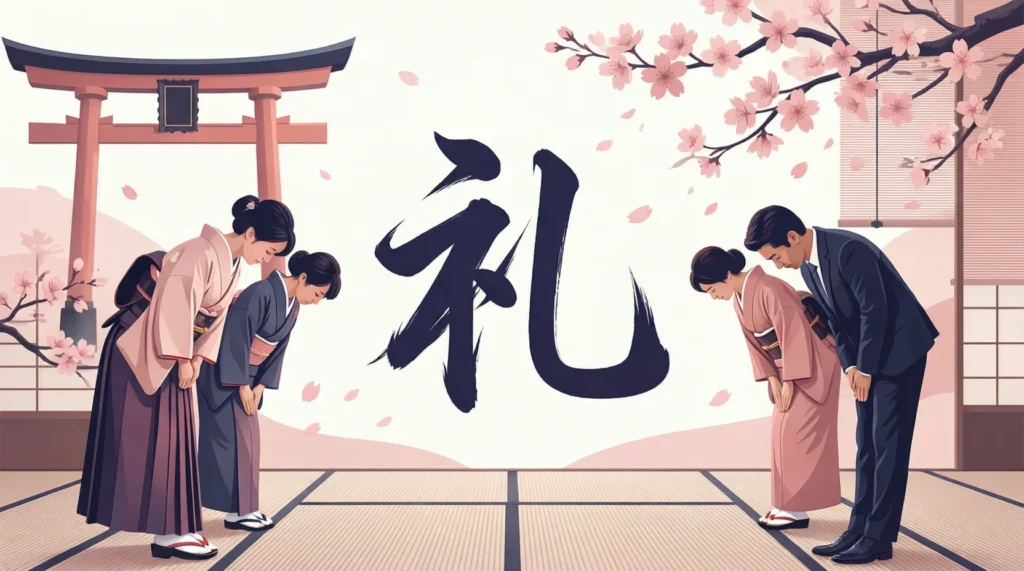
“Rei” (礼) in Japanese means “respect,” “courtesy,” or “politeness.” It is commonly used to describe manners, etiquette, and respectful behavior in Japanese culture. Depending on context, “rei” can also refer to gratitude, formal greetings, or bowing as a sign of respect.
If you are learning Japanese or are curious about Japanese culture, understanding “rei” is essential. It is not just a word but a core value deeply embedded in daily communication, social behavior, and traditional customs across Japan.
Japanese culture places a strong emphasis on respect, harmony, and social awareness. At the heart of these values is the concept of “rei.” Unlike many words that simply translate into English, “rei” carries emotional, cultural, and social meaning that goes beyond a single definition.
From bowing when greeting someone to speaking politely in formal situations, “rei” shapes how people interact in Japan. It influences language, behavior, education, business etiquette, and even martial arts. Understanding “rei” helps you understand why Japanese communication feels respectful and structured.
Origin and Cultural Background of “Rei”
The word “rei” (礼) originates from classical Chinese philosophy and was later integrated into Japanese ethics and traditions. Historically, it referred to rituals, ceremonies, and correct social conduct.
Over time, “rei” became a foundational concept in:
- Confucian teachings
- Samurai ethics
- Traditional Japanese education
- Modern Japanese society
Today, “rei” is still taught from a young age in Japan as part of moral education, emphasizing kindness, humility, and proper manners.
Meaning and Usage of “Rei”
“Rei” is most commonly used as a noun, though it appears in compound words and expressions related to politeness and respect.
Core Meanings of “Rei”
| Meaning | Explanation |
|---|---|
| Respect | Showing consideration for others |
| Courtesy | Polite behavior and manners |
| Etiquette | Social rules and proper conduct |
| Gratitude | Expressing thanks respectfully |
Common Words and Expressions Using “Rei”
“Rei” often appears in compound terms that describe social behavior.
| Japanese Term | Meaning | Usage Context |
|---|---|---|
| 礼儀 (Reigi) | Manners / etiquette | Formal behavior |
| 礼儀正しい (Reigi tadashii) | Well-mannered | Compliment |
| 無礼 (Burei) | Rude / disrespectful | Negative behavior |
| 敬礼 (Keirei) | Salute | Military or formal |
| 礼をする (Rei o suru) | To bow | Greeting or thanks |
“Rei” and Bowing in Japan
One of the most visible expressions of “rei” is bowing.
Bowing is used to:
- Greet someone
- Say thank you
- Apologize
- Show respect
- End a meeting
Different bow angles reflect different levels of respect, all connected to the concept of “rei.”
Examples
Here are examples showing how “rei” appears in real-life situations.
| Tone | Japanese Example | English Meaning |
|---|---|---|
| Friendly | 礼を忘れないでね 😊 | Don’t forget your manners 😊 |
| Neutral | 彼は礼儀正しい人です | He is a polite person |
| Formal | 礼をもって対応します | We will respond respectfully |
| Negative | 無礼な態度だ 😒 | That’s rude behavior 😒 |
In casual conversations, emojis can soften the tone. In formal contexts, “rei” reflects professionalism and discipline.
Comparison With Similar Japanese Concepts
“Rei” is often confused with other Japanese words related to respect.
| Term | Meaning | Difference |
|---|---|---|
| 敬意 (Keii) | Respect | Focuses on feelings |
| 丁寧 (Teinei) | Polite | Describes speech style |
| 尊敬 (Sonkei) | Admiration | Strong respect |
| 礼 (Rei) | Courtesy | Behavior and manners |
“Rei” is broader and focuses on how respect is shown through actions.
Alternate Meanings of “Rei”
Depending on context, “rei” can have additional meanings:
- Formal greeting in ceremonies
- Symbol of discipline in martial arts
- Moral value taught in education
- Respectful behavior in business settings
These meanings are culturally rooted rather than literal translations.
“Rei” in Martial Arts and Traditional Practices
In Japanese martial arts like karate, judo, and kendo, “rei” is extremely important.
- Students bow before and after practice
- Bowing shows humility and respect
- The phrase Rei! is often spoken to signal a bow
Here, “rei” symbolizes discipline, honor, and mutual respect between teacher and student.
Polite and Professional Alternatives to “Rei”
In modern Japanese communication, other words may be used depending on context.
| Word | Meaning | Usage |
|---|---|---|
| 丁寧 | Polite | Speech and tone |
| 礼節 | Courtesy | Formal writing |
| 敬意 | Respect | Emotional respect |
Using the right word depends on whether the focus is behavior, language, or feeling.
FAQs
- What does “rei” mean in Japanese?
“Rei” means respect, courtesy, or politeness. - Is “rei” used in daily conversation?
Yes, especially in words related to manners and etiquette. - Does “rei” only mean bowing?
No, bowing is one expression of “rei,” but it also includes respectful behavior and attitude. - Is “rei” formal or informal?
It is neutral but often appears in formal or respectful contexts. - What is the opposite of “rei”?
“Burei” means rude or disrespectful. - Why is “rei” important in Japanese culture?
It helps maintain harmony and respectful relationships. - Is “rei” taught in schools?
Yes, it is part of moral and social education in Japan. - Can foreigners use “rei” correctly?
Yes, showing basic respect and politeness is always appreciated.
Practical Tips for Understanding “Rei”
- Observe body language and tone in Japanese interactions
- Practice polite expressions and bowing
- Understand context before choosing respectful language
- Remember that actions matter as much as words
Conclusion
“Rei” is more than just a Japanese word. It represents respect, courtesy, and social harmony. Whether seen in bowing, polite speech, or everyday behavior, “rei” reflects the heart of Japanese culture.
Learning the meaning of “rei” helps you communicate more naturally, behave more respectfully, and better understand Japanese traditions. It is a powerful reminder that respect is not just spoken but shown.
Search More Related Articles :
- VOC Paint Meaning: Low-VOC vs Traditional Paints Compared (2026)
- The Meaning of the Rainbow in the Bible : Explained for Christians (2026)

Madison Taylor is an experienced content writer who focuses on researching and explaining word meanings, slang, and texting terms. She writes for meanvoro.com, creating clear and accurate to help readers understand language easily.