

Perseverance in the Bible refers to steadfastness, endurance, and patience in faith, especially in the face of trials, temptations, or suffering.
It is the ability to remain committed to God’s teachings and promises, trusting in His timing and guidance, no matter the challenges.
Life is full of challenges, and the Bible encourages believers to stay strong and faithful through every trial. But what does perseverance really mean in a biblical context? Simply put, perseverance is the ability to remain steadfast in faith, trust God’s plan, and continue doing what is right, even when faced with difficulties, delays, or temptations.
In the Bible, perseverance is more than just “not giving up.” It is a spiritual virtue that shapes character, builds hope, and strengthens our relationship with God. From Job’s unwavering faith during suffering to Paul’s tireless efforts spreading the Gospel, perseverance is consistently highlighted as a key trait of a faithful believer.
Understanding Perseverance: Origin and Biblical Context
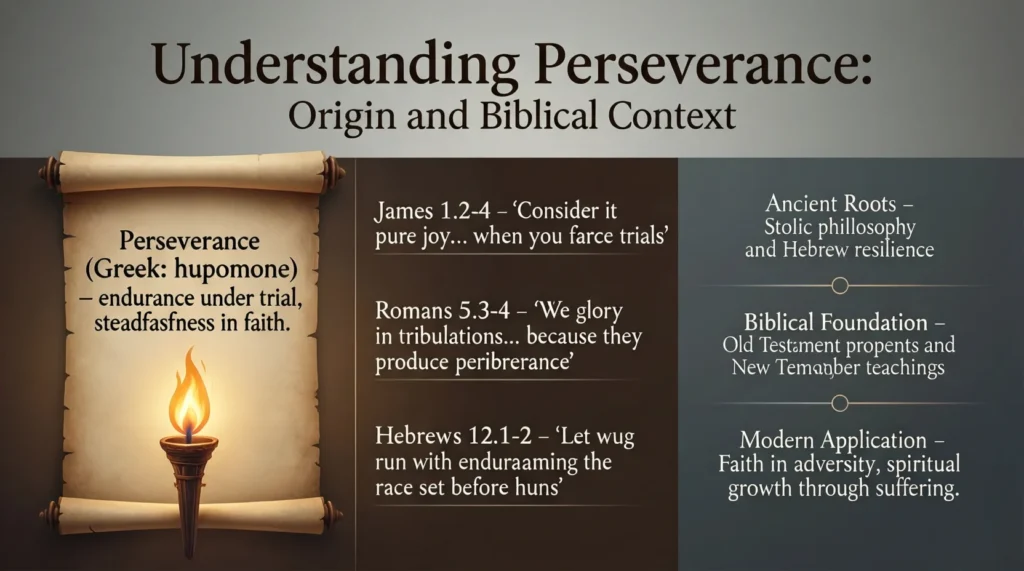
Perseverance, known in Greek as hypomonē, has a strong presence throughout the Bible. It is more than just “not giving up”; it is a spiritual discipline rooted in faith, hope, and unwavering trust in God’s plan.
- Biblical Usage: Perseverance is mentioned in both the Old and New Testaments. For example:
- James 1:12 – “Blessed is the one who perseveres under trial, because, having stood the test, that person will receive the crown of life that the Lord has promised to those who love him.”
- Romans 5:3-4 – “We also glory in our sufferings, because we know that suffering produces perseverance; perseverance, character; and character, hope.”
- Origin of the Word:
- The English word perseverance comes from the Latin perseverantia, meaning “steadfastness” or “constancy.”
- In biblical Greek, hypomonē conveys not only endurance but also hope and faithfulness amidst challenges.
- Popularity: Perseverance is a widely embraced virtue in Christian teaching because it encourages believers to maintain faith and moral integrity, even when life is difficult.
How Perseverance Is Practiced in Real Life
Biblical perseverance is not passive. It actively involves trusting God, practicing patience, and remaining morally steadfast.
Practical Ways to Demonstrate Perseverance:
- Maintaining faith during personal struggles
- Continuing prayer and worship, even when answers seem delayed
- Resisting temptation and moral compromise
- Helping others despite fatigue or discouragement
- Learning from failure without losing hope
Table: Perseverance vs. Related Concepts
| Concept | Biblical Meaning | Key Difference from Perseverance |
|---|---|---|
| Endurance | Physical or mental stamina under pressure | Focuses more on sheer staying power |
| Patience | Ability to wait calmly without complaint | Patience is passive; perseverance is active |
| Faithfulness | Loyalty to God and His commands | Faithfulness is constant; perseverance often tested under hardship |
| Hope | Expectation of God’s promises | Hope fuels perseverance but is not the same thing |
Perseverance in Different Biblical Contexts
1. Perseverance in Trials
Life’s challenges are seen as opportunities for spiritual growth. Perseverance allows believers to emerge stronger, more faithful, and more reliant on God.
Example: Job endured immense suffering but never lost faith in God.
2. Perseverance in Faith
Believers are encouraged to persist in prayer, study of the Word, and worship, even when spiritual growth feels slow.
Example: Daniel continued praying to God despite the threat of the lion’s den.
3. Perseverance in Love and Service
The Bible emphasizes steadfast love toward others, even when faced with ingratitude or rejection.
Example: Paul’s missionary journeys were full of hardships, yet he persisted in spreading the Gospel.
Examples of Perseverance
- Friendly Tone:
“Even when life feels like a Monday that never ends, remember, perseverance is your spiritual superpower 💪✨” - Neutral Tone:
“Perseverance allows a believer to maintain consistency in faith practices and moral integrity.” - Negative/Dismissive Tone:
“Ignoring perseverance in faith can lead to discouragement or wavering in spiritual commitment.”
Comparing Perseverance With Similar Biblical Terms
Perseverance is closely linked with other virtues but has subtle differences:
- Patience vs. Perseverance: Patience is the calm waiting for God’s timing, while perseverance actively continues striving in faith.
- Endurance vs. Perseverance: Endurance is often temporary strength; perseverance is sustained commitment over the long term.
- Steadfastness vs. Perseverance: Steadfastness is staying true to beliefs; perseverance adds the dimension of facing trials while remaining faithful.
Alternate Meanings and Usage Tips
While the primary biblical meaning focuses on spiritual endurance, perseverance can also refer to:
- Everyday Life: Persisting through personal or professional challenges
- Academic or Career Goals: Maintaining focus despite obstacles
Tips for Using “Perseverance” in Writing or Speech:
- Use in contexts emphasizing long-term commitment and faithfulness
- Combine with faith-oriented language in religious discussions
- Pair with words like “steadfast,” “enduring,” or “resilient” for clarity
Polite or Professional Alternatives
If you want to use a more neutral or professional term:
- Steadfastness
- Tenacity
- Endurance
- Commitment
- Resilience
FAQs
1. What does perseverance mean in James 1:12?
It means staying faithful and steadfast in your morals and faith, even during trials, so you can receive the promises God has made.
2. How can I develop perseverance in my spiritual life?
You can grow perseverance through regular prayer, studying the Bible, joining fellowship with other believers, and trusting God’s plan, even when things feel challenging.
3. Is perseverance the same as patience?
Not exactly. Patience is about waiting calmly, while perseverance is actively continuing in faith and effort, even when it’s difficult.
4. Why is perseverance important in the Bible?
Perseverance helps build character, strengthens hope, and allows spiritual growth through challenges.
5. Can perseverance be applied outside of religion?
Absolutely. Perseverance is about sticking with your goals and commitments, even when life gets tough.
6. Which Bible verses talk about perseverance?
Some key verses include:
- Romans 5:3-4
- James 1:12
- Hebrews 12:1-2
- Galatians 6:9
7. How does perseverance relate to faith?
Perseverance shows active trust in God and helps ensure that your faith stays strong, even during difficult times.
8. What is the difference between perseverance and endurance?
Endurance is temporary strength to get through a situation, while perseverance is a long-term commitment to keep going despite ongoing challenges.
Conclusion:
Perseverance in the Bible is more than simply enduring hardships it is a demonstration of steadfast faith, unwavering hope, and moral commitment. It teaches us to trust God’s timing, remain faithful during trials, and grow spiritually through life’s challenges.
Ultimately, embracing perseverance allows us to live a life of purpose, hope, and spiritual fulfillment, demonstrating that true faith is steadfast, even in the toughest times.
Search More Related Articles :
- BOT Mean in Baseball: Complete Guide for Fans & Players (2026)
- GIR Mean in Golf: Tips to Hit More Greens in Regulation (2026)

Madison Taylor is an experienced content writer who focuses on researching and explaining word meanings, slang, and texting terms. She writes for meanvoro.com, creating clear and accurate to help readers understand language easily.