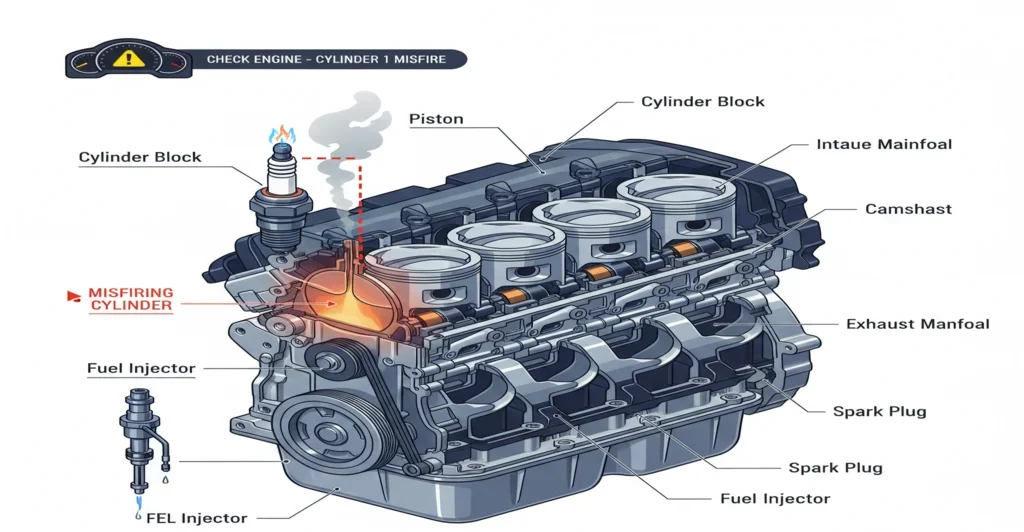
A misfire in a car occurs when one or more engine cylinders fail to ignite the air-fuel mixture properly, causing incomplete combustion.
This leads to rough running, shaking, loss of power, poor fuel efficiency, and sometimes a flashing check engine light.
If your car feels like it’s stumbling, jerking, or vibrating more than usual, you might be dealing with an engine misfire. It can range from a minor spark plug issue to a more serious mechanical problem. Understanding what a misfire means, what causes it, and how to fix it can save you money and prevent bigger engine damage.
Let’s break it down clearly and simply.
What Is a Misfire in a Car Engine?
An internal combustion engine works by igniting a mixture of fuel and air inside each cylinder. This explosion pushes the piston down and creates power.
When that ignition does not happen correctly or at the right time, the cylinder “misfires.”
Instead of smooth power delivery, the engine:
- Shakes or vibrates
- Hesitates during acceleration
- Loses power
- Runs rough at idle
- Burns extra fuel
In more serious cases, the check engine light may flash, warning you that damage could occur if you continue driving.
How a Car Engine Is Supposed to Work
To understand misfires, it helps to know the four basic engine steps:
- Intake – Air and fuel enter the cylinder
- Compression – The piston compresses the mixture
- Ignition – The spark plug ignites the mixture
- Exhaust – Burned gases exit
A misfire happens during the ignition stage when combustion fails or is weak.
Origin and Technical Meaning of “Misfire”
The word “misfire” combines:
- “Mis” meaning wrong
- “Fire” referring to ignition
In automotive terms, it means the engine did not fire correctly.
Modern vehicles use engine control modules that detect misfires using sensors. When detected, they often trigger diagnostic trouble codes like:
- P0300 (random misfire)
- P0301–P0308 (specific cylinder misfire)
These codes help mechanics identify the affected cylinder.
Common Causes of Engine Misfire
A misfire typically happens due to problems in one of three areas:
1. Ignition System Problems
This is the most common cause.
- Worn spark plugs
- Faulty ignition coils
- Damaged spark plug wires
- Bad distributor (in older cars)
Example:
If your spark plug is worn out, the fuel-air mixture will not ignite properly, causing rough engine behavior.
2. Fuel System Issues
If fuel delivery is incorrect, combustion will fail.
- Clogged fuel injector
- Dirty fuel filter
- Low fuel pressure
- Bad fuel pump
Example:
A clogged injector can prevent fuel from reaching one cylinder, causing a misfire.
3. Air or Mechanical Problems
If the air supply or engine compression is compromised, ignition suffers.
- Vacuum leaks
- Low compression
- Blown head gasket
- Timing issues
- Faulty sensors
Example:
A vacuum leak can create an imbalance in the air-fuel ratio, leading to incomplete combustion.
Symptoms of a Car Misfire
Here are the most common real-world signs:
| Symptom | What It Feels Like | Severity |
|---|---|---|
| Rough idle | Car shakes while stopped | Mild to moderate |
| Hesitation | Delay when pressing accelerator | Moderate |
| Engine vibration | Steering wheel or cabin shakes | Moderate |
| Loss of power | Weak acceleration | Moderate to severe |
| Flashing check engine light | Immediate warning | Serious |
| Poor fuel economy | More trips to gas station | Ongoing issue |
If the check engine light is flashing, reduce driving immediately to prevent catalytic converter damage.
Types of Misfires
1. Single Cylinder Misfire
Only one cylinder is affected. Often caused by a bad spark plug or coil.
2. Multiple Cylinder Misfire
Several cylinders fail. This usually points to fuel pressure or timing problems.
3. Random Misfire
Occurs unpredictably. Often related to sensors or vacuum leaks.
Misfire vs Similar Engine Problems
| Issue | What It Means | How It Differs From Misfire |
|---|---|---|
| Engine knock | Abnormal combustion noise | Knock is premature ignition, misfire is failed ignition |
| Backfire | Explosion in intake or exhaust | Misfire is incomplete combustion inside cylinder |
| Rough idle | Engine shakes at stop | Rough idle can be caused by misfire, but also other issues |
| Stalling | Engine shuts off | Misfire may lead to stalling, but not always |
Is It Safe to Drive With a Misfire?
Short answer: Not for long.
Driving with a misfire can:
- Damage the catalytic converter
- Reduce engine lifespan
- Increase fuel consumption
- Cause overheating
If the check engine light is flashing, it indicates active misfiring that can cause serious damage.
If it’s steady, schedule inspection soon.
How Mechanics Diagnose a Misfire
Professional diagnosis may include:
- OBD-II scan for codes
- Spark plug inspection
- Ignition coil testing
- Fuel pressure testing
- Compression testing
Modern vehicles store detailed error codes that help pinpoint the problem quickly.
How to Fix a Misfire
The fix depends on the cause.
Common repairs include:
- Replacing spark plugs
- Replacing ignition coils
- Cleaning or replacing fuel injectors
- Repairing vacuum leaks
- Replacing faulty sensors
- Fixing timing or compression issues
Simple ignition repairs are usually affordable. Mechanical engine repairs can be more expensive.
Cost of Fixing a Misfire
Approximate repair costs:
| Repair Type | Estimated Cost Range |
|---|---|
| Spark plug replacement | Low |
| Ignition coil replacement | Moderate |
| Fuel injector cleaning | Moderate |
| Sensor replacement | Moderate |
| Head gasket repair | High |
Costs vary depending on vehicle type and location.
Preventing Engine Misfires
Preventative maintenance can reduce risk:
- Replace spark plugs at recommended intervals
- Use quality fuel
- Maintain proper oil levels
- Address check engine light quickly
- Follow manufacturer service schedule
Routine maintenance is always cheaper than major engine repairs.
FAQs
1. What does a misfire feel like while driving?
It feels like jerking, shaking, hesitation, or uneven acceleration.
2. Can a bad spark plug cause a misfire?
Yes. Worn or faulty spark plugs are one of the most common causes.
3. Is a misfire serious?
It can be. Minor ignition issues are fixable, but prolonged misfiring can damage the engine.
4. What causes random misfire codes?
Vacuum leaks, fuel pressure issues, or sensor problems often trigger random misfires.
5. Can low fuel cause a misfire?
Low fuel pressure or clogged injectors can cause misfires.
6. Will a misfire fix itself?
No. The underlying issue must be repaired.
7. How long can I drive with a misfire?
It’s best to avoid extended driving, especially if the warning light flashes.
8. Does a misfire affect fuel economy?
Yes. Unburned fuel reduces efficiency and increases consumption.
Professional and Clear Alternatives to “Misfire”
In formal automotive reports, you might see:
- Cylinder combustion failure
- Ignition malfunction
- Incomplete combustion event
- Engine firing irregularity
These mean essentially the same thing but sound more technical.
Conclusion:
A misfire in a car means that one or more engine cylinders are not igniting fuel properly. This causes rough performance, shaking, power loss, and sometimes serious engine damage if ignored.
The most common causes include:
- Faulty spark plugs
- Bad ignition coils
- Fuel system problems
- Vacuum leaks
- Mechanical engine issues
The good news is that many misfires are affordable to fix if caught early. If you notice shaking, hesitation, or a flashing check engine light, have your vehicle inspected as soon as possible.
Early action protects your engine and your wallet.
Discover More Related Articles:

Madison Taylor is an experienced content writer who focuses on researching and explaining word meanings, slang, and texting terms. She writes for meanvoro.com, creating clear and accurate to help readers understand language easily.