
Definition
In texting, the symbol “/” (forward slash) is commonly used to separate words, indicate alternatives, show tone shifts, or add quick clarification. It can mean “and,” “or,” “per,” or signal a change in thought depending on context.
If you’ve ever received a message like “Let’s meet Friday/Saturday” or “I’m tired / not in the mood”, you’ve probably wondered what exactly does “/” mean in texting?
The forward slash may look simple, but in digital conversations, it carries multiple meanings. It’s one of those subtle texting symbols that can completely change tone, clarity, and intent especially in fast-paced chats, social media captions, or casual DMs.
In this guide, you’ll learn exactly what “/” means in texting, how people use it in real conversations, its tone variations, and how it compares to other symbols. By the end, you’ll not only understand it you’ll use it like a pro.
Origin of “/” in Texting
The forward slash didn’t start as a texting symbol it has a long history in writing and computing.
Where it comes from:
- Traditionally used in grammar to mean “or” (e.g., yes/no)
- Used in dates (e.g., 12/05/2026)
- Common in URLs and coding (e.g., website paths)
How it evolved into texting:
With the rise of SMS and instant messaging:
- People needed shortcuts to type faster
- Symbols replaced longer phrases
- “/” became a quick way to combine ideas or show multiple meanings
Today, it’s widely used across:
- Instagram captions
- TikTok comments
- Twitter/X posts
What Does “/” Mean in Texting?
The meaning of “/” depends on context, but here are the most common interpretations:
1. “Or” (Choice or Alternative)
This is the most common meaning.
Example:
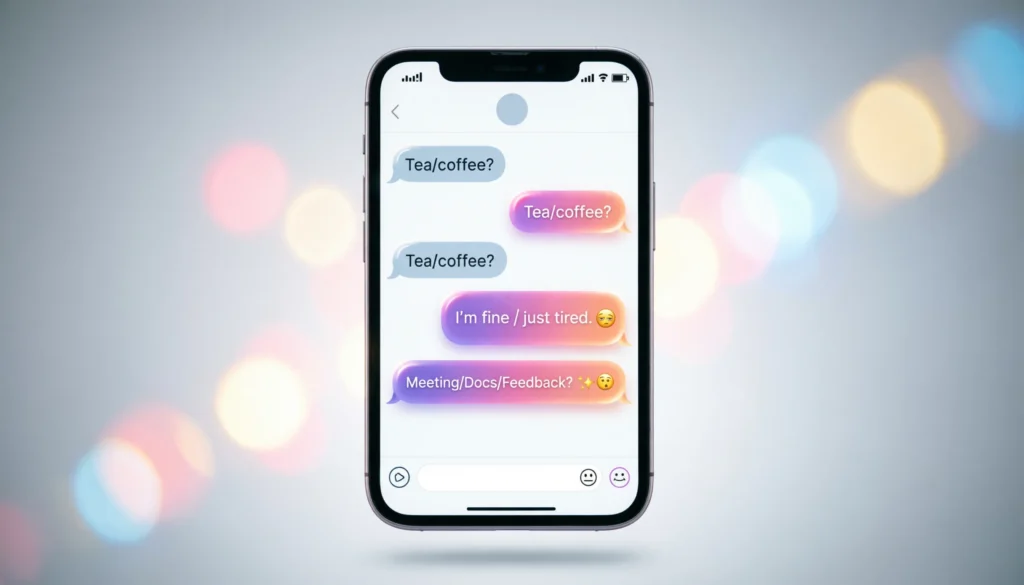
- “Do you want tea/coffee?”
👉 Meaning: tea or coffee
Tone: Neutral and practical
2. “And” (Combination)
Sometimes “/” connects ideas instead of separating them.
Example:
- “We’re watching movies/snacking tonight”
👉 Meaning: watching movies and snacking
Tone: Casual and relaxed
3. Tone Shift or Clarification
People use “/” to add a second thought or clarify what they mean.
Example:
- “I’m fine / just tired”
👉 Meaning: I’m okay, but actually tired
Tone: Slightly emotional or explanatory
4. Quick Correction or Rephrase
It can show a change in wording.
Example:
- “That was weird / funny actually”
👉 Meaning: correction from weird to funny
Tone: Reflective or playful
5. Dual Meaning or Ambiguity
Used when both meanings apply.
Example:
- “Best friend / partner vibes”
👉 Meaning: both friend and partner energy
Tone: Light, expressive, sometimes romantic
6. Stylized Writing (Aesthetic Use)
Often used in captions or bios.
Example:
- “Dreamer / Creator / Explorer ✨”
Tone: Stylish, modern, social-media friendly
Real-Life Texting Examples
Here’s how “/” works in different contexts:
| Text Message | Meaning | Tone |
|---|---|---|
| “Call me tonight/tomorrow” | Either time works | Neutral |
| “I’m busy / will reply later” | Explaining delay | Polite |
| “That movie was scary/funny” | Mixed feelings | Casual |
| “You’re annoying / kidding 😂” | Correction/joke | Playful |
| “Let’s chill / grab food” | Multiple plans | Friendly |
| “I’m okay / not really” | Hidden emotion | Slightly negative |
Tone Guide: How “/” Changes Meaning
The forward slash isn’t just about words it affects tone too.
Friendly Tone 😊
- “Let’s hang out / grab coffee”
- Feels easygoing and flexible
Neutral Tone 😐
- “Submit by Friday/Saturday”
- Straightforward and clear
Negative or Dismissive Tone 😒
- “Whatever / do what you want”
- Can feel slightly cold or passive-aggressive
Playful Tone 😂
- “You’re smart / annoying”
- Light teasing or humor
When Should You Use “/” in Texting?
Use “/” when you want to:
- Save time typing
- Show multiple options
- Add quick clarification
- Keep messages casual
- Create stylish captions
Avoid using it when:
- Writing formal emails
- Communicating professionally
- Clarity is critical (can confuse some readers)
Comparison With Similar Texting Symbols
Let’s compare “/” with other commonly used symbols:
| Symbol | Meaning | Example | Difference |
|---|---|---|---|
| / | Or / And / Clarification | “Tea/coffee?” | Flexible meaning |
| & | And | “You & me” | Always “and” |
| – (dash) | Pause or emphasis | “I’m tired – really tired” | More dramatic |
| , (comma) | Separation | “Tea, coffee” | Formal |
| (pipe) | Stylized separator | “Life |
Alternate Meanings of “/”
While texting meanings are most common, “/” can have other interpretations:
1. In Mathematics
- Means division
- Example: 10/2 = 5
2. In URLs
- Separates website paths
- Example: example.com/page
3. In Dates
- Used as a separator
- Example: 03/27/2026
4. In Tone Indicators (Advanced Use)
Sometimes paired with tone tags:
- “/s” = sarcasm
- “/j” = joking
- “/srs” = serious
Example:
- “That was amazing /s”
👉 Actually sarcastic
Polite or Professional Alternatives
If you want to avoid “/” in formal communication, try these:
Instead of:
- “Friday/Saturday”
Use:
- “Friday or Saturday”
Instead of:
- “Call me later / busy now”
Use:
- “I’m currently busy, but I’ll call you later.”
Instead of:
- “Tea/coffee?”
Use:
- “Would you prefer tea or coffee?”
Common Mistakes to Avoid
Even though “/” is simple, people misuse it often.
1. Overusing it
❌ “I’m tired / hungry / bored / annoyed”
👉 Feels cluttered
2. Causing confusion
❌ “Let’s meet Monday/Tuesday evening”
👉 Unclear timing
3. Using in formal writing
❌ “Dear Sir/Madam” (okay in some cases, but outdated)
FAQs
1. What does “/” mean in texting from a girl?
It usually means the same as anyone else “or,” “and,” or clarification. Context matters more than who sends it.
2. Is “/” rude in texting?
Not inherently. However, in certain phrases like “whatever / fine,” it can sound slightly dismissive.
3. Does “/” mean “and” or “or”?
It can mean both. You need to look at the sentence context to understand the intended meaning.
4. What does “/s” mean in texting?
“/s” is a tone indicator that means sarcasm. It shows the message shouldn’t be taken literally.
5. Why do people use “/” instead of words?
It saves time, keeps messages short, and fits casual or social media communication styles.
6. Is “/” used in professional messages?
Rarely. It’s better to use full words like “and” or “or” in formal communication.
7. What does “/” mean in Instagram captions?
It’s often used for style, separation, or listing ideas:
“Travel / Food / Lifestyle”
8. Can “/” change the tone of a message?
Yes. It can make a message feel casual, playful, or even slightly passive-aggressive depending on usage.
Conclusion
The forward slash “/” might look like a small symbol, but in texting, it plays a big role. Whether it means “or,” “and,” or acts as a tone-shifting tool, it helps people communicate faster and more casually.
Understanding how “/” works will help you read messages more accurately and use it naturally in your own texting style
Once you understand its flexibility, you’ll start noticing it everywhere and using it naturally in your own messages.
Discover More Related Articles:
- What Does NT Mean in Gaming?: Ranked Matches in 2026
- “En” Mean in Spanish: How “En” Differs From “Sobre” in 2026

Ryan Thompson is an experienced content writer specializing in slang terms, texting abbreviations, and word meanings. He writes for meanvoro.com, where he creates accurate and easy-to-understand language content for readers.