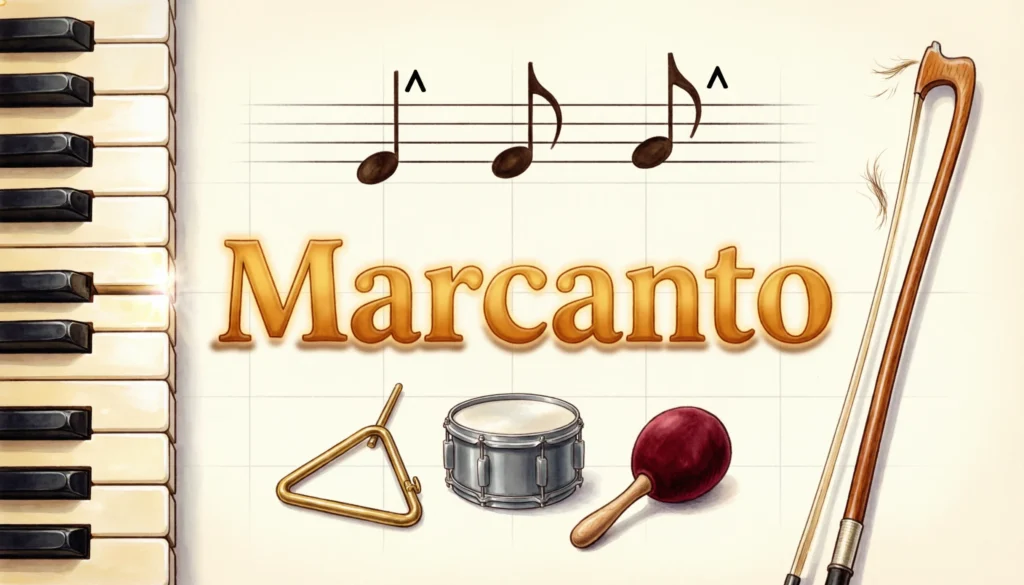
In music, “marcato” is an Italian term that means “marked” or “accented”. It indicates that a note, chord, or passage should be played with emphasis, giving it extra stress and clarity in the musical performance.
Understanding marcato is essential for musicians, composers, and music enthusiasts because it shapes the dynamics, articulation, and emotional expression of a piece.
Origin and Popularity of “Marcato”
The word marcato comes from Italian, the language of classical music notation, where many performance instructions originate. It literally means “marked” or “highlighted”, instructing the performer to play a note or series of notes more prominently than others.
Marcato is widely used across various music genres:
- Classical compositions (orchestral, piano, and chamber music)
- Jazz and contemporary music arrangements
- Film scores and musical theater
Its prevalence in sheet music, online tutorials, and performance instructions makes it a crucial term for musicians worldwide.
How “Marcato” Is Used in Music
1. Marking Notes for Emphasis
Marcato indicates that the note should stand out. Musicians often combine it with staccato or other articulations for expressive effect.
Examples:
- A single marcato note in a melody: 🎵
- Played louder or with sharper attack than surrounding notes
- In an orchestral score: Strings might play certain notes marcato to highlight rhythm or tension
2. Marcato vs. Other Dynamics
While dynamics like forte (loud) or piano (soft) control volume, marcato emphasizes accent and articulation, not just loudness.
Example:
- Forte: Play loudly
- Marcato: Play with a clear, marked accent, even if softly
Musicians may see marcato indicated by:
- The word “marcato” above the note
- The symbol ^ (caret or wedge) above or below the note
3. Playing Marcato on Different Instruments
- Piano: Press the key more firmly to emphasize the note
- Strings: Bow sharply or place a strong attack on the note
- Wind instruments: Use breath support to articulate the note clearly
- Percussion: Strike with added emphasis for marked effect
Example in Sheet Music:
🎼 A melody might read: C^ D E F^ G, where the caret ^ or “marcato” tells the musician which notes to accent.
Example Table: Marcato in Context
| Instrument | Marcato Instruction | Musical Effect | Tone / Feeling |
|---|---|---|---|
| Piano | Press keys with emphasis | Notes stand out in melody | Energetic, bold |
| Violin / Strings | Sharp bow attack | Accented rhythm, clear articulation | Dramatic, intense |
| Flute / Wind | Strong breath articulation | Clear note separation | Bright, pronounced |
| Drums / Percussion | Accent on specific hits | Rhythm emphasized | Punchy, marked |
Comparison With Related Musical Terms
| Term | Meaning in English | Difference from Marcato |
|---|---|---|
| Accent | Emphasized note | Marcato is a stronger, more pronounced accent |
| Staccato | Short and detached notes | Marcato focuses on emphasis, not duration |
| Tenuto | Held note | Tenuto stresses duration, Marcato stresses attack |
| Forte | Loud | Marcato emphasizes clarity and attack, not just volume |
Tip:
Marcato often works together with other dynamics for expressive music, e.g., marcato-forte = emphasized and loud.
Alternate Meanings or Symbols
Although marcato is primarily a performance instruction, it can appear in shorthand or symbols:
- ^: A wedge symbol above a note
- marc.: Abbreviated in sheet music
- Combined with other markings: marcato-staccato for short, accented notes
Polite and Professional Alternatives in Music Notation
In formal sheet music or teaching, you might see these alternatives to indicate emphasis:
- Accent (> or ^)
- Sforzando (sfz) → sudden, strong accent on a note
- Tenuto + accent → held and emphasized note
Example:
- Instead of writing “marcato” repeatedly, a composer may use sfz to save space and indicate a similar effect.
Common Mistakes to Avoid With Marcato
- Confusing Marcato with Forte
- Forte = volume; Marcato = emphasis / marked attack
- Overusing Marcato
- If every note is marked, it loses its expressive effect
- Ignoring articulation
- Marcato is about how you play, not just how loud you play
- Misreading symbols
- ^ (caret) or wedge symbols may look like staccato at first glance context matters
FAQs
1. What does marcato mean in music?
It means “marked” or “accented,” instructing the musician to play notes with emphasis.
2. How do you play marcato?
Play the note with a sharp attack or emphasis, using dynamics, articulation, or bowing techniques depending on the instrument.
3. Is marcato the same as accent?
Similar, but marcato is stronger and more pronounced than a standard accent.
4. Can you combine marcato with other dynamics?
Yes, e.g., marcato-forte for loud and accented notes, or marcato-staccato for short, emphasized notes.
5. Which instruments use marcato?
All instruments: piano, strings, winds, percussion, and even vocals in dramatic phrasing.
6. What symbols indicate marcato?
The wedge ^ above/below notes or the abbreviation marc.
7. Is marcato loud?
Not necessarily. It emphasizes attack and clarity, not only volume.
8. Why is marcato important in music?
It shapes the rhythm, dynamics, and emotional expression, making music feel expressive and alive.
Conclusion:
Marcato is a key articulation that brings energy, emphasis, and clarity to music. Unlike simple loudness, it focuses on how a note is played, making melodies and rhythms stand out.
By mastering marcato, musicians can make their performances more dynamic, precise, and emotionally compelling, whether playing classical, jazz, or contemporary music.
Discover More Related Articles:
- Lamentation Mean in the Bible: Why It Matters for Christians in 2026
- Adam Mean in the Bible: Symbolism, and Impact in 2026

Madison Taylor is an experienced content writer who focuses on researching and explaining word meanings, slang, and texting terms. She writes for meanvoro.com, creating clear and accurate to help readers understand language easily.