Definition
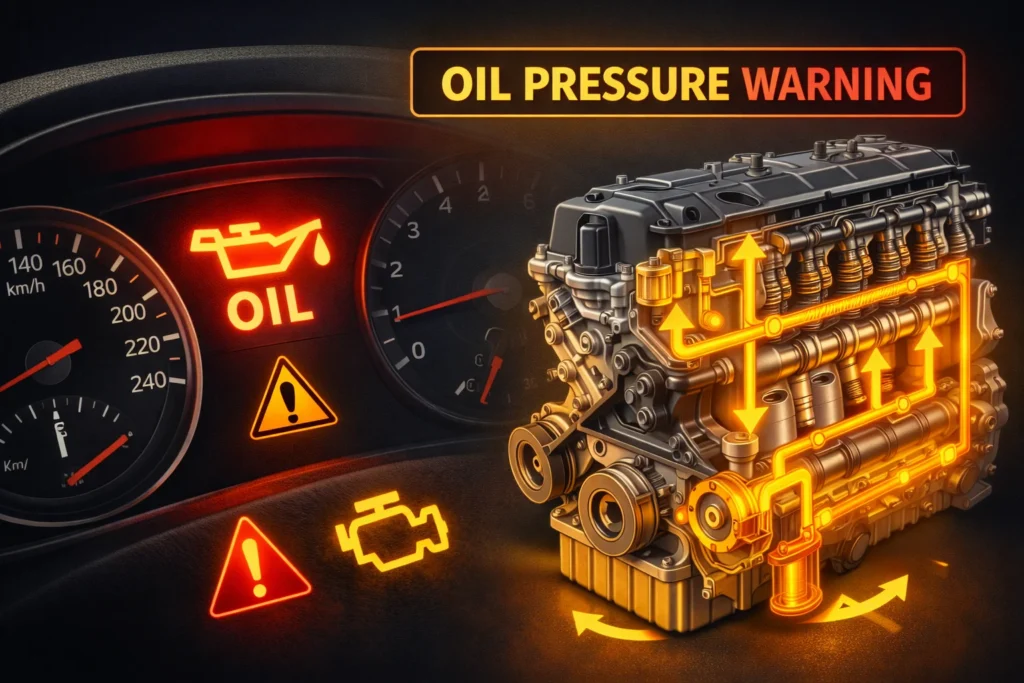
Low oil pressure in a car means that the engine oil is not circulating with enough force through the engine’s lubrication system.
This can prevent critical engine parts from receiving proper lubrication, which may lead to overheating, increased friction, and serious engine damage if not addressed quickly.
In simple terms, low oil pressure means your engine isn’t getting the oil it needs to run safely and smoothly.
When the oil pressure warning light appears on your dashboard, it is a signal that something in the lubrication system is not working correctly. Ignoring it can lead to costly engine repairs or even complete engine failure.
Why Oil Pressure Is So Important for Your Car
The Role of Engine Oil
Engine oil is one of the most important fluids in your vehicle. It performs several critical functions:
- Lubrication: Reduces friction between moving engine parts
- Cooling: Helps dissipate heat inside the engine
- Cleaning: Removes dirt, sludge, and debris
- Protection: Prevents corrosion and wear
Without proper oil pressure, the oil cannot flow through narrow engine passages efficiently.
What Happens When Oil Pressure Drops
When oil pressure drops too low:
- Engine parts start rubbing against each other
- Friction and heat increase rapidly
- Internal components may wear out faster
- The engine may seize or fail completely
Even a few minutes of driving with very low oil pressure can cause major damage.
Origin and Popularity of the Term “Low Oil Pressure”
Automotive Dashboard Warnings
The phrase “low oil pressure” became common with the introduction of dashboard warning systems in vehicles.
Early cars did not have advanced sensors, so drivers had no warning when lubrication problems occurred. Modern vehicles include oil pressure sensors and warning lights that alert drivers instantly.
Why Drivers Search This Term
Many drivers search for “what does low oil pressure mean in a car” when they notice:
- The oil pressure light on the dashboard
- A warning message on the digital display
- Strange engine noises
- Sudden loss of engine power
Understanding this warning can prevent expensive mechanical failures.
Common Causes of Low Oil Pressure
Low Engine Oil Level
One of the most common reasons for low oil pressure is simply not having enough oil in the engine.
This can happen due to:
- Oil leaks
- Burning oil inside the engine
- Not changing oil regularly
Checking the oil dipstick can quickly reveal if the level is too low.
Worn Engine Components
Over time, engine parts wear down. This can cause oil to flow too freely through gaps, reducing pressure.
Common worn components include:
- Engine bearings
- Piston rings
- Camshaft bearings
Older vehicles are more likely to experience this issue.
Faulty Oil Pump
The oil pump is responsible for circulating oil throughout the engine.
If the pump fails or becomes weak:
- Oil cannot move efficiently
- Pressure drops significantly
- Engine parts may not receive enough lubrication
A faulty oil pump usually requires professional repair.
Clogged Oil Filter
A dirty or clogged oil filter can restrict oil flow.
This often happens when:
- Oil changes are skipped
- Low-quality oil filters are used
- Contaminants build up in the system
Regular maintenance helps prevent this problem.
Incorrect Oil Type
Using the wrong oil viscosity can also reduce oil pressure.
For example:
- Oil that is too thin may not maintain pressure
- Oil that is too thick may struggle to circulate
Always use the oil recommended in your car’s owner manual.
Warning Signs of Low Oil Pressure
Dashboard Oil Pressure Light
The most obvious sign is the oil pressure warning light on the dashboard.
This light usually looks like a small oil can icon.
When it turns on:
- Stop driving as soon as possible
- Check the oil level
- Avoid running the engine for long periods
Unusual Engine Noises
Low oil pressure can cause:
- Knocking sounds
- Ticking noises
- Grinding sounds
These noises occur because engine parts are not properly lubricated.
Engine Overheating
Oil also helps cool the engine.
When oil pressure drops:
- Heat builds up inside the engine
- Temperature levels increase quickly
- Engine damage may occur
Burning Oil Smell
Sometimes drivers notice a burning oil smell when oil pressure problems exist.
This may indicate:
- Oil leaks
- Overheated engine components
Example Situations of Low Oil Pressure
Real-World Scenarios Drivers Experience
| Situation | What Happens | Possible Cause |
|---|---|---|
| Oil light appears while driving | Dashboard warning light turns on | Low oil level |
| Engine makes knocking sound | Loud metallic noise | Poor lubrication |
| Oil pressure drops after oil change | Oil warning light appears | Incorrect oil viscosity |
| Car overheats suddenly | Temperature gauge rises | Oil circulation problem |
| Engine loses power | Reduced engine performance | Failing oil pump |
These examples show how low oil pressure symptoms can appear in everyday driving.
How Mechanics Diagnose Low Oil Pressure
Step 1: Check Oil Level
The first step is checking the oil dipstick to ensure the engine has enough oil.
Step 2: Inspect for Leaks
Mechanics look for leaks around:
- Oil pan
- Gaskets
- Seals
- Oil filter
Step 3: Test the Oil Pressure Sensor
Sometimes the warning light is triggered by a faulty sensor rather than actual low pressure.
Step 4: Measure Actual Oil Pressure
A professional mechanic may use a mechanical oil pressure gauge to measure the real pressure inside the engine.
Comparison With Related Car Warning Terms
Oil Pressure vs Low Oil Level
Many drivers confuse low oil pressure with low oil level, but they are not exactly the same.
| Term | Meaning | Main Issue |
|---|---|---|
| Low Oil Pressure | Oil not circulating with enough force | Mechanical or lubrication problem |
| Low Oil Level | Not enough oil in the engine | Oil consumption or leak |
| Oil Pressure Warning Light | Dashboard alert | Possible pressure problem |
| Engine Oil Change Needed | Maintenance reminder | Oil quality issue |
Understanding the difference helps drivers respond correctly.
Alternate Meanings of “Low Oil Pressure”
In Other Engines
While the phrase is most commonly used for car engines, it can also apply to:
- Motorcycle engines
- Truck engines
- Boat engines
- Industrial machinery
In all cases, the meaning is essentially the same: insufficient oil circulation inside the engine system.
What to Do If Your Car Shows Low Oil Pressure
Immediate Steps
If you see the warning light:
- Pull over safely
- Turn off the engine
- Check the oil level
- Look for visible leaks
When to Call a Mechanic
You should seek professional help if:
- The oil level is normal but the warning persists
- The engine makes loud noises
- The car overheats
Driving with low oil pressure can destroy an engine very quickly.
Maintenance Tips to Prevent Low Oil Pressure
Follow Regular Oil Changes
Changing oil at recommended intervals keeps the system clean and efficient.
Use the Correct Oil
Always choose the manufacturer-recommended oil viscosity.
Replace the Oil Filter
A fresh oil filter prevents blockages and improves oil flow.
Monitor Dashboard Warnings
Never ignore warning lights. They are designed to protect your engine.
FAQs
What causes low oil pressure in a car?
Low oil pressure can be caused by low oil levels, a faulty oil pump, worn engine parts, clogged oil filters, or using the wrong type of engine oil.
Is it safe to drive with low oil pressure?
No. Driving with low oil pressure can cause severe engine damage because internal parts are not properly lubricated.
Can low oil pressure damage the engine?
Yes. Lack of lubrication increases friction and heat, which can lead to engine failure or seized components.
How do I fix low oil pressure?
Possible fixes include adding oil, replacing the oil filter, repairing leaks, replacing the oil pump, or fixing worn engine parts.
What does the oil pressure warning light mean?
It indicates that the engine oil pressure is too low and the lubrication system may not be functioning correctly.
Can an oil change fix low oil pressure?
Sometimes. If the issue is caused by old oil or a clogged filter, a fresh oil change may restore proper pressure.
What oil pressure is normal for a car?
Normal oil pressure typically ranges between 20 and 60 PSI, depending on the engine and driving conditions.
Why does oil pressure drop when the engine is hot?
When oil heats up, it becomes thinner. If engine components are worn, the thinner oil may not maintain proper pressure.
Conclusion
Low oil pressure is one of the most serious warning signs a car can give. It means the engine may not be receiving enough lubrication to operate safely.
Ignoring this warning can quickly lead to overheating, excessive wear, and even complete engine failure.
The most common causes include low oil levels, worn engine parts, clogged filters, faulty oil pumps, or incorrect oil viscosity. Fortunately, many of these problems can be prevented with simple maintenance such as regular oil changes and monitoring dashboard warnings.
If your car ever displays a low oil pressure warning, the safest response is to stop driving and investigate the issue immediately. Acting quickly can save your engine and your wallet from costly damage.
Discover More Related Articles:

Ryan Thompson is an experienced content writer specializing in slang terms, texting abbreviations, and word meanings. He writes for meanvoro.com, where he creates accurate and easy-to-understand language content for readers.