

In the Bible, “haughty” means having an attitude of pride, arrogance, or superiority that places oneself above God and others.
It refers to a heart posture marked by self-exaltation, contempt for others, and resistance to humility before God.
Have you ever read a Bible verse that warns against being “haughty” and wondered what that actually means in everyday life?
The word sounds old-fashioned, but its message is timeless and surprisingly relevant in a world of ego, pride, and self-promotion.
Before diving deep, here’s a clear, featured-snippet-ready definition.
In Scripture, haughtiness is consistently portrayed as spiritually dangerous and morally destructive.
Why the Bible Talks So Much About Haughtiness
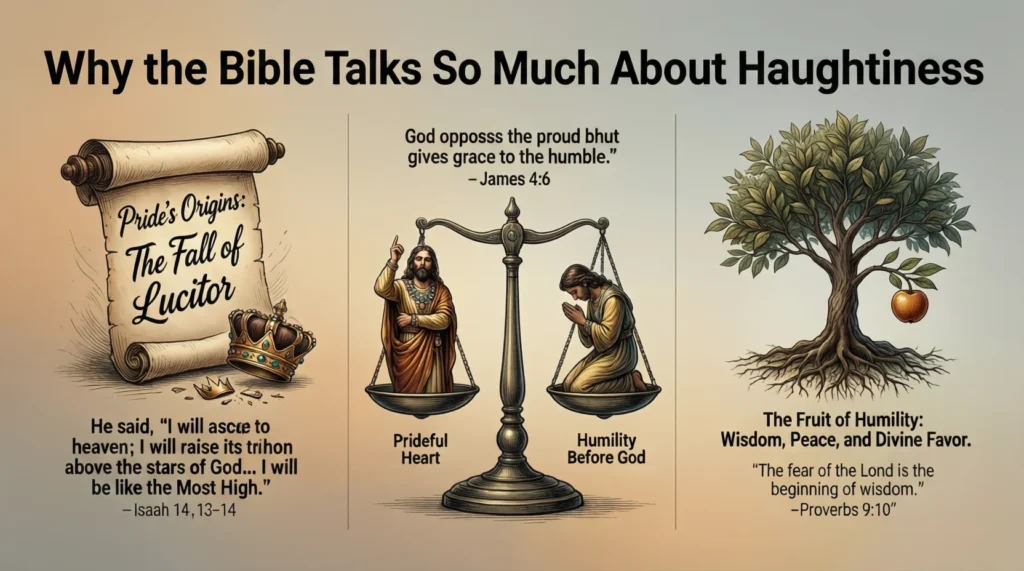
The Bible doesn’t warn against confidence, leadership, or success but it cautions against pride that hardens the heart.
Haughtiness is not just an outward behavior; it’s an inner condition that affects how a person:
- Sees God
- Treats others
- Responds to correction
- Understands their own limitations
That’s why the term especially in Proverbs, Psalms, and prophetic books is used as a serious moral warning.
The Origin of the Word “Haughty” (Biblical & Linguistic Roots)

Hebrew Origins (Old Testament)
In the Old Testament, “haughty” comes from Hebrew words like:
- “Gābah” – meaning to be high, lifted up, exalted
- “Rām” – meaning elevated or lofty
These words often describe:
- Prideful eyes
- Lifted hearts
- Exalted attitudes
Proverbs 16:18
“Pride goes before destruction, a haughty spirit before a fall.”
Here, “haughty spirit” paints a picture of someone spiritually “standing too tall” in their own eyes.
Greek Influence
While the exact English word “haughty” appears less often in the New Testament, the idea is conveyed through Greek terms related to:
- Pride
- Self-exaltation
- Arrogance
James 4:6
“God opposes the proud but gives grace to the humble.”
The message remains consistent across both Testaments.
What “Haughty” Looks Like in Real Life
Haughtiness isn’t always loud or obvious. In Scripture, it can appear in subtle but damaging ways.
Common Biblical Traits of a Haughty Person
- Looks down on others
- Refuses correction or wisdom
- Credits themselves instead of God
- Uses power or status to dominate
- Displays pride through words, posture, or actions
Isaiah 2:11
“The haughty eyes of people shall be brought low, and the pride of everyone shall be humbled.”
Tone of the Word “Haughty” in the Bible
In Scripture, “haughty” is always negative.
Tone Breakdown
| Tone Type | Used Biblically? | Explanation |
|---|---|---|
| Friendly | No | Never used affectionately |
| Neutral | No | Always moral or spiritual warning |
| Negative / Corrective | Yes | Associated with judgment, downfall, or rebuke |
Unlike modern words that can shift tone, haughty in the Bible is a red-flag term.
Examples of “Haughty” Used in the Bible
Example 1: Prideful Attitude
Proverbs 21:4
“Haughty eyes and a proud heart the lamp of the wicked are sin.”
Meaning:
A person’s inner pride eventually shows outwardly. Haughtiness is treated as a form of sin, not just a personality flaw.
Example 2: Warning of Consequences
Proverbs 18:12
“Before downfall the heart is haughty, but humility comes before honor.”
Meaning:
Haughtiness precedes failure. Humility, not arrogance, leads to lasting honor.
Example 3: God’s Response to the Haughty
Psalm 101:5
“Whoever has haughty eyes and a proud heart, him I will not endure.”
Meaning:
God directly rejects sustained arrogance. This verse shows how seriously Scripture treats pride.
Haughty vs Humble in the Bible
| Trait | Haughty Person | Humble Person |
|---|---|---|
| View of Self | Overestimates importance | Recognizes dependence on God |
| View of Others | Looks down on them | Shows respect and grace |
| Response to Correction | Defensive or dismissive | Teachable and open |
| Biblical Outcome | Fall, judgment, resistance | Grace, honor, favor |
Haughty vs Related Biblical Terms
Difference Haughty vs Proud
- Proud: Broad term for self-exaltation
- Haughty: A sharper, more visible form of pride, often contemptuous
Haughtiness is pride in action.
Using Haughty vs Arrogant
- Arrogant: Overbearing confidence
- Haughty: Spiritually elevated attitude with disdain
Arrogance focuses on ego; haughtiness focuses on moral superiority.
Compare Haughty vs Confident
- Confident: Trusting God or one’s abilities with humility
- Haughty: Trusting self instead of God
Confidence is encouraged; haughtiness is condemned.
Alternate Meanings of “Haughty”
In modern English, haughty can mean:
- Snobbish
- Aloof
- Condescending
Example (non-biblical):
“She gave a haughty look and walked away.”
While similar, the biblical meaning goes deeper, pointing to a heart condition, not just behavior.
Polite or Professional Alternatives to “Haughty”
Alternative Words
- Arrogant
- Prideful
- Self-important
- Condescending
- Overbearing
Professional Tone Alternatives
- Lacking humility
- Displays excessive pride
- Shows an elevated sense of self
These alternatives are useful in teaching, counseling, or professional writing.
Real-World Usage: Why This Word Still Matters Today
Even if “haughty” isn’t used daily in conversation, the behavior it describes is everywhere:
- Social media superiority
- Power-driven leadership
- Refusal to admit wrong
- Judging others harshly
The Bible’s warning isn’t outdated it’s relevant today.
How the Bible Encourages the Opposite of Haughtiness
Scripture provides the solution.
Biblical Antidotes to Haughtiness
- Humility – Micah 6:8
- Teachability – Proverbs 12:1
- Dependence on God – John 15:5
- Service to others – Philippians 2:3–4
Philippians 2:3
“Do nothing from selfish ambition or conceit, but in humility count others more significant than yourselves.”
FAQs
1. Is haughtiness the same as pride in the Bible?
Haughtiness is a form of pride, but more visible and contemptuous in nature.
2. Does God forgive haughty behavior?
Yes, when there is repentance and humility. Scripture emphasizes grace for the humble.
3. Is being confident considered haughty?
No. Confidence rooted in God is healthy. Haughtiness exalts self over God.
4. Why does the Bible strongly condemn haughtiness?
Because it leads to spiritual blindness, broken relationships, and resistance to God.
5. Can Christians struggle with haughtiness?
Yes. The Bible’s warnings are written to believers as well as leaders.
6. What verse best defines haughty in the Bible?
Proverbs 16:18 is the most widely cited definition verse.
7. Is haughty always a sin?
In biblical context, yes it reflects a heart posture opposed to humility.
8. How can someone overcome a haughty spirit?
Through prayer, self-examination, accountability, and practicing humility daily.
Conclusion:
So, what does haughty mean in the Bible?
It’s more than arroganc. It’s a heart lifted too high, a spirit that forgets dependence on God and devalues others. Scripture consistently warns that haughtiness leads to downfall but promises grace to those who choose humility.
The Bible makes it clear: God resists the haughty but draws near to the humble.
Search More Related Articles:
- VOC Paint Meaning: Low-VOC vs Traditional Paints Compared (2026)
- The Meaning of the Rainbow in the Bible : Explained for Christians (2026)

Madison Taylor is an experienced content writer who focuses on researching and explaining word meanings, slang, and texting terms. She writes for meanvoro.com, creating clear and accurate to help readers understand language easily.