
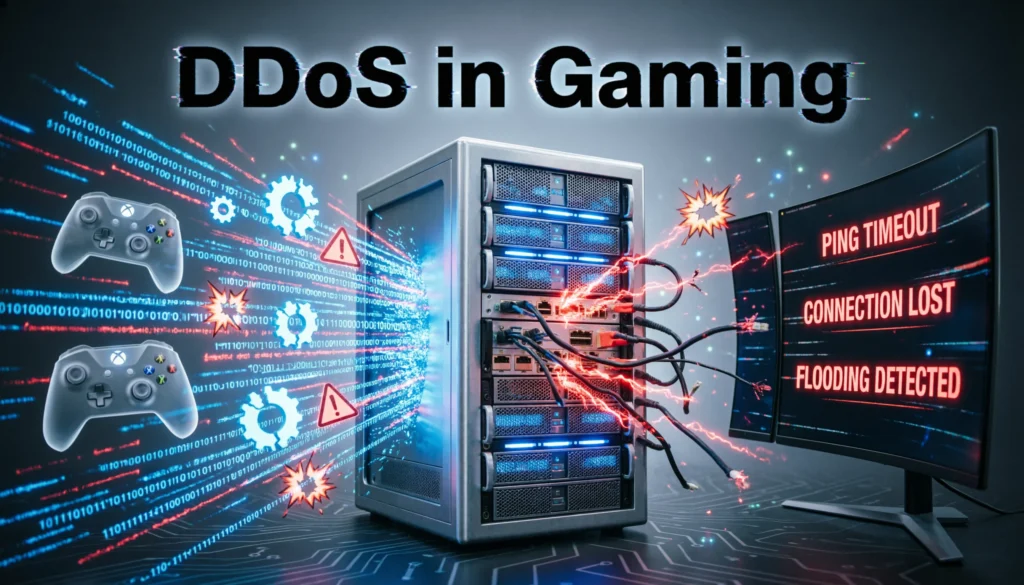
In gaming, DDoS stands for “Distributed Denial of Service.” It refers to a cyberattack where multiple systems flood a game server or player’s internet connection with traffic, causing lag, disconnections, or complete server shutdown.
Online gaming depends on stable internet connections and responsive servers. Whether you are playing competitive shooters, MMORPGs, or esports titles, connection stability is everything.
When a DDoS attack happens, it can:
- Cause extreme lag
- Disconnect players mid-match
- Shut down servers
- Ruin tournaments or ranked games
Because online competition can get intense, some players or malicious groups use DDoS attacks unfairly to gain an advantage. Knowing how DDoS works is important for both casual and competitive gamers.
DDoS attacks are unfortunately common in competitive online gaming. They can disrupt matches, disconnect players, or crash servers entirely. Understanding what DDoS means in gaming helps players recognize the issue, protect themselves, and respond appropriately.
Origin and Technical Meaning of DDoS
DDoS stands for Distributed Denial of Service.
Let’s break it down clearly:
- Distributed means the attack comes from multiple computers or devices.
- Denial of Service means preventing normal access to a service, such as a game server.
In simple terms, a DDoS attack overwhelms a server or connection with fake traffic until it cannot handle legitimate players.
Unlike a single attack source, DDoS uses many devices at once, making it harder to block.
How DDoS Attacks Affect Gaming
In gaming, DDoS attacks usually target either:
- Game servers
- Individual players
1. Server DDoS
When attackers target a game server:
- Everyone experiences lag
- Matches freeze
- The server crashes
- Players get kicked out
This often affects large groups at once.
2. Player DDoS
In competitive situations, attackers may target a specific player’s IP address. This can:
- Slow down their internet
- Disconnect them from the match
- Prevent them from rejoining
This is especially harmful in ranked matches or tournaments.
Examples of DDoS in Gaming Context
Here are some real-world style examples of how DDoS is used in gaming conversations.
| Tone | Gaming Example | Meaning |
|---|---|---|
| Frustrated | “The server just got DDoSed again 😒” | The game server was attacked and crashed |
| Competitive | “He DDoSed me during ranked!” | A player targeted another player’s connection |
| Neutral | “The match was canceled due to a DDoS attack.” | Official explanation for disruption |
| Casual | “That lag felt like a DDoS.” | Player joking about severe lag |
Sometimes players exaggerate normal lag by calling it a DDoS, but real attacks are more severe and disruptive.
Difference Between DDoS and Regular Lag
Many gamers confuse DDoS with normal internet problems. Here’s the difference:
| Issue | Cause | Impact |
|---|---|---|
| Regular Lag | Slow internet or high ping | Minor delays |
| Server Overload | Too many players | Temporary slowdown |
| DDoS Attack | Malicious traffic flood | Severe lag, crashes, disconnections |
Not every lag spike is a DDoS attack. Real DDoS incidents are usually confirmed by developers or affect many players at once.
Why Do People DDoS in Gaming?
While illegal and unethical, attackers may DDoS for:
- Competitive advantage
- Revenge after losing
- Disrupting tournaments
- Trolling or harassment
- Gaining attention
In serious cases, DDoS attacks have disrupted professional esports events.
Is DDoS Illegal?
Yes. DDoS attacks are illegal in many countries because they intentionally disrupt services and cause financial damage.
Game companies can:
- Ban accounts permanently
- Report attackers to authorities
- Track malicious activity
Players should never attempt or support DDoS attacks.
How Gamers Can Protect Themselves
While players cannot fully prevent server-level attacks, they can reduce personal risk:
- Avoid sharing your IP address
- Use secure internet connections
- Be cautious with unknown links
- Enable router security features
- Consider a VPN for added privacy
Professional gamers often use advanced protection to avoid being targeted during competitions.
DDoS in Competitive and Esports Gaming
DDoS has impacted:
- Online qualifiers
- Ranked leaderboards
- High-stakes tournaments
- Streaming sessions
When streamers reveal IP addresses accidentally, they become more vulnerable. Game developers continuously improve server protection systems to reduce attacks.
Comparison With Related Gaming Terms
| Term | Meaning | Difference |
|---|---|---|
| DDoS | Distributed Denial of Service attack | External traffic overload |
| Swatting | False emergency call | Real-world harassment |
| Hacking | Unauthorized access | May involve cheating |
| Lag Switching | Manipulating connection | Affects own network |
DDoS is specifically about overwhelming servers or connections with traffic.
Polite or Professional Ways to Refer to DDoS
In formal discussions, such as news reports or esports commentary, people may say:
- Service disruption
- Network attack
- Server overload incident
- Cyberattack
These terms sound more professional than simply saying “we got DDoSed.”
FAQs
- What does DDoS mean in gaming?
It means Distributed Denial of Service, a cyberattack that overloads a server or connection. - Is DDoS common in online games?
It happens, especially in competitive gaming, but major companies work to prevent it. - Can someone DDoS my home internet while gaming?
It is possible if someone obtains your IP address. - Is DDoS the same as hacking?
No. DDoS floods traffic; hacking involves gaining unauthorized access. - How long does a DDoS attack last?
It can last minutes or hours depending on severity and protection systems. - Can game companies stop DDoS attacks?
They use advanced protection systems, but no system is 100 percent immune. - Is DDoS illegal?
Yes, in most countries it is a criminal offense. - How do I know if I was DDoSed?
Severe, sudden internet disruption affecting only you or confirmed server crashes may indicate an attack.
Practical Tips for Gamers
- Do not share personal network information
- Keep your system updated
- Use strong passwords
- Report suspicious behavior
- Stay calm and avoid retaliation
Protecting your online presence is just as important as improving your gaming skills.
Conclusion
DDoS in gaming refers to a Distributed Denial of Service attack that overwhelms a server or player’s connection, causing lag, crashes, or disconnections. While frustrating, it is a serious cybersecurity issue rather than just normal lag.
Understanding DDoS helps gamers:
- Recognize real network attacks
- Protect their privacy
- Avoid misinformation
- Support fair competition
Online gaming should be competitive and fun, not disrupted by malicious activity. Awareness and proper security practices make a big difference.
Discover More Related Articles:
- Perseverance Mean in the Bible: Lessons from Paul, Job, and Jesus for 2026
- Subdue Meaning in the Bible: Lessons for 2026

Ryan Thompson is an experienced content writer specializing in slang terms, texting abbreviations, and word meanings. He writes for meanvoro.com, where he creates accurate and easy-to-understand language content for readers.