
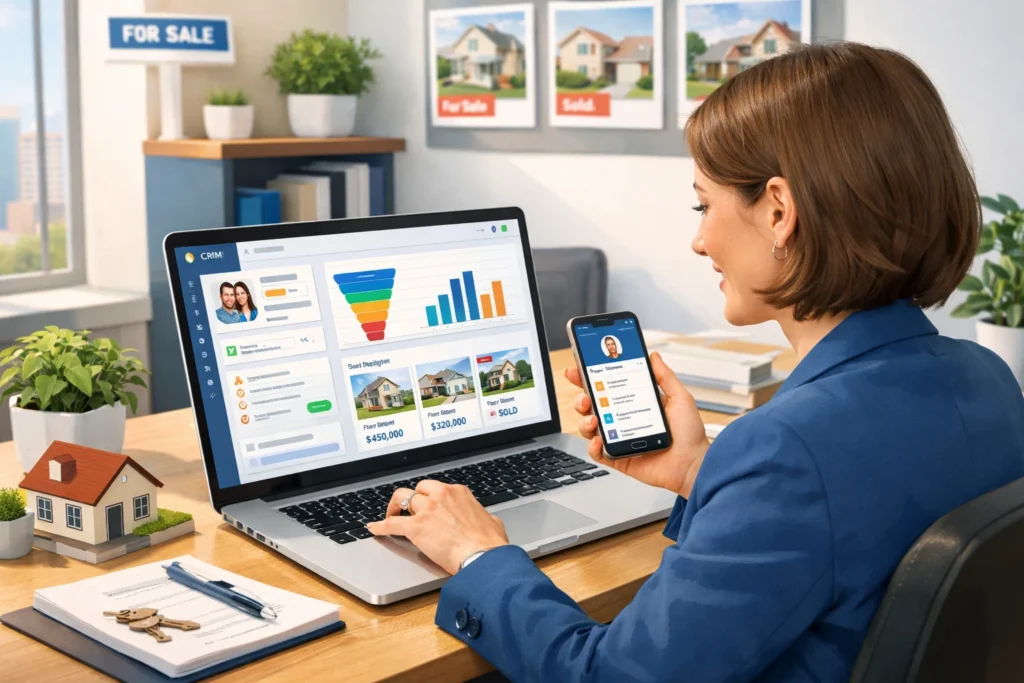
CRM stands for Customer Relationship Management.
In real estate, it refers to software and systems that help agents and companies manage interactions with clients, leads, and contacts to improve relationships, sales, and communication.
In short: CRM is a tool that helps real estate professionals organize, track, and nurture client relationships efficiently.
If you’ve ever talked to real estate agents or read about real estate tools, you’ve probably come across the acronym CRM. It’s a key term in the industry, but many people are unsure what it really means.
Understanding what CRM means in real estate is essential for agents, brokers, property managers, investors, and even homebuyers who want to understand how modern real estate business works.
This guide explains CRM in detail, how it’s used in real estate, its benefits, and practical tips for getting the most out of it.
Why CRM Is Important in Real Estate
CRM has become a standard in the real estate industry because it helps agents:
- Keep track of leads and potential clients
- Maintain strong relationships with current and past clients
- Automate follow-ups, reminders, and communications
- Increase sales by improving client satisfaction
- Save time by organizing contacts and tasks
A good CRM ensures that no leads are forgotten, and agents can provide personalized attention to clients, which is crucial in real estate.
Origin and History of CRM in Business
The concept of CRM originated in the 1980s as companies sought to improve customer service and sales tracking. With technology advances, CRM software became digital, allowing businesses to store client data, schedule follow-ups, and analyze trends.
In real estate, CRM became popular in the early 2000s as agents realized the importance of:
- Managing multiple leads
- Tracking property interests
- Following up with buyers and sellers efficiently
Modern real estate CRMs include features like email automation, pipeline management, lead scoring, and mobile access.
Core Functions of Real Estate CRM
A CRM system in real estate typically includes these key functions:
1. Lead Management
Track and organize all prospective buyers, sellers, and investors.
Example:
- An agent enters new inquiries into the CRM and assigns follow-up dates.
2. Contact Organization
Store client details such as phone numbers, email addresses, and preferences.
Example:
- Segmenting clients by budget, location interest, or buying stage.
3. Automated Communication
Send reminders, emails, or texts automatically to clients.
Example:
- “Happy house hunting! Check out these new listings in your area.”
4. Task Management
Schedule appointments, showings, and meetings in one platform.
Example:
- The CRM reminds the agent of an upcoming property tour.
5. Reporting and Analytics
Analyze sales performance, client engagement, and pipeline activity.
Example:
- Reviewing which leads converted into closed deals.
Benefits of Using CRM in Real Estate
- Improved organization: All client data in one place
- Better follow-up: Automated reminders prevent lost leads
- Higher sales efficiency: Agents spend less time on admin work
- Enhanced client relationships: Personalized communication improves trust
- Data-driven decisions: Reports help identify trends and opportunities
Example Table: How CRM Helps Real Estate Agents
| Function | Example | Benefit |
|---|---|---|
| Lead tracking | New inquiry from website | No lead gets forgotten |
| Contact segmentation | Buyers interested in condos | Targeted communication |
| Automated follow-up | Email drip campaign | Saves time |
| Appointment scheduling | Property showing reminders | Better organization |
| Reporting | Monthly sales analysis | Track performance and strategy |
Common Expressions Using CRM
- CRM software – Refers to the actual program used
- CRM system – The full structure of processes and tools
- CRM strategy – How an agent or company uses CRM to manage clients
- CRM pipeline – A visual representation of where leads are in the sales process
Comparison CRM vs Other Real Estate Tools
| Tool | Meaning | Key Difference |
|---|---|---|
| CRM | Customer Relationship Management | Focuses on clients, leads, and follow-ups |
| MLS | Multiple Listing Service | Focuses on property listings, not clients |
| ERP | Enterprise Resource Planning | Broader business management, not client-focused |
| Email marketing | Automated messaging | Limited to messaging, not full client tracking |
Tip: A CRM often integrates with MLS, email marketing, and mobile apps to provide a complete solution.
Polite or Professional Alternatives
In formal business contexts, CRM can also be referred to as:
- Client Relationship Management system
- Real estate contact management platform
- Customer interaction management software
Example:
- Informal: “I use a CRM to keep track of my clients.”
- Formal: “Our agency utilizes a client relationship management system to optimize interactions with buyers and sellers.”
Alternate Meanings or Misunderstandings
Outside real estate, CRM can also mean:
- Customer Resource Management
- Crew Resource Management (aviation and safety)
In real estate, however, CRM always refers to Customer Relationship Management.
FAQs
Meaning of CRM in real estate?
CRM stands for Customer Relationship Management and is used to manage client interactions.
Why do real estate agents need CRM?
CRM helps agents track leads, manage clients, and improve sales efficiency.
Can CRM improve sales?
Yes, by organizing contacts, automating follow-ups, and providing analytics.
Types of CRM for real estate?
There are cloud-based, mobile, and desktop CRMs, each with varying features.
How does CRM help client relationships?
By storing detailed client information and automating communication for personalized attention.
Is CRM only for large agencies?
No, individual agents and small teams can also benefit from CRM software.
What features are most useful in CRM?
Lead tracking, contact segmentation, automated follow-up, appointment scheduling, and reporting.
Can CRM integrate with other tools?
Yes, most modern CRMs integrate with MLS, email marketing, and mobile apps.
Practical Tips for Using CRM in Real Estate
- Choose a CRM that fits your workflow and budget
- Keep client data updated regularly
- Automate follow-ups to avoid losing leads
- Segment clients for targeted communication
- Use reporting tools to improve strategies over time
Conclusion
CRM in real estate is a game-changer for agents and agencies. It stands for Customer Relationship Management and helps track, organize, and nurture client relationships efficiently.
By using a CRM, real estate professionals can:
- Improve client communication
- Manage leads effectively
- Save time on administrative tasks
- Increase sales and revenue
- Make data-driven decisions
Understanding CRM is no longer optional in real estate it’s a vital tool for success in a competitive market.
Discover More Related Articles:
- Perseverance Mean in the Bible: Lessons from Paul, Job, and Jesus for 2026
- Subdue Meaning in the Bible: Lessons for 2026

Madison Taylor is an experienced content writer who focuses on researching and explaining word meanings, slang, and texting terms. She writes for meanvoro.com, creating clear and accurate to help readers understand language easily.