
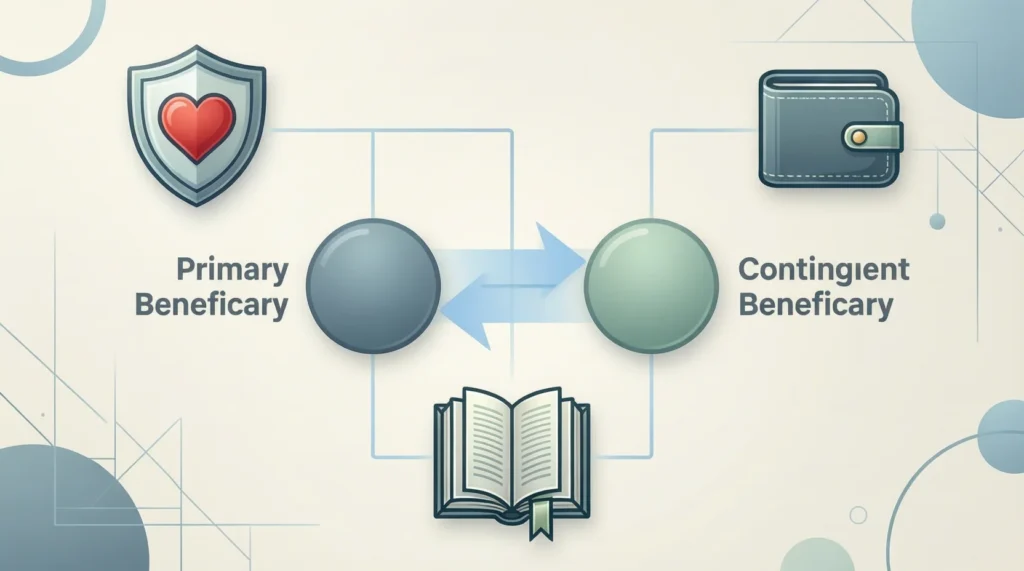
In the context of a beneficiary, “contingent” refers to a person or entity who will receive assets, benefits, or insurance proceeds only if the primary beneficiary cannot inherit them.
A contingent beneficiary is essentially a backup, ensuring that assets are distributed according to the owner’s wishes even if the primary beneficiary is unable or unwilling to accept them.
When you set up a life insurance policy, retirement account, or will, you usually designate a primary beneficiary. But what happens if that person cannot inherit for instance, if they predecease you or refuse the inheritance? That’s where a contingent beneficiary comes into play.
Having a contingent beneficiary provides:
- Backup protection for your assets
- Clarity in estate planning
- Avoidance of probate complications
- Peace of mind knowing your wishes are followed
Without a contingent beneficiary, assets may default to your estate, which could involve court intervention, delays, and potential disputes among heirs.
Understanding the concept of contingent beneficiaries is crucial for estate planning, life insurance, and financial management. It helps prevent legal disputes, ensures smooth transfer of assets, and protects the intentions of the account or policy owner.
Origin and Meaning of “Contingent”
The word “contingent” comes from the Latin contingere, meaning “to touch, happen, or befall.” In legal and financial contexts, it has evolved to mean dependent on certain conditions or events.
In estate planning:
- Contingent always implies a condition: the beneficiary will only inherit if a certain event occurs (e.g., the primary beneficiary cannot receive the asset).
- It introduces flexibility and ensures assets do not go unclaimed.
How Contingent Beneficiaries Work
When naming a contingent beneficiary, the process is straightforward but must be done carefully:
- Identify the primary beneficiary – the first person to receive the asset.
- Designate the contingent beneficiary – the backup recipient.
- Specify conditions – usually “if the primary cannot inherit.”
- Update regularly – review your beneficiary designations after major life events.
Examples of Contingent Beneficiaries
| Scenario | Primary Beneficiary | Contingent Beneficiary | Explanation |
|---|---|---|---|
| Life insurance | Spouse | Child | If the spouse predeceases the insured, the child receives the payout. |
| Retirement account | Adult child | Sibling | If the child cannot inherit, the sibling becomes the beneficiary. |
| Trust fund | Grandchild | Charity | If the grandchild cannot inherit, the fund goes to the designated charity. |
Difference Between Primary and Contingent Beneficiaries
Understanding the distinction is key:
| Term | Definition | Role in Inheritance |
|---|---|---|
| Primary Beneficiary | First in line to receive assets | Receives assets if alive and eligible |
| Contingent Beneficiary | Backup recipient | Receives assets only if the primary cannot inherit |
Pro tip: Always name at least one contingent beneficiary to avoid default distribution to your estate.
Legal and Financial Considerations
Naming contingent beneficiaries comes with important considerations:
- Eligibility: Contingent beneficiaries must meet legal requirements (age, relationship, entity type).
- Multiple contingents: You can name more than one, specifying percentages.
- Updating records: Life changes like marriage, divorce, or death may require updates.
- Tax implications: Contingent beneficiaries may inherit under different tax rules depending on the asset type.
Examples in Different Contexts
| Context | Example | Explanation |
|---|---|---|
| Life Insurance | John names his wife as primary and his son as contingent | If the wife passes away first, the son gets the policy payout |
| 401(k) or IRA | Jane lists her brother as primary and her cousin as contingent | Ensures account is transferred smoothly |
| Will or Trust | Testator leaves house to friend as primary, charity as contingent | Charity inherits only if friend cannot |
Common Mistakes to Avoid
- Not naming a contingent beneficiary – assets may default to the estate.
- Failing to update beneficiaries – life events may change your intentions.
- Choosing vague language – clearly specify names and percentages.
- Overlooking multiple accounts – each account may require separate designations.
Polite and Professional Alternatives
Sometimes in documents or discussions, you may see alternative terms or explanations:
| Term | Meaning | Usage |
|---|---|---|
| Secondary Beneficiary | Another way to say contingent | Often used in financial forms |
| Backup Beneficiary | Informal, easier to understand | Good for patient/family communication |
| Alternate Beneficiary | Another professional term | Used in legal documents |
Using clear, understandable language ensures beneficiaries are aware of their status.
FAQs
- What does contingent mean in a beneficiary?
It means the person will receive assets only if the primary beneficiary cannot inherit. - Can you have more than one contingent beneficiary?
Yes, you can assign percentages or specify order of inheritance. - Is a contingent beneficiary legally binding?
Yes, once designated properly on accounts or insurance forms. - Do contingent beneficiaries inherit automatically?
They inherit only if the primary beneficiary cannot receive the asset. - How often should I update contingent beneficiaries?
After major life events like marriage, divorce, birth, or death. - What happens if no contingent beneficiary is listed?
Assets usually go to the estate and may involve probate. - Can a contingent beneficiary be a charity or trust?
Yes, any legal entity can be designated. - Are there tax implications for contingent beneficiaries?
Yes, taxes depend on the type of asset and inheritance laws.
Practical Tips for Naming Contingent Beneficiaries
- Always name at least one backup.
- Use full legal names to avoid confusion.
- Specify percentages if multiple contingent beneficiaries exist.
- Review regularly to keep designations up to date.
- Consult a financial advisor or estate attorney for complex estates.
Conclusion
A contingent beneficiary ensures your assets are distributed according to your wishes even if your primary beneficiary cannot inherit. Understanding the role of contingents is essential in estate planning, insurance, and retirement accounts.
- Pro tip: Regularly review and update your beneficiaries.
- Practice tip: Clearly document percentages and conditions for multiple contingents.
Proper use of contingent beneficiaries protects your estate, prevents disputes, and provides peace of mind.
Discover More Related Articles:
- Perseverance Mean in the Bible: Lessons from Paul, Job, and Jesus for 2026
- Subdue Meaning in the Bible: Lessons for 2026

Madison Taylor is an experienced content writer who focuses on researching and explaining word meanings, slang, and texting terms. She writes for meanvoro.com, creating clear and accurate to help readers understand language easily.