

Consecration in the Bible means the act of setting apart someone or something for a sacred purpose, dedicating it fully to God’s service, holiness, and divine use.
It involves a deliberate commitment to spiritual purity, devotion, and obedience to God.
Consecration is a central concept in biblical teachings, appearing throughout both the Old and New Testaments. It is not just a ceremonial act; it reflects a heart and life fully devoted to God.
Whether applied to people, objects, or places, consecration signifies intentional holiness and separation from ordinary, worldly purposes.
Origin of the Word “Consecration”
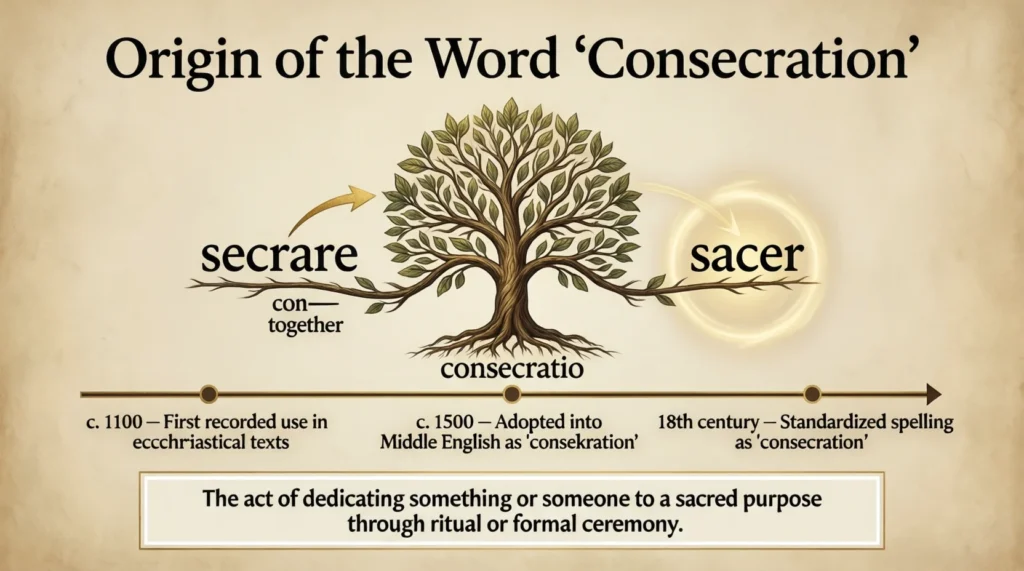
The word “consecrate” comes from the Latin consecrare, which means “to make sacred” or “to dedicate formally to God.”
In the Hebrew Bible (Old Testament), the term often appears in connection with priests, temples, altars, and sacred objects.
Popularity and Historical Usage
- Old Testament: Consecration involved ceremonial purification, anointing with oil, and symbolic acts to mark someone or something as holy (Exodus 28:41, Leviticus 8:10–12).
- New Testament: The focus shifted to inner holiness, personal dedication, and living a life pleasing to God (Romans 12:1–2, 1 Thessalonians 5:23).
- Modern Usage: Today, consecration is often used in churches for ordaining ministers, dedicating buildings, or committing oneself to spiritual disciplines.
Usage of Consecration in the Bible
Consecration can apply to people, places, objects, and even time. Each type has specific meaning and significance:
1. Consecration of People
- Priests: In the Old Testament, priests were consecrated to serve in the temple (Exodus 29:1–9).
- Believers: In the New Testament, all Christians are called to consecration in their daily lives living holy lives and being set apart for God’s purposes (1 Peter 1:15–16).
2. Consecration of Objects
- Altars, vessels, and temples were consecrated for sacred use (Exodus 40:9–11).
| Object | Purpose of Consecration | Biblical Reference |
|---|---|---|
| Ark of the Covenant | To represent God’s presence | Exodus 40:20 |
| Priestly Garments | To signify holiness and service | Exodus 28:2 |
| Temple Altar | For sacrifices and worship | Leviticus 8:10–12 |
3. Consecration of Places
- Temples, altars, and holy sites were consecrated to signify God’s dwelling among His people.
- Example: Solomon consecrating the temple in Jerusalem (1 Kings 8:63).
4. Consecration of Time
- Sabbath and special feasts were consecrated to rest, worship, and reflection (Exodus 20:8–11).
Examples of Consecration in Context
Friendly/Positive Tone
- Example: A young believer dedicating their life to God through prayer, fasting, and service.
- Interpretation: Personal consecration demonstrates devotion and sets a life apart for holy purposes. 🙏
Neutral Tone
- Example: The consecration of temple utensils for ceremonial use.
- Interpretation: The focus is functional designating items for a specific religious role.
Negative/Dismissive Tone
- Example: Someone going through rituals without genuine heart commitment.
- Interpretation: Consecration without sincerity loses its spiritual value. ❌
Comparison with Related Terms
| Term | Meaning | Difference from Consecration |
|---|---|---|
| Dedication | Setting apart for a purpose, not always spiritual | Can be secular; consecration is sacred |
| Ordination | Formal appointment to religious office | Consecration can include ordination, but broader |
| Sanctification | Process of becoming holy over time | Consecration is the initial act of setting apart |
| Blessing | Divine favor without necessarily separating something | Consecration implies dedication and separation |
Tip: Consecration often overlaps with these terms but always emphasizes setting apart for God.
Alternate Meanings and Uses
- Secular Use: Occasionally, consecration may refer to dedicating a space or object for any formal purpose (e.g., “consecrating a monument”), though this is less common.
- Professional or Polite Alternatives:
- Dedicate
- Devote
- Sanctify
These alternatives work when discussing commitment or purpose without heavy religious connotations.
Practical Applications Today
- Personal Spiritual Life: Dedicating your actions, thoughts, and time to God.
- Church or Religious Institutions: Consecrating pastors, ministries, or buildings.
- Objects and Rituals: Religious artifacts, Bibles, and altars may still be consecrated.
💡 Practical Tip: True consecration is a heart commitment. Rituals alone are not enough without sincerity and obedience to God.
FAQs
- What does consecration mean for a Christian today?
It means living a life dedicated to God, avoiding sin, and serving others with spiritual purpose. - How do you consecrate yourself to God?
Through prayer, repentance, obedience, and intentionally dedicating your life and actions to Him. - Is consecration the same as salvation?
No. Salvation is God’s gift of eternal life, while consecration is your response setting yourself apart for holy living. - What Bible verses talk about consecration?
Key verses include Exodus 28:41, Leviticus 8:10–12, Romans 12:1, and 1 Peter 1:15–16. - Can objects be consecrated today?
Yes, religious items, altars, and church spaces are still consecrated in modern practice. - Does consecration require a ceremony?
Not always. While ceremonies are traditional, heart dedication and obedience are more important. - Is consecration only for priests or religious leaders?
No. Every believer can consecrate themselves to God through holy living. - What is the difference between consecration and sanctification?
Consecration is setting apart; sanctification is the ongoing process of growing in holiness and spiritual maturity.
Conclusion
Consecration in the Bible is more than a ritual it’s a lifestyle of devotion, obedience, and holiness. From priests and temples in the Old Testament to the personal dedication of believers today, consecration demonstrates a heart set apart for God.
Practical Tip: Start small dedicate daily actions, thoughts, and decisions to God. Over time, this personal consecration grows into a full spiritual lifestyle that aligns with biblical teachings. 🌟
Search More Related Articles :
- Perseverance Mean in the Bible: Lessons from Paul, Job, and Jesus for 2026
- Subdue Meaning in the Bible: Lessons for 2026

Madison Taylor is an experienced content writer who focuses on researching and explaining word meanings, slang, and texting terms. She writes for meanvoro.com, creating clear and accurate to help readers understand language easily.