
Definition:
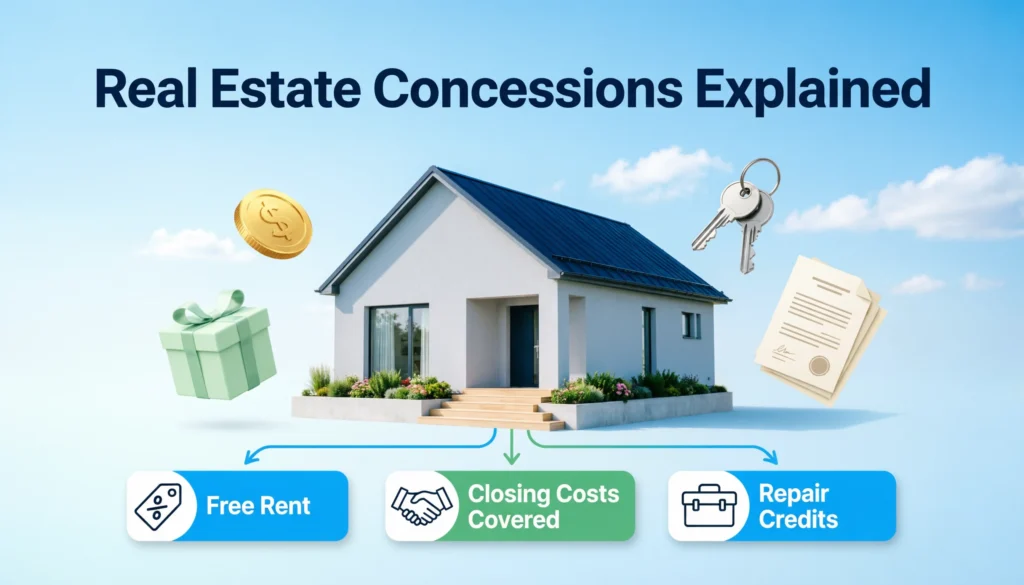
Concessions in real estate are incentives or benefits offered by a seller, landlord, or agent to attract buyers or tenants and help close a deal faster. These can include covering closing costs, offering discounts, free upgrades, rent reductions, or other financial perks.
Why Concessions Matter in Real Estate
Picture this: you find a home you like, but it’s slightly over your budget. The seller offers to pay part of your closing costs or include appliances for free. Suddenly, the deal feels much better, right?
That’s the power of concessions.
They play a huge role in:
- Negotiations between buyers and sellers
- Speeding up transactions
- Making properties more competitive
- Helping deals go through in slower markets
Origin and Popularity of the Term “Concessions”
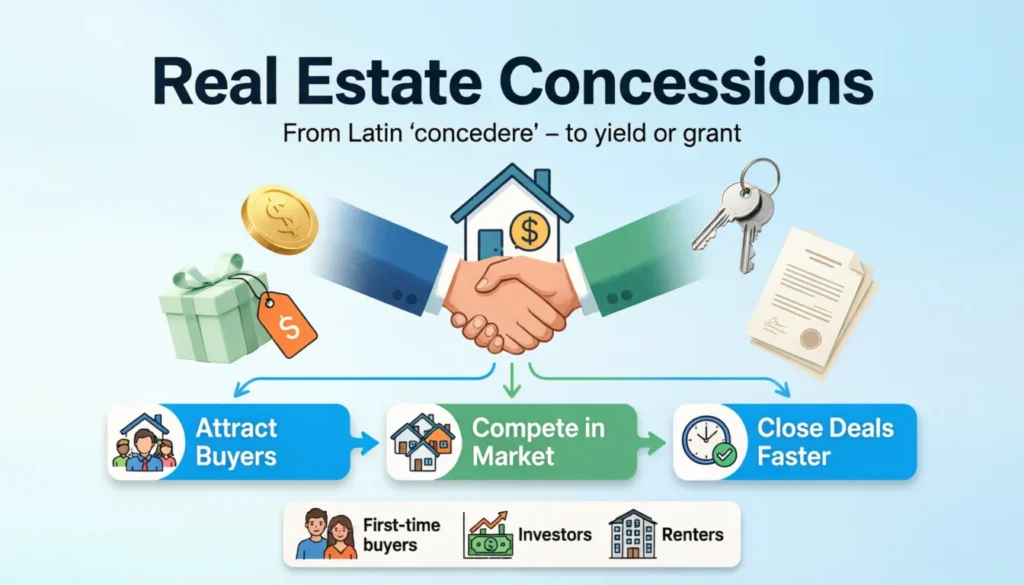
The word “concession” comes from the Latin concedere, meaning “to yield or grant.” In general language, it refers to giving something up to reach an agreement.
In real estate, the term became popular as markets grew more competitive. Agents and sellers began using concessions strategically to:
- Attract hesitant buyers
- Compete with similar listings
- Close deals during market slowdowns
Today, “real estate concessions” is a widely searched and commonly used term, especially among:
- First-time homebuyers
- Real estate investors
- Renters negotiating leases
Types of Concessions in Real Estate
Concessions can vary depending on whether the property is being sold or rented. Let’s break it down:
Seller Concessions (For Home Buyers)
These are incentives offered by the seller to the buyer.
Common examples include:
- Paying part or all of the buyer’s closing costs
- Offering repair credits after inspection
- Including furniture or appliances
- Lowering the purchase price
- Covering HOA fees for a period
Buyer Concessions
Less common, but buyers can also offer concessions to sellers.
Examples:
- Flexible move-out dates
- Waiving contingencies (like inspection)
- Offering a quick closing
Rental Concessions (For Tenants)
Landlords often offer concessions to attract renters.
Examples include:
- One month free rent 🎉
- Reduced security deposit
- Free parking or utilities
- Discounted rent for the first few months
Real Estate Concessions Examples
Understanding how concessions are used in real life helps you use them more effectively.
Friendly / Helpful Tone 😊
- “We’ll cover your closing costs to make things easier for you.”
- “Sign the lease today and get your first month free!”
👉 This tone builds trust and encourages quick decisions.
Neutral / Professional Tone
- “The seller is offering a $5,000 concession toward repairs.”
- “A rental concession of one month’s rent is available.”
👉 Common in contracts and listings.
Negative / Dismissive Tone 😬
- “They only offered a small concession—it’s not worth it.”
- “That concession doesn’t really make a difference.”
👉 Used when the offer feels insufficient.
Real Estate Concessions Table
| Type of Concession | Who Offers It | Example | Purpose |
|---|---|---|---|
| Closing Cost Assistance | Seller | Pays 3% of buyer’s closing costs | Reduce upfront buyer expenses |
| Repair Credit | Seller | $2,000 credit for home repairs | Fix issues without delaying sale |
| Price Reduction | Seller | Drops price by $10,000 | Attract more buyers |
| Free Rent | Landlord | First month free | Fill vacant units quickly |
| Flexible Terms | Buyer | Allows delayed move-out | Appeal to seller’s needs |
| Included Extras | Seller | Adds appliances or furniture | Increase perceived value |
When Are Concessions Most Common?
Concessions are more likely in certain market conditions:
Buyer’s Market 🏠
- More homes than buyers
- Sellers compete with each other
- Concessions are very common
Seller’s Market 🔥
- More buyers than homes
- Sellers have the advantage
- Concessions are less common
Balanced Market ⚖️
- Equal supply and demand
- Concessions are negotiable
How Concessions Work in Negotiations
Concessions are a powerful negotiation tool.
Example Scenario:
- Home price: $250,000
- Buyer asks for $7,500 in concessions
Instead of lowering the price, the seller agrees to:
👉 Pay closing costs
Result:
- Buyer saves cash upfront
- Seller keeps listing price intact
Win-win situation 🎯
Concessions vs Related Real Estate Terms
Understanding similar terms helps avoid confusion.
Difference Concessions vs Discounts
| Feature | Concessions | Discounts |
|---|---|---|
| Meaning | Extra benefits or incentives | Direct price reduction |
| Flexibility | Highly flexible | Fixed |
| Example | Paying closing costs | Lowering price by $10,000 |
Comparing Concessions vs Incentives
- Concessions: Usually negotiated during a deal
- Incentives: Often advertised upfront
👉 Example:
- Incentive: “Free parking included!”
- Concession: “We’ll waive your parking fee if you sign today.”
Using Concessions vs Credits
- Credit: A specific financial amount
- Concession: A broader term that may include credits
👉 Example:
- “$3,000 repair credit” = a type of concession
Alternate Meanings of “Concessions”
Outside real estate, the word “concessions” can mean:
- Snacks or food sold at events 🍿
- A compromise in negotiations
- Special privileges or allowances
But in real estate, it always relates to deal sweeteners or financial benefits.
Polite & Professional Alternatives to “Concessions”
If you’re writing listings or communicating professionally, you can use:
- Incentives
- Buyer benefits
- Seller contributions
- Financial assistance
- Promotional offers
👉 Example:
Instead of: “We’re offering concessions”
Say: “We’re offering buyer incentives to support closing costs.”
Tips for Using Concessions Effectively
Buyers:
- Always ask—there’s no harm in negotiating
- Focus on high-impact concessions (like closing costs)
- Compare offers carefully
For Sellers:
- Use concessions strategically instead of lowering price
- Highlight them in listings
- Offer just enough to stay competitive
For Renters:
- Look for seasonal deals (winter = more concessions)
- Negotiate politely but confidently
- Ask about hidden perks
FAQs
1. What does concessions mean in real estate?
Concessions are incentives offered by sellers or landlords to attract buyers or tenants, such as covering closing costs or offering free rent.
2. Are concessions good for buyers?
Yes, concessions reduce upfront costs and make purchasing or renting more affordable.
3. Do concessions affect home prices?
Sometimes. Instead of lowering the price, sellers may offer concessions to maintain the listing value.
4. What are seller concessions?
Seller concessions are costs or benefits the seller agrees to pay on behalf of the buyer, such as closing costs or repairs.
5. Can you negotiate concessions?
Absolutely! Concessions are one of the most negotiable parts of a real estate deal.
6. What is a rental concession?
A rental concession is a benefit offered by a landlord, like free rent or reduced deposits, to attract tenants.
7. Are concessions common in all markets?
No. They’re more common in buyer’s markets and less common in competitive seller’s markets.
8. Do lenders allow concessions?
Yes, but there are limits depending on the loan type. Always check with your lender.
Conclusion:
Concessions in real estate are more than just “extras” they’re strategic tools that can make or break a deal.
Concessions in real estate are powerful tools that make buying, selling, or renting properties easier and more appealing. They can include financial perks like covering closing costs, offering free rent, or providing repair credits. While they don’t always lower the property’s listed price, they add significant value to the deal and can help negotiations succeed.
For buyers and renters, concessions reduce upfront costs and make properties more accessible. For sellers and landlords, they can attract serious buyers or tenants and close deals faster especially in competitive or slow markets.
Discover More Related Articles:

Ryan Thompson is an experienced content writer specializing in slang terms, texting abbreviations, and word meanings. He writes for meanvoro.com, where he creates accurate and easy-to-understand language content for readers.