
Canon in the Bible refers to the collection of books that are officially recognized as inspired by God and authoritative for Christian faith and practice.
These books form the standard scripture, distinguishing sacred writings from other religious or historical texts.
The term “canon” is essential in understanding how the Bible was compiled and why certain texts are included while others are not. If you’ve ever wondered why some books appear in your Bible and others don’t, or why different Christian traditions include different books, then understanding the concept of the biblical canon is key.
This article explores the origins, meaning, usage, and examples of canon in the Bible, comparing it with related terms, providing practical insights, and answering the most common questions people have.
Origin of the Term “Canon”
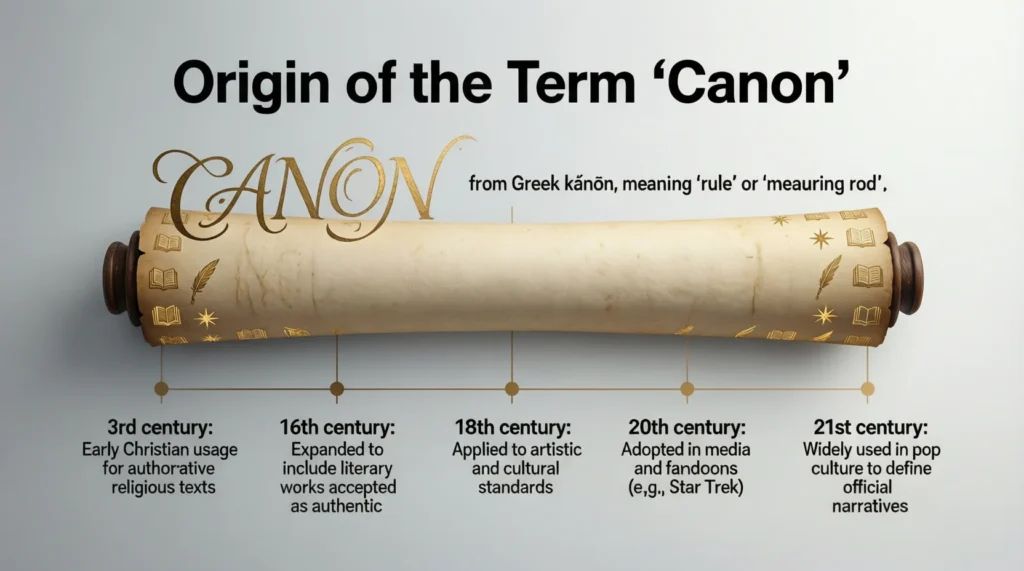
The word canon comes from the Greek word kanon, which means “rule” or “measuring stick.” In early Christian usage, it evolved to refer to a standard set of sacred texts that serve as a benchmark for faith and doctrine.
- Hebrew roots: In Judaism, the Torah and other sacred writings were considered authoritative long before the New Testament was compiled.
- Greek influence: Early Christians borrowed kanon to define which writings were truly inspired by God.
- Historical codification: By the 4th century, church leaders officially recognized the New Testament books we know today as canonical.
Why it matters: Understanding the origin helps clarify why some texts were included or excluded, emphasizing the principle of spiritual authority rather than mere popularity.
What Does Canon Mean in the Bible?
In simple terms:
- Canon = Officially recognized books of the Bible
- Non-canonical = Writings not accepted as inspired scripture
Key Points
- Canonization was a deliberate process guided by church councils and early Christian leaders
- It ensures consistency in teaching, doctrine, and worship across the Christian community
- Different traditions may recognize slightly different canons:
- Protestant Bible: 66 books (39 Old Testament + 27 New Testament)
- Catholic Bible: 73 books (including the Deuterocanonical books)
- Eastern Orthodox Bible: Varies slightly, with additional texts like 3 Maccabees
Example Table: Canon vs Non-Canon
| Category | Examples | Notes |
|---|---|---|
| Canonical Books | Genesis, Matthew, Romans | Recognized as authoritative scripture |
| Non-Canonical | Gospel of Thomas, Book of Enoch | Valuable historically, but not scripture |
| Deuterocanonical | Tobit, Wisdom of Solomon | Accepted by Catholic and Orthodox traditions |
Popularity and Real-World Usage
The concept of canon isn’t just historical—it still influences Christian life today:
- Church teaching: Sermons, catechism, and religious education rely on canonical texts
- Bible translations: Publishers follow canonical standards to determine which books to include
- Academic study: Scholars study canon formation to understand historical context, theology, and textual authority
Fun fact: Some people casually use “canon” outside of religious contexts to mean something like “official” or “standard,” such as in movies, TV series, or literature. For example: “The Harry Potter canon” refers to the official stories written by J.K. Rowling, not fan fiction.
Examples of Canon in Context
Understanding canon can be tricky without examples. Here’s how it is applied:
- Friendly tone:
“Genesis, Exodus, and Psalms are all part of the biblical canon, forming the foundation of the Old Testament.” - Neutral tone:
“The Gospel of Thomas is interesting historically but is not part of the biblical canon.” - Negative/dismissive tone:
“Some early Christian writings were eventually rejected from the canon because they contradicted core teachings.”
Tip: Using tone appropriately helps clarify whether a text is considered authoritative or merely historical.
Canon Compared with Related Terms
Understanding canon is easier when compared to similar or related concepts:
| Term | Meaning | Relation to Canon |
|---|---|---|
| Scripture | Sacred writings, may include canonical & non-canonical | Canon is a subset of scripture |
| Apocrypha | Hidden or doubtful writings | Not part of Protestant canon, partly included in Catholic/Orthodox canon |
| Deuterocanonical | “Second canon” books | Recognized in Catholic and Orthodox Bibles, not in Protestant canon |
| Inspired | Believed to be guided by God | Canonical books are considered inspired |
Alternate Meanings of “Canon”
While most people think of canon in the Bible, it has a few other uses:
- Literature & Media: Official works vs fan fiction
- Music: A canon is a composition where the melody is imitated after a short delay
- Art & Architecture: Standards or rules of proportion
Professional alternatives when discussing scripture:
- Scriptural standard
- Authorized writings
- Sacred text collection
How Canon Was Formed
Canon formation wasn’t random—it involved careful discernment:
- Apostolic authority: Books linked to apostles were more likely to be accepted
- Orthodox teaching: Texts consistent with accepted beliefs were favored
- Widespread usage: Books widely used in churches across regions were more likely to be canonized
- Divine inspiration: Ultimately, the church discerned these writings as inspired by God
Example: The Book of Revelation was debated for centuries before being universally recognized in the canon.
Why Canon Matters Today
- Ensures theological consistency across denominations
- Guides spiritual growth and moral teaching
- Provides a framework for Bible study and education
- Differentiates inspired texts from historical or legendary writings
Without a canon, it would be difficult to know which texts reflect authentic Christian teaching.
FAQs
1. What is the biblical canon?
The biblical canon is the official collection of books recognized as inspired and authoritative in the Bible.
2. Who decided which books were in the Bible?
Early church leaders and councils discerned which texts were apostolic, orthodox, and widely accepted by the Christian community.
3. Are all Christian denominations’ canons the same?
No. Protestant, Catholic, and Orthodox churches recognize slightly different canons.
4. What is the difference between canon and scripture?
Scripture can refer to any sacred writing, while canon specifically refers to the officially recognized, authoritative books.
5. What are deuterocanonical books?
These are books included in the Catholic and Orthodox canons but not in the Protestant canon.
6. Why are some books not in the Bible?
Books may have been excluded due to lack of apostolic authority, inconsistency with orthodox teaching, or limited acceptance among early churches.
7. Is the Bible complete?
Yes, according to each tradition’s canon. The Bible contains all the books considered necessary for faith and practice.
8. Can canon change today?
No, the canon is considered closed. Modern additions or removals are not recognized in mainstream Christianity.
Conclusion
Understanding what canon means in the Bible helps us appreciate the Bible as a structured, authoritative collection of texts. Canon ensures that believers study consistent, inspired, and reliable scripture.
The canon distinguishes between books that are recognized as divinely inspired and those that are historically interesting but not used for teaching or doctrine. It continues to guide theology, Bible study, and worship across Christian traditions.
When studying the Bible, it is helpful to be aware of which canon your tradition follows to understand why certain books are included and others are not.
Search More Related Articles :
- BOT Mean in Baseball: Complete Guide for Fans & Players (2026)
- GIR Mean in Golf: Tips to Hit More Greens in Regulation (2026)

Ryan Thompson is an experienced content writer specializing in slang terms, texting abbreviations, and word meanings. He writes for meanvoro.com, where he creates accurate and easy-to-understand language content for readers.