
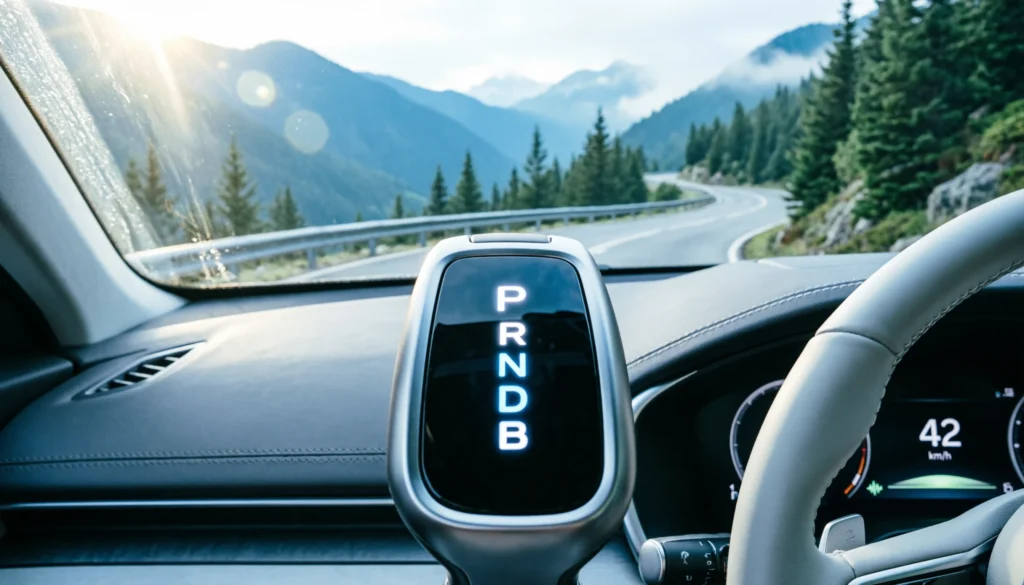
Definition:
“B” in a car typically stands for “Brake mode” or “Engine braking mode.” It is a gear setting found in automatic, hybrid, and electric vehicles that helps slow the car down by using the engine or motor instead of relying only on the brake pedal.
If you’ve ever glanced at your gear selector and noticed the mysterious “B”, you’re not alone. Many drivers are familiar with P, R, N, and D, but that extra “B” can feel confusing especially if you’ve never used it before.
Is it for braking? Is it for battery? Should you even use it?
The truth is, “B” plays a useful role in specific driving situations, especially in modern cars like hybrids and electric vehicles. Understanding it can improve your driving control, safety, and even fuel efficiency.
Let’s break it down in simple, practical terms.
What Does “B” Mean in a Car?
In most modern vehicles, “B” stands for Brake mode or Engine Braking mode.
Simple Explanation:
- It slows down the car without pressing the brake pedal too much
- It uses the engine or electric motor to reduce speed
- It helps reduce wear on your brakes
Where You’ll Find It:
- Hybrid cars (like Toyota Prius)
- Electric vehicles (EVs)
- Some automatic transmission cars
How Does “B” Mode Work?
When you shift into “B” mode, your car changes how it behaves:
In Regular Cars:
- The engine creates resistance
- This slows down the wheels naturally
In Hybrid/Electric Cars:
- The motor regenerates energy
- That energy goes back into the battery ⚡
- It slows the car at the same time
Key Benefit:
You get controlled deceleration without constantly pressing the brake pedal.
When Should You Use “B” Mode?
“B” is not for everyday driving. It’s designed for specific situations.
Best Times to Use It:
🚗 1. Driving Downhill
- Prevents your car from gaining too much speed
- Reduces brake overheating
🚗 2. Heavy Traffic
- Helps slow the car smoothly
- Reduces constant braking
🚗 3. Slippery Roads
- Provides better control
- Prevents sudden braking
🚗 4. Long Descents
- Ideal for mountain roads
- Saves brake pads from wear
When NOT to Use “B” Mode
Using “B” at the wrong time can reduce efficiency.
Avoid using it:
- During normal city driving
- On flat roads
- When you want maximum fuel efficiency (in some hybrids)
👉 In most cases, “D” (Drive) is better for everyday use.
Origin and Evolution of “B” in Cars
The concept of engine braking isn’t new—it has existed in manual transmissions for decades. Drivers used to downshift gears to slow down the car.
How “B” Evolved:
- Manual cars → Downshifting
- Automatic cars → Limited control
- Modern cars → Introduced “B” for convenience
Why It Became Popular:
- Rise of hybrid vehicles
- Need for better energy efficiency
- Improved driving safety on slopes
Real-World Usage of “B” Mode
Here’s how drivers actually use “B” in daily life:
Example 1 (Friendly Context 😊):
“I switched to B mode while driving down the hill—didn’t even need to press the brakes much!”
Example 2 (Neutral Context):
“Use B gear when going downhill to maintain control and reduce brake wear.”
Example 3 (Slightly Negative/Dismissive Tone 😅):
“You don’t need B mode for city driving—it just wastes efficiency.”
Example Table: “B” Mode vs Other Gear Modes
| Gear Mode | Meaning | Purpose | When to Use |
|---|---|---|---|
| P | Park | Locks wheels | When parked |
| R | Reverse | Move backward | Reversing |
| N | Neutral | No power | Towing/car wash |
| D | Drive | Normal driving | Everyday use |
| B | Brake Mode | Engine braking | Downhill, traffic |
“B” Mode vs Similar Driving Terms
Let’s compare “B” with other related concepts:
1. B vs D (Drive)
- D: Regular driving
- B: Slowing down using engine
👉 Use D for normal roads, B for control situations
2. B vs Low Gear (L)
- L (Low gear): Keeps car in lower gear for power
- B: Focuses on braking effect
👉 Both help on slopes, but B is smoother and modern
3. B vs Regenerative Braking
- Regenerative braking: Converts motion into energy
- B mode: Enhances this effect in EVs
👉 In EVs, “B” often increases regeneration
Alternate Meanings of “B” in Cars
While “B” usually means Brake mode, it can have other meanings depending on context:
Possible Alternate Meanings:
- Battery Mode (rare, in EV displays)
- Boost Mode (in performance cars)
- Gear B (specific models)
👉 Always check your car manual to confirm.
Advantages of Using “B” Mode
✅ Better Control
- Ideal for slopes and tricky roads
✅ Less Brake Wear
- Reduces pressure on brake pads
✅ Energy Efficiency (in hybrids/EVs)
- Charges battery while slowing down
✅ Safer Driving
- Prevents overheating brakes
Disadvantages of “B” Mode
❌ Reduced Fuel Efficiency (sometimes)
- Can slow the car too much
❌ Not Needed Always
- Overuse can be unnecessary
❌ Learning Curve
- New drivers may find it confusing
Tips for Using “B” Mode Effectively
- ✔ Use it only when needed (downhill, traffic)
- ✔ Switch back to “D” for normal driving
- ✔ Don’t rely on it fully—still use brakes when needed
- ✔ Practice in safe conditions
Polite or Professional Alternatives
If you’re explaining “B” to someone:
Instead of:
“It’s just for braking.”
Say:
“It’s a braking assist mode that helps control speed more efficiently.”
FAQs:
- Is it safe to drive in B mode?
Yes, it’s safe, especially for downhill driving or controlled deceleration. - Can I use B mode all the time?
No, it’s mainly for specific situations; regular driving should use D (Drive). - Does B mode save fuel?
In hybrids and EVs, it can regenerate energy, but may lower efficiency on flat roads. - Is B the same as low gear?
Not exactly. B focuses on braking, while low gear provides more engine power and control. - Does B mode damage the engine?
No, it’s designed to be safe when used correctly. - When should I switch back to D?
Switch back on normal, flat roads for everyday driving. - Do all cars have B mode?
No, it’s mostly in hybrid and electric vehicles.
Do all cars have B mode?
No, it’s mostly in hybrid and electric vehicles.
Conclusion:
The “B” gear in a car is a Brake or Engine Braking mode that helps control speed, especially on downhill roads or in heavy traffic. It reduces wear on your brakes, can assist with energy regeneration in hybrids and electric vehicles, and provides smoother, safer driving in specific situations.
While it’s not needed for everyday driving, understanding and using it correctly can make your driving experience more efficient and controlled.
Discover More Related Articles:
- Lamentation Mean in the Bible: Why It Matters for Christians in 2026
- Adam Mean in the Bible: Symbolism, and Impact in 2026

Ryan Thompson is an experienced content writer specializing in slang terms, texting abbreviations, and word meanings. He writes for meanvoro.com, where he creates accurate and easy-to-understand language content for readers.