Definition
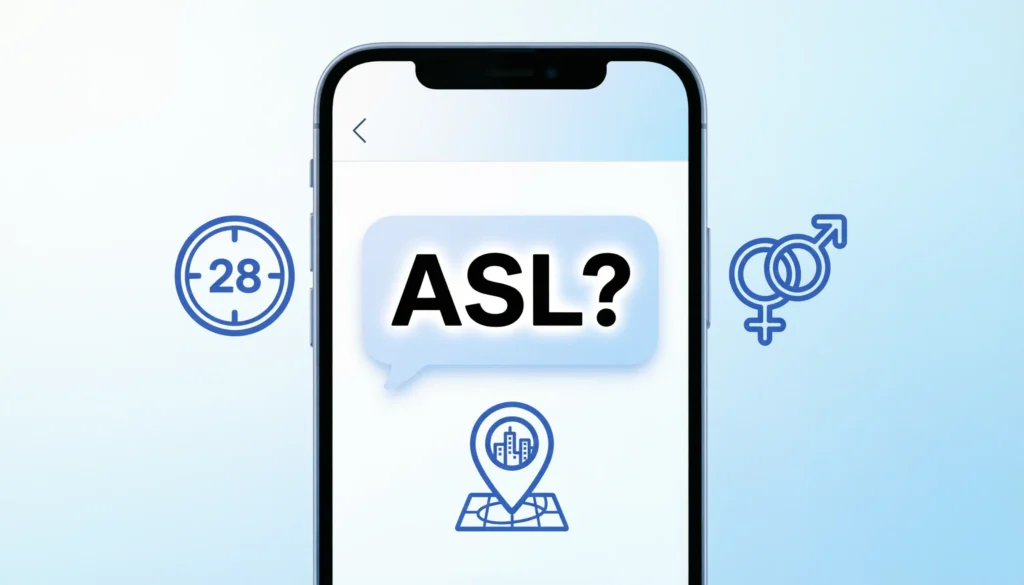
ASL in text messaging most commonly means “Age, Sex, Location.” It is an internet slang abbreviation used in chats and online conversations to ask someone basic personal details, typically during early-stage online interactions.
If you’ve ever been chatting online and suddenly seen someone type “ASL?”, you might have paused for a second wondering what it means. Is it a greeting? A code? Or something more personal?
In the world of texting and online chat rooms, abbreviations are everywhere. From “LOL” to “BRB,” digital communication has developed its own language. Among these, ASL is one of the older yet still recognized internet slang terms.
Understanding what ASL means in text is important because it can change the tone of a conversation quickly—sometimes making it casual, sometimes awkward, and sometimes even inappropriate depending on context.
Let’s break it down in detail so you know exactly how, when, and why people use it.
Origin of ASL in Text Messaging
The abbreviation ASL (Age, Sex, Location) originated in the early days of the internet, especially during:
- Internet chat rooms (1990s–early 2000s)
- AOL Instant Messenger (AIM)
- Yahoo Chat rooms
- Early online forums and IRC (Internet Relay Chat)
Back then, users often communicated anonymously. People used ASL as a quick way to get basic background information about someone they were chatting with.
Why it became popular:
- Fast typing in chat rooms
- Curiosity about anonymous users
- Lack of social media profiles at the time
- Simple structure (just three short questions in one abbreviation)
Over time, ASL became a standard internet slang term, though its usage has declined in modern texting culture.
What Does ASL Mean in Text Today?
In today’s digital world, ASL is still understood, but it is used less frequently in casual texting apps like WhatsApp, Instagram, or Snapchat.
When someone types “ASL?”, they are usually asking:
- A = How old are you?
- S = What is your gender?
- L = Where are you located?
However, in modern communication, asking this directly can sometimes feel too personal or outdated, especially if the conversation has just started.
How ASL Is Used in Real Conversations
Even though ASL is old-school internet slang, it still appears in certain situations.
Common usage scenarios:
- Online gaming chats
- Random chat platforms
- Anonymous forums
- Old internet communities
- Casual joking among friends
Example usage:
- “Hey, ASL?”
- “ASL? just curious 😊”
- “We’ve been talking for a while, ASL?”
Examples of ASL in Different Tones
Understanding tone is important because ASL can feel very different depending on context.
Friendly tone:
- “Hey! ASL? 😊”
👉 Casual curiosity, not too serious
Neutral tone:
- “ASL?”
👉 Straightforward and simple request
Suspicious or awkward tone:
- “ASL…?”
👉 Can feel invasive or uncomfortable
Dismissive tone:
- “ASL lol”
👉 May sound uninterested or random
ASL Meaning in Different Contexts
| Context | Meaning | Tone |
|---|---|---|
| Chat rooms | Age, Sex, Location | Neutral / social |
| Gaming chats | Basic introduction | Casual |
| Dating apps | Personal screening | Sometimes inappropriate |
| Friend chats | Joke or nostalgia | Friendly |
| Random messages | Identity check | Can feel intrusive |
Comparison With Related Internet Slang
ASL is often confused with other abbreviations or similar chat terms. Here’s how it compares:
1. ASL vs A/S/L (written separately)
- ASL = abbreviation
- A/S/L = older stylized version
👉 Both mean the same thing
2. ASL vs “HMU” (Hit Me Up)
- ASL = asks for personal info
- HMU = invitation to talk later
3. ASL vs “WYD” (What You Doing)
- ASL = identity-based question
- WYD = activity-based question
4. ASL vs “Intro”
- ASL = specific details (age, gender, location)
- Intro = general self-introduction
Alternate Meanings of ASL
While ASL most commonly means Age, Sex, Location, it can also have other meanings depending on context:
1. American Sign Language
This is the most important alternative meaning.
- A complete visual language used by Deaf communities
- Widely recognized in education and communication
- Completely unrelated to texting slang
2. As Hell (slang variation)
In informal internet slang:
- “Funny asl” = funny as hell
- “Tired asl” = very tired
👉 This usage is very common in modern social media captions.
Why ASL Is Less Common Today
ASL is not as popular in modern texting for several reasons:
- Privacy awareness has increased
- People prefer profile-based apps (Instagram, TikTok)
- Asking age/gender/location directly feels intrusive
- Social etiquette in online communication has evolved
Instead, people now share:
- Social media profiles
- Bios and introductions
- Optional personal details
Polite Alternatives to ASL
If you want to avoid sounding intrusive, here are better ways to ask similar information:
Instead of asking ASL directly:
- “Where are you from?” (casual)
- “What time zone are you in?” (neutral)
- “Tell me a little about yourself 😊”
- “Nice to meet you! What brings you here?”
These sound:
- More respectful
- More natural
- Less invasive
Example Table: ASL in Real Chat Situations
| Situation | Message Example | Interpretation |
|---|---|---|
| Chat room intro | “ASL?” | Asking basic identity info |
| Gaming lobby | “ASL bro?” | Casual player check |
| Dating chat | “ASL?” | Personal screening |
| Friend joke | “ASL lol” | Playful/nostalgic |
| Random DM | “ASL??” | Can feel suspicious |
Common Misunderstandings About ASL
Many beginners misunderstand ASL because of its simplicity.
Misconception 1: It’s always harmless
👉 Not always—can feel invasive depending on context
Misconception 2: It only means American Sign Language
👉 In texting, it often means Age, Sex, Location
Misconception 3: It is still widely used
👉 It’s mostly outdated in modern social media
Is It Safe to Use ASL in Chats?
ASL itself is not dangerous, but it depends on:
- Who you are talking to
- The platform you are using
- The tone of the conversation
Safe usage tips:
- Use it only in casual or familiar environments
- Avoid asking strangers too directly
- Be mindful of privacy concerns
FAQs
1. What does ASL mean in texting?
ASL means Age, Sex, Location, used to ask basic personal details in chats.
2. Is ASL still used today?
Yes, but it is less common in modern texting apps.
3. Is ASL rude to ask?
It can feel rude or intrusive if asked too early in a conversation.
4. Does ASL always mean Age, Sex, Location?
No, it can also mean American Sign Language or “as hell” in slang.
5. Where did ASL come from?
It originated in early internet chat rooms and messaging platforms.
6. What is ASL in gaming chats?
It usually asks for a player’s age, gender, and location for casual interaction.
7. What is a polite alternative to ASL?
You can ask “Where are you from?” or “Tell me about yourself.”
8. Is ASL safe to use online?
Yes, but it depends on context and how respectfully it is used.
Conclusion
Understanding what ASL means in text helps you navigate online conversations more confidently. While it originally stood for Age, Sex, Location, its usage has evolved and become less common in modern digital communication.
Today, people prefer more natural and respectful ways to get to know someone online. Still, ASL remains an important part of internet slang history and is useful to recognize when you come across it in chats, gaming lobbies, or older online platforms.
The key takeaway is simple:
👉 Use ASL carefully, understand its tone, and always respect privacy in online conversations.
Discover More Related Articles:
- Pum Pum Mean in Jamaican: Caribbean Music Culture in 2026
- “GLA” Mean in Real Estate: How GLA Impacts Rent and Appraisal for 2026

Madison Taylor is an experienced content writer who focuses on researching and explaining word meanings, slang, and texting terms. She writes for meanvoro.com, creating clear and accurate to help readers understand language easily.