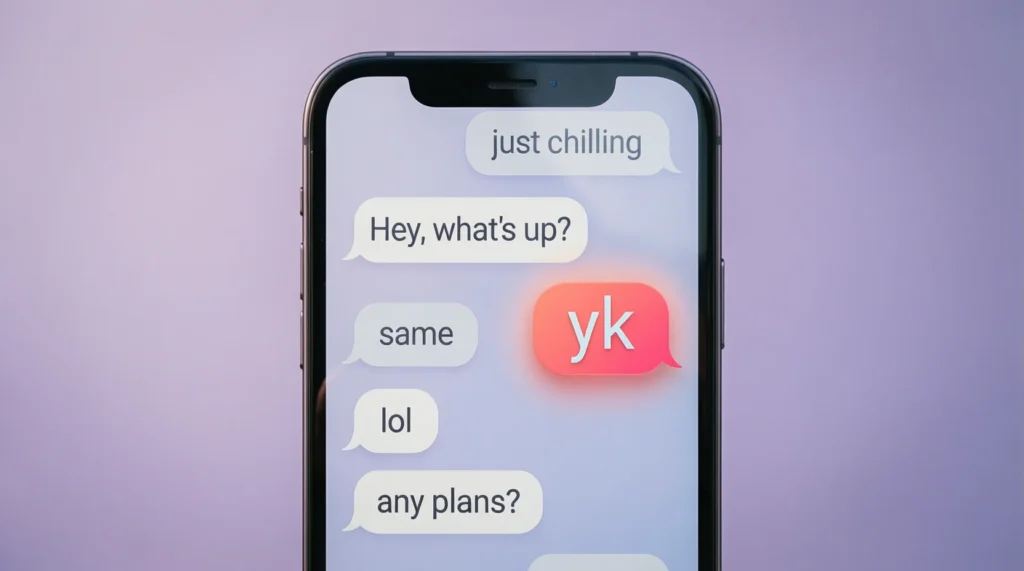
In today’s fast-paced world of texting and social media, short forms and slang are everywhere. One such abbreviation you may have seen is “YK Meaning in Texting.” It often appears in casual chats, comments, or direct messages, leaving many people wondering what it actually means and how it should be understood in conversation.
Definition
YK means “you know.”
It is an informal abbreviation commonly used in text messages and online chats to sound casual, relatable, or conversational. The tone of “yk” depends heavily on context and punctuation.
Simply put, “YK” means “you know.” It is commonly used to make messages sound more relaxed, conversational, and natural, similar to how people speak in real life. Instead of typing the full phrase, texters use “yk” to save time while keeping the tone friendly and informal.
Understanding what “YK” means in text is important because its meaning can slightly change depending on context and tone. Sometimes it shows friendliness or shared understanding, while other times it may express hesitation or mild frustration. Knowing how and when it is used helps you better interpret messages and respond appropriately.
Why “YK” Is Common in Modern Texting
Text communication is fast, informal, and expressive. Abbreviations like “yk” help people communicate efficiently while still sounding human.
People use “yk” to:
- Type faster in casual conversations
- Match how they speak in real life
- Sound friendly or relatable
- Invite agreement or understanding
Understanding what “yk” means helps prevent misunderstandings and improves how you read tone in digital conversations.
Origin of “YK” in Texting
Where “YK” Comes From
The phrase “you know” has been part of spoken English for generations. It is often used as a filler phrase, a softener, or a way to check whether someone understands. When texting became popular, shortening common spoken phrases became natural.
“You know” was shortened to “yk” for speed and convenience.
Growth in Popularity
“YK” became widespread with:
- Early SMS texting
- Instant messaging platforms
- Social media apps such as Snapchat, Instagram, and TikTok
Today, it is most common in casual conversations, especially among younger users, but it is widely understood across age groups.
What Does “YK” Mean in Different Contexts?
Although “yk” always means “you know,” the emotional tone changes depending on how it is used.
It can:
- Make a message feel friendly
- Soften a statement
- Fill a pause like in spoken conversation
- Express mild frustration or sarcasm
Context determines how it should be interpreted.
Examples
Friendly or Relatable Tone
“That movie was so good, yk?”
“I was just tired, yk, long day at school.”
“You’re really good at this, yk that?”
In these cases, “yk” builds connection and warmth.
Neutral or Casual Tone
“I will be there around 7, yk, after practice.”
“It is kind of complicated, yk.”
Here, “yk” works as a conversational filler with no strong emotion.
Slightly Annoyed or Dismissive Tone
“I already told you, yk.”
“It is obvious, yk?”
In these situations, punctuation and context make “yk” sound impatient or sarcastic.
Example
| Text Message Example | Tone | Intended Meaning |
| I was busy, yk. | Casual | Light explanation |
| It is common sense, yk? | Dismissive | Suggests it should be obvious |
| That song hits different, yk? | Friendly | Seeks shared agreement |
| I am just stressed, yk. | Vulnerable | Softens emotional expression |
| We talked about this, yk. | Frustrated | Reminder with irritation |
Is “YK” Always Informal?
Yes. “YK” is strictly informal and should not be used in professional or academic settings.
Avoid using it in:
- Work emails
- School assignments
- Job applications
- Formal customer communication
It is best reserved for personal and social messages.
Comparison: “YK” vs Similar Text Abbreviations
YK vs U Know
Both mean “you know,” but “yk” is shorter and more modern.
YK vs IK
| Abbreviation | Meaning | Purpose |
| YK | You know | Invites understanding or agreement |
| IK | I know | Confirms understanding |
Example exchange:
“It is stressful, yk?”
“Yeah, ik.”
YK vs IDK
“YK” assumes shared understanding.
“IDK” expresses uncertainty.
They serve opposite roles in conversation.
YK vs FR
“FR” adds emphasis and intensity.
“YK” keeps the tone relaxed and conversational.
Alternate Meanings of “YK”
In rare cases, “yk” may refer to:
- Someone’s initials
- A username or brand abbreviation
- A typing mistake
However, in everyday texting, it almost always means “you know.”
How to Use “YK” Naturally in Text
To sound natural rather than awkward:
- Place “yk” in the middle of a sentence
- Avoid using it too often
- Match the other person’s texting style
- Be mindful of emotional conversations
Natural example:
“I was nervous, yk, meeting everyone for the first time.”
Forced example:
“YK I was nervous meeting everyone.”
Polite or Professional Alternatives to “YK”
When a more respectful tone is needed, consider these alternatives.
Polite Casual Options
“As you may know”
“You might be aware”
“I believe you understand”
Professional Alternatives
“As discussed earlier”
“As previously mentioned”
“For your reference”
Why People Use “YK” So Often
“YK” reflects natural speech patterns. People say “you know” when:
- Thinking out loud
- Seeking reassurance
- Softening statements
- Expressing emotion
Texting simply mirrors spoken habits.
Is “YK” Rude?
“YK” is not rude by default, but it can sound rude depending on context.
It may sound rude when:
- Used in arguments
- Paired with sarcasm
- Followed by a period or question mark
It sounds friendly when:
- Used with supportive language
- Paired with emojis
- Used in relaxed conversations
Conclusion
Understanding what “yk” means in text helps you interpret tone and intent more accurately in everyday conversations. While it is small and informal, it plays a big role in how messages feel. Used correctly, it sounds natural and friendly. Used poorly, it can sound dismissive.
FAQs
1. What does YK mean in text messages?
It means “you know” and is used to sound conversational.
2. Is YK considered slang?
Yes, it is informal texting slang.
3. Is YK used on Snapchat and Instagram?
Yes, it is very common on social media platforms.
4. Can YK sound negative?
Yes, depending on tone and punctuation.
5. Is YK the same as “you know what I mean”?
No. “YK” is shorter and less specific.
6. Should YK be used professionally?
No, it should be avoided in formal communication.
7. Do adults understand YK?
Most do, but younger users use it more frequently.
8. How should I respond to someone using YK?
Respond naturally. No special reply is required.

Madison Taylor is an experienced content writer who focuses on researching and explaining word meanings, slang, and texting terms. She writes for meanvoro.com, creating clear and accurate to help readers understand language easily.