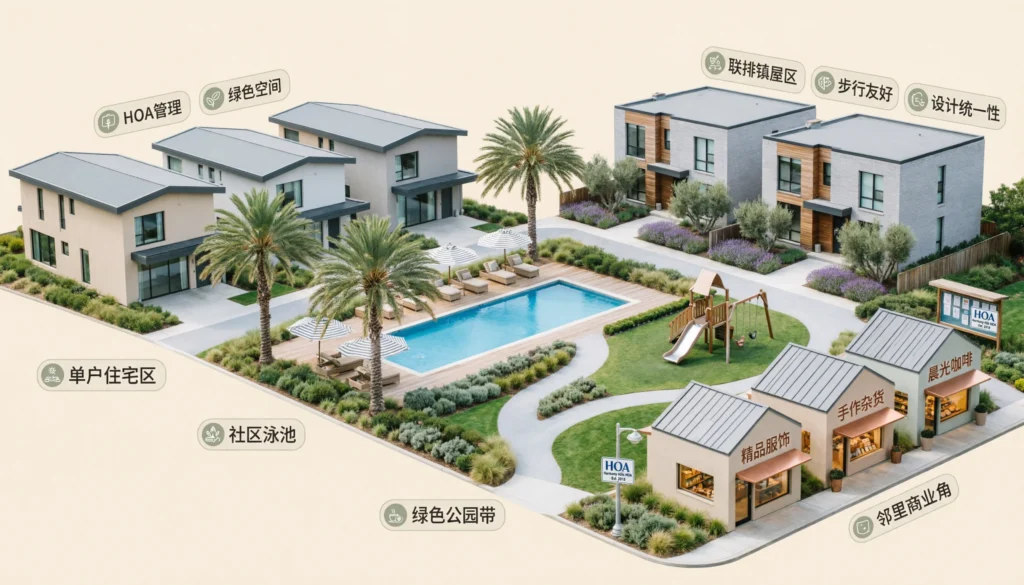
In real estate, PUD stands for Planned Unit Development. It refers to a type of property development where individual homes, townhouses, or condos are grouped together in a planned community with shared amenities and common areas.
PUDs often combine residential living with open spaces, recreational areas, and sometimes commercial spaces, offering a mix of privacy and community benefits.
If you’re buying, selling, or investing in real estate, understanding what a PUD is and how it differs from other property types can help you make smarter decisions.
Origin and Popularity of PUDs
The concept of a Planned Unit Development originated in the United States in the mid-20th century as a solution to suburban expansion. Developers wanted to maximize land use efficiently while creating community-oriented neighborhoods.
Today, PUDs are common in cities and suburban areas because they:
- Offer shared amenities like pools, parks, or clubhouses
- Promote organized zoning without sacrificing open space
- Provide homeowners with community oversight via homeowner associations (HOAs)
Investors, families, and first-time homebuyers often consider PUDs because they combine private property ownership with convenience and communal benefits.
How PUDs Work in Real Estate
1. Property Ownership
In a PUD, homeowners typically own their individual unit and the land beneath it, unlike condominiums, where you usually only own the unit interior.
Examples:
- Single-family home in a PUD → Owns the house and the lot
- Townhouse in a PUD → Owns the unit and shared yard areas
2. Shared Amenities and Common Areas
PUDs often include amenities maintained by the HOA. This is a key selling point for residents seeking convenience and recreation.
Examples of Common Amenities:
- Swimming pools and spas
- Tennis or basketball courts
- Walking trails and parks
- Clubhouses or community centers
3. Homeowner Associations (HOAs)
Most PUDs have HOAs that manage the community, maintain common areas, and enforce rules. Homeowners pay HOA fees for these services.
Examples:
- Weekly landscaping for shared parks
- Security patrols or gated access
- Community events and facilities maintenance
4. Zoning Flexibility
Unlike traditional subdivisions, PUDs allow developers flexible zoning, combining residential, commercial, or recreational spaces in one development.
Example:
- A PUD may have a row of homes next to a small shopping center or daycare within the community.
Example Table: PUD vs Other Property Types
| Property Type | Ownership | Amenities | Common Features |
|---|---|---|---|
| PUD (Planned Unit Development) | Owns home + land | Pools, parks, community areas | HOA-managed, flexible zoning |
| Condominium (Condo) | Owns unit interior only | Shared amenities inside property | HOA manages building + common spaces |
| Townhouse | Owns unit + sometimes land | Limited amenities | Row-style homes, often HOA-managed |
| Single-family home | Owns home + lot | Private amenities only | No HOA required (unless in subdivision) |
Comparison With Similar Real Estate Terms
| Term | Definition | Difference From PUD |
|---|---|---|
| Condominium | Individual ownership of a unit in a building | Condo owners don’t usually own the land beneath units; PUD owners do |
| Subdivision | Group of homes with similar zoning rules | Subdivisions may lack shared amenities or flexible zoning |
| Co-op | Owns shares in a corporation that owns the building | PUD offers actual property ownership, co-op offers indirect ownership |
| Planned Community | General term for a managed neighborhood | PUD is a specific type of planned community with HOA and flexible zoning |
Benefits of Buying a PUD
- Community Living: Shared amenities encourage social interaction and provide recreational options.
- Land Ownership: Unlike condos, you own both the home and the lot.
- Amenities Maintenance: HOAs handle upkeep, making life easier for homeowners.
- Flexible Layouts: PUDs can mix homes, townhouses, and commercial areas.
- Potential for Property Value Growth: Well-maintained PUDs may appreciate faster due to the quality of shared amenities and community planning.
Drawbacks of Buying a PUD
- HOA Fees: Monthly or annual fees can be costly.
- HOA Rules: Strict community rules may limit modifications to your property.
- Shared Responsibility: Issues with common areas can affect all residents.
- Potential Resale Complexity: Some buyers may prefer traditional homes without HOA restrictions.
FAQs
1. What does PUD mean in real estate?
It stands for Planned Unit Development, a type of community with shared amenities and flexible zoning.
2. Do you own the land in a PUD?
Yes, homeowners typically own both their home and the land beneath it.
3. How is a PUD different from a condominium?
Condos usually only give ownership of the interior unit, whereas PUDs give ownership of both unit and land.
4. Are PUDs good for families?
Yes. PUDs often include parks, pools, and community spaces, making them family-friendly.
5. What is an HOA?
A Homeowner Association manages the PUD’s common areas and enforces community rules.
6. Do PUDs include commercial areas?
Sometimes. Developers can include small shops, offices, or other commercial spaces within the community.
7. Are PUDs more expensive than traditional homes?
They can be slightly more expensive due to shared amenities and HOA fees, but they often offer added convenience and value.
8. Can PUD rules affect what I do on my property?
Yes. HOAs may regulate exterior changes, landscaping, or other modifications.
Conclusion:
A Planned Unit Development (PUD) is more than just a neighborhood; it’s a strategically designed community that balances private property ownership with shared amenities and community oversight.
Whether you’re a first-time buyer, a family seeking convenience, or an investor, understanding PUDs can help you make informed real estate decisions.
With proper research, buying a PUD can offer both privacy and community benefits, making it an attractive option in today’s real estate market.
Discover More Related Articles:
- Perseverance Mean in the Bible: Lessons from Paul, Job, and Jesus for 2026
- Subdue Meaning in the Bible: Lessons for 2026

Madison Taylor is an experienced content writer who focuses on researching and explaining word meanings, slang, and texting terms. She writes for meanvoro.com, creating clear and accurate to help readers understand language easily.