

FPO stands for For Position Only.
In marketing and design, it refers to a placeholder element, such as an image, text, or graphic, that is used in a layout temporarily until the final content is ready.
In short, FPO marks where content will go without being the final asset.
If you have ever been involved in a marketing project, worked on a design mockup, or taken part in an advertising campaign, you may have noticed the abbreviation FPO being used in discussions or drafts. At first, it might look confusing or unclear, especially if you are seeing it for the first time. However, in the world of design and marketing workflows, FPO is a widely used and important term that helps teams communicate more effectively during the creative process.
Understanding what FPO means in marketing is essential for designers, marketers, advertisers, and even clients, because it plays a key role in how layouts are planned, how visuals are presented in early stages, and how ideas are tested before final production. It ensures everyone involved is on the same page when reviewing drafts or placeholders in a project.
In this guide, we will break down the meaning of FPO in detail, explore how it is used in real marketing and design scenarios, and look at practical examples and best practices so you can easily understand and apply it in your own work.
Why FPO Is Important in Marketing
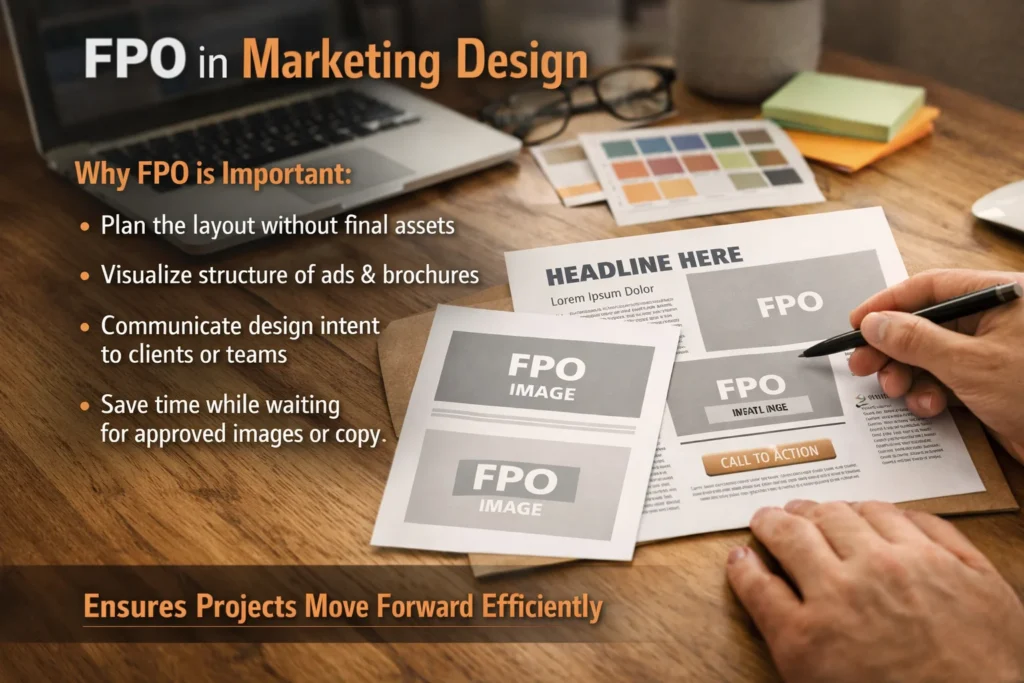
FPO is essential because it allows designers and marketers to:
- Plan the layout without final assets
- Visualize the structure of advertisements, brochures, or digital campaigns
- Communicate design intent to clients or teams
- Save time while waiting for approved images or copy
Using FPO correctly ensures projects move forward efficiently without delays.
Origin and Background of FPO
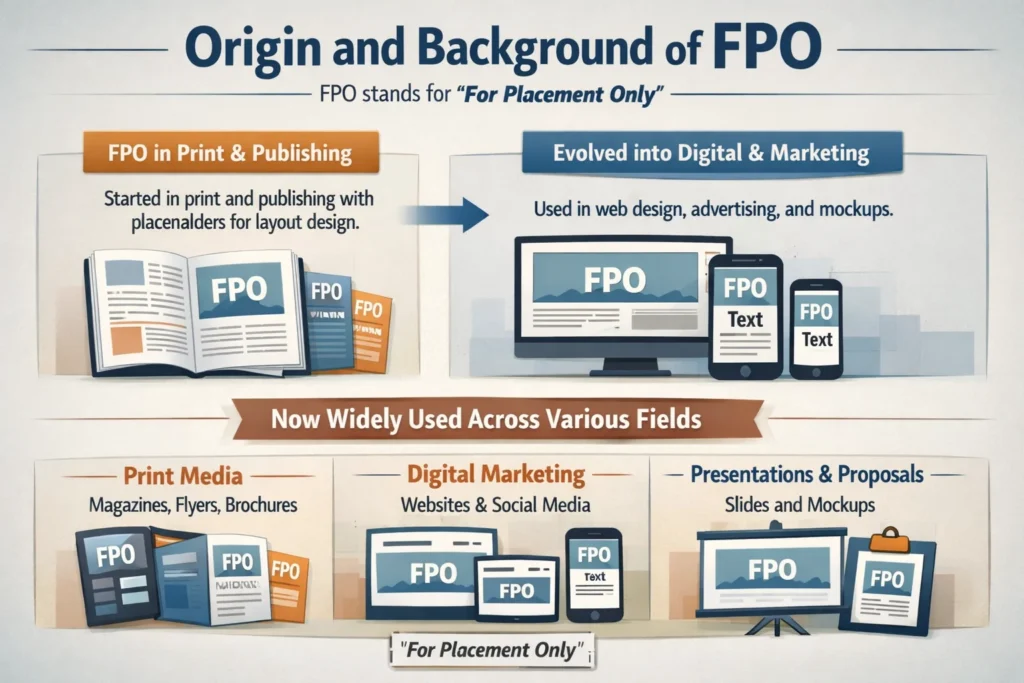
The term FPO originated in print and publishing, when designers would use temporary images or text during layout design.
Over time, it became standard in digital marketing, web design, and advertising, helping teams create mockups before final content is available.
FPO is now widely recognized across:
- Print media (magazines, flyers, brochures)
- Digital marketing campaigns (social media, websites)
- Presentation decks and proposals
How FPO Is Used in Marketing
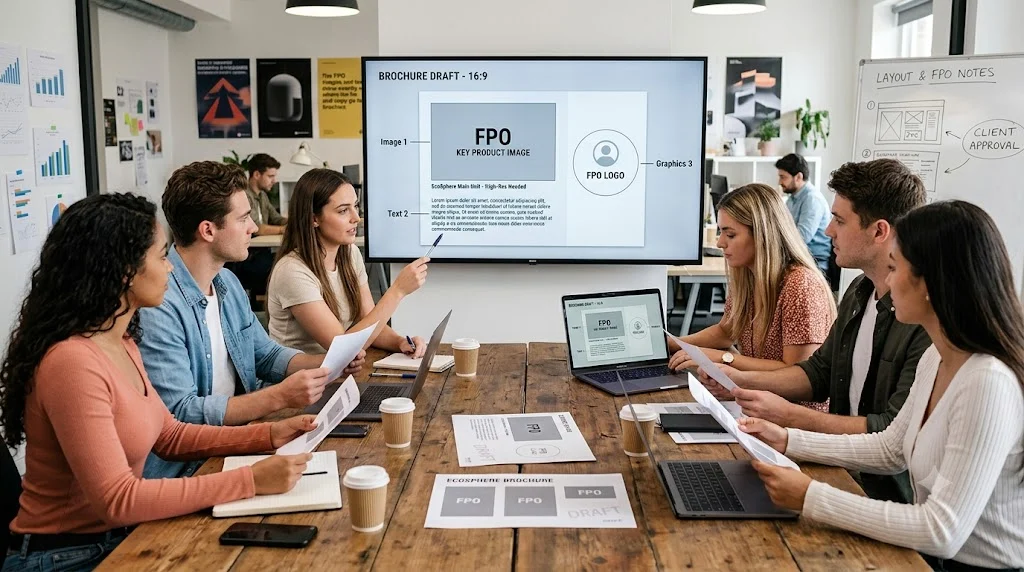
FPO can appear in different forms:
1. FPO Images
Temporary images labeled “FPO” in design software or layout mockups.
Example:
- A brochure draft showing a grey box with “FPO” text where the final product image will go.
2. FPO Text
Placeholder text used until final copy is ready.
Example:
3. FPO Graphics or Logos
Placeholder icons, charts, or logos used to plan the design.
Example:
- A presentation slide showing a generic logo in place of a client’s logo.
Benefits of Using FPO in Marketing
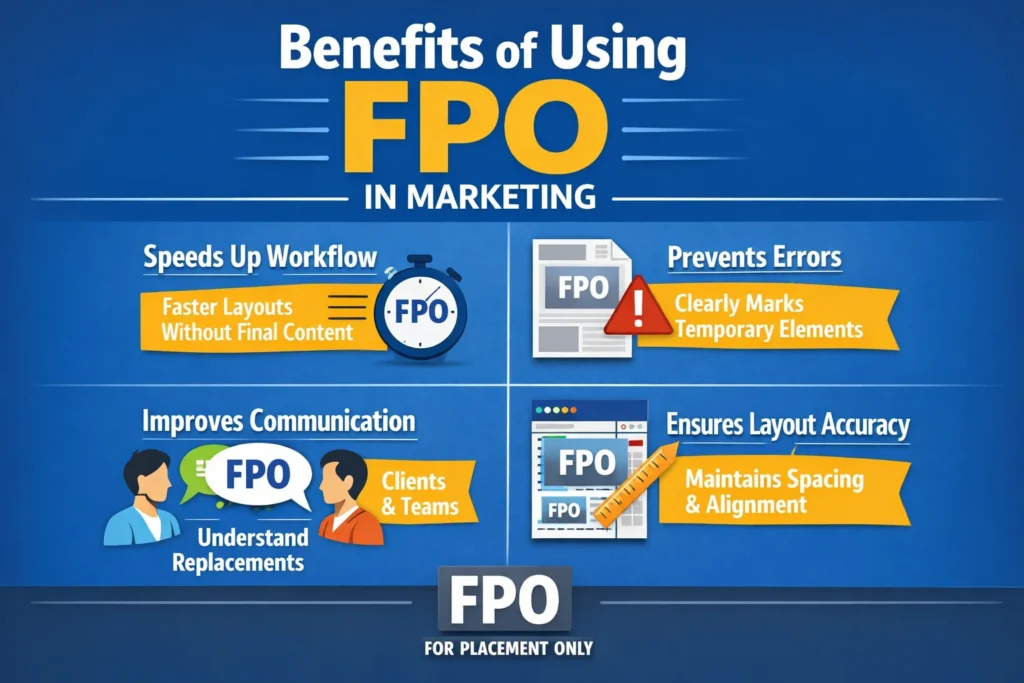
- Speeds up workflow – Designers can continue layout work without waiting for final content.
- Prevents errors – Clearly marks which elements are temporary.
- Improves communication – Clients and teams know what will be replaced later.
- Ensures layout accuracy – Helps maintain spacing, proportions, and alignment.
Real-Life Examples of FPO in Marketing
- Magazine design: A designer uses a temporary image labeled FPO until the client sends the product photo.
- Website mockup: FPO text shows where headings and descriptions will appear.
- Social media ads: Placeholder graphics demonstrate ad placement before approval.
- Client presentations: Slides use FPO visuals to indicate pending final content.
Common Expressions Using FPO
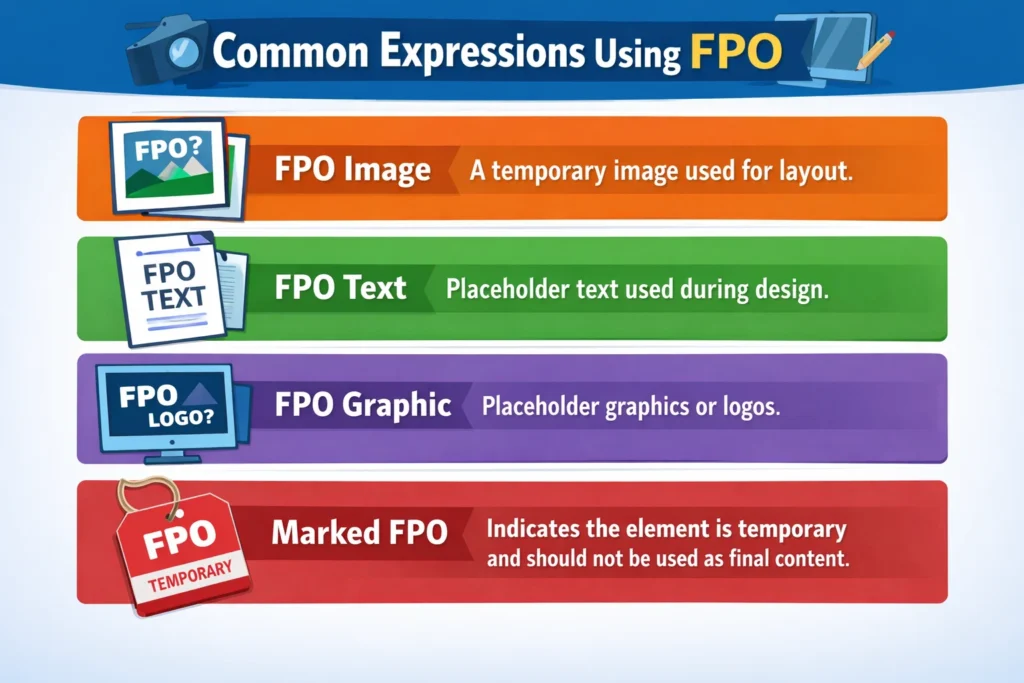
- FPO image – A temporary image used for layout
- FPO text – Placeholder text used during design
- FPO graphic – Placeholder graphics or logos
- Marked FPO – Indicates the element is temporary and should not be used as final content
Comparison: FPO vs Similar Terms
| Term | Meaning | Key Difference |
|---|---|---|
| FPO | For Position Only | Placeholder for layout purposes |
| Lorem Ipsum | Dummy text | Used only for text content, not images or graphics |
| Mockup | Draft layout | A complete design prototype; may include FPO elements |
| Placeholder | Temporary content | General term; FPO specifically marks intended positions |
Polite or Professional Alternatives
In professional documentation or communication, you can describe FPO elements as:
- Temporary content – For clarity in emails or briefs
- Design placeholder – Useful for client-facing presentations
- Preliminary layout element – Formal term in publishing
Example:
- Informal: “This image is FPO.”
- Formal: “This is a temporary design placeholder until the final image is received.”
Alternate Meanings or Misunderstandings
Outside marketing and design, FPO can mean different things:
- Financial Planning Officer (finance)
- Fleet Post Office (military)
In marketing contexts, however, FPO always refers to a placeholder element used for positioning.
FAQs
Meaning of FPO in marketing?
FPO stands for For Position Only, indicating temporary content in a design layout.
Why is FPO used?
It helps designers plan layouts without waiting for final images or text.
Does FPO appear in digital marketing?
Yes, it’s common in web design, social media ads, and presentations.
How is FPO different from a mockup?
A mockup is a full draft design; FPO is a temporary placeholder within the mockup.
Can FPO be used in client presentations?
Yes, FPO clearly indicates which elements are temporary until final content is ready.
What types of FPO content exist?
Images, text, logos, graphics, charts, or other design elements.
Should FPO be replaced before publishing?
Yes, FPO elements must be replaced with final content before release.
Is FPO commonly understood by clients?
Clients in marketing or design will usually understand, but it’s good to clarify in presentations or briefs.
Practical Tips for Using FPO in Marketing
- Always label FPO elements clearly to avoid confusion
- Use consistent sizing and spacing for placeholders
- Replace FPO elements promptly once final content is available
- Explain FPO to clients to ensure clarity in presentations
- Use FPO strategically to maintain workflow efficiency
Conclusion
FPO in marketing is a simple but powerful tool that keeps design projects moving. By marking For Position Only elements, designers and marketers can:
- Plan layouts efficiently
- Communicate clearly with clients and teams
- Ensure the final product looks professional
Understanding FPO ensures smooth collaboration, faster project completion, and accurate, polished final marketing materials.
Discover More Related Articles:
- OG Mean | Original Gangster or something else In 2026
- TS Mean in Text | Online Chat & Internet Slang Breakdown In 2026
- What Does ASL Mean | American Sign Language & Its Importance In 2026

Ryan Thompson is an experienced content writer specializing in slang terms, texting abbreviations, and word meanings. He writes for meanvoro.com, where he creates accurate and easy-to-understand language content for readers.